
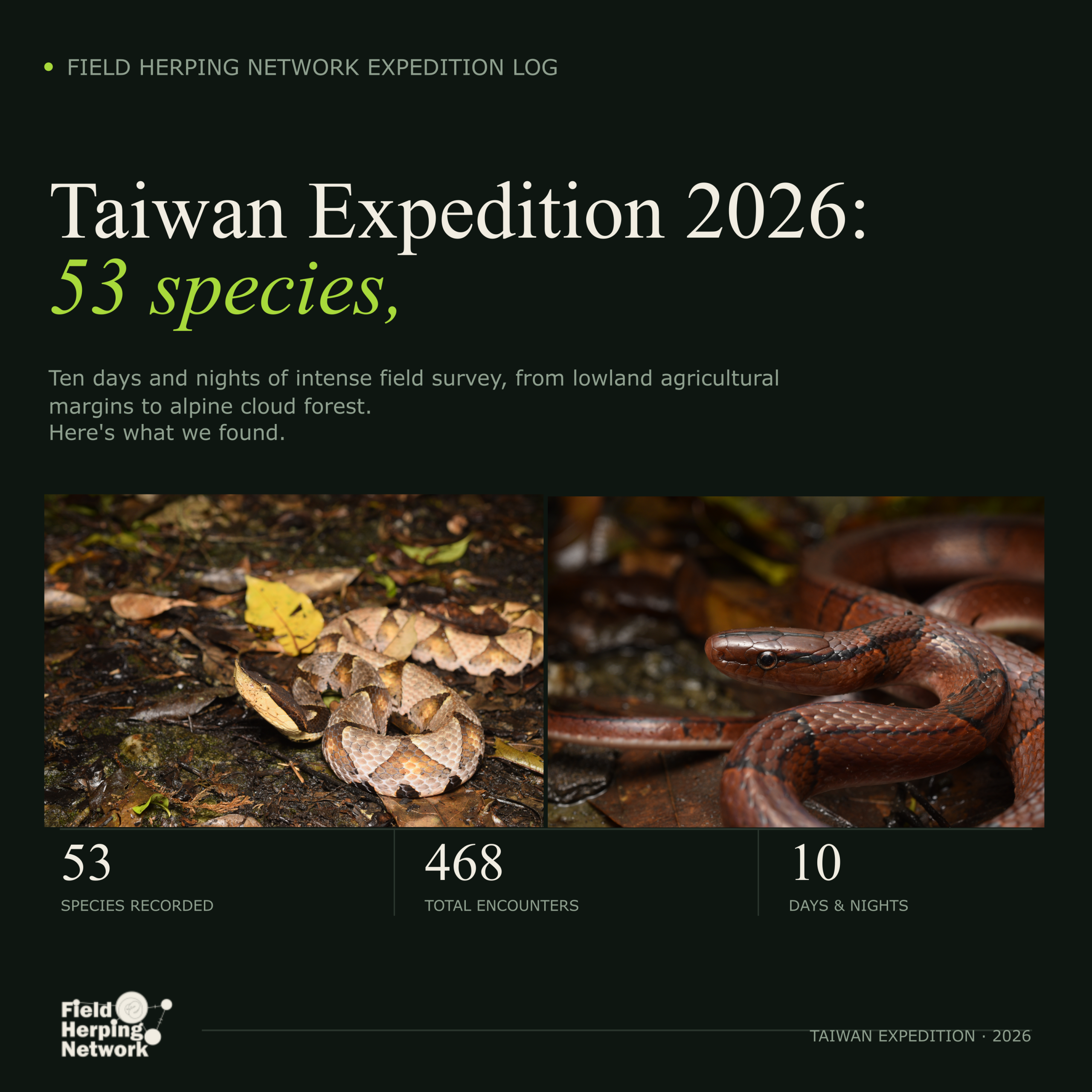
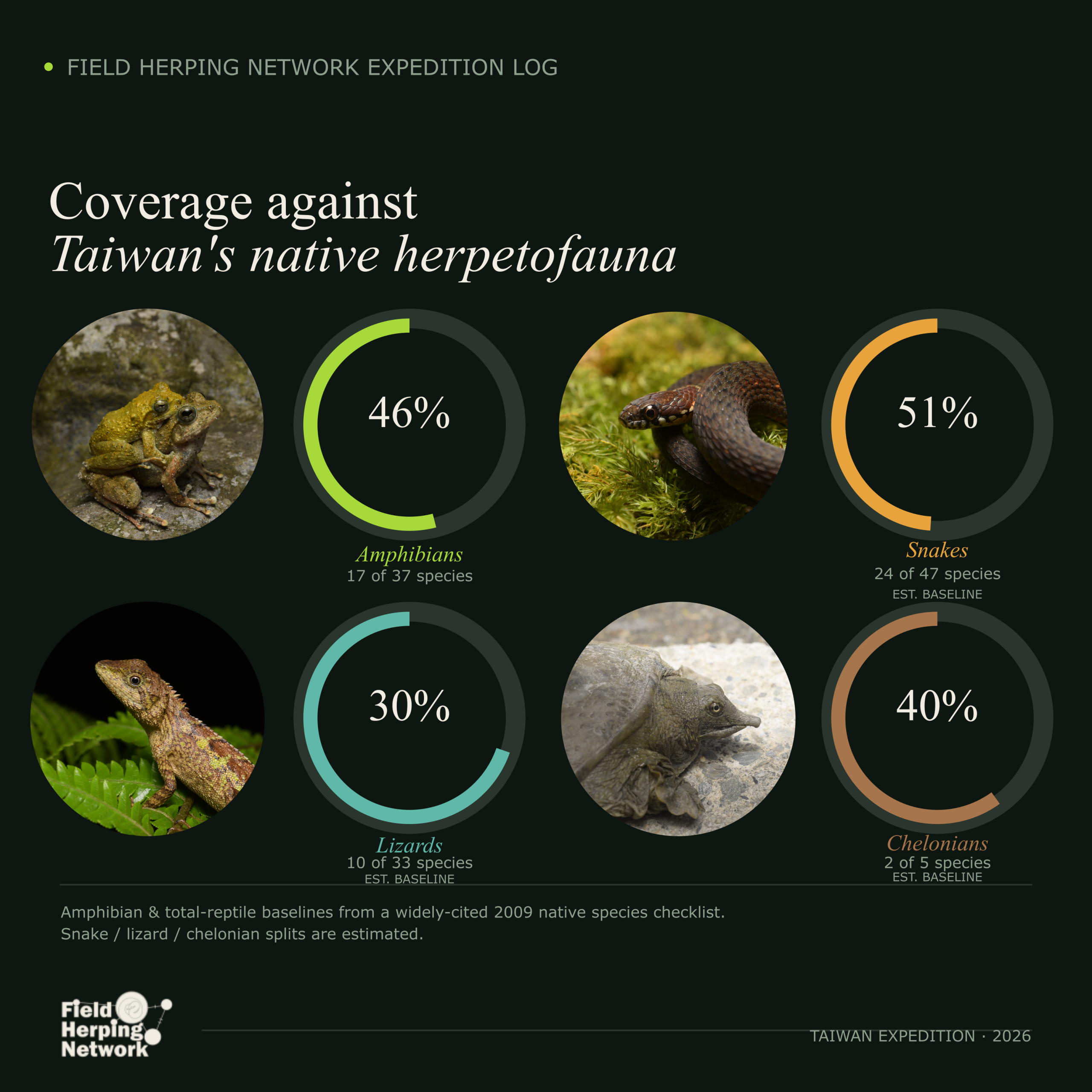
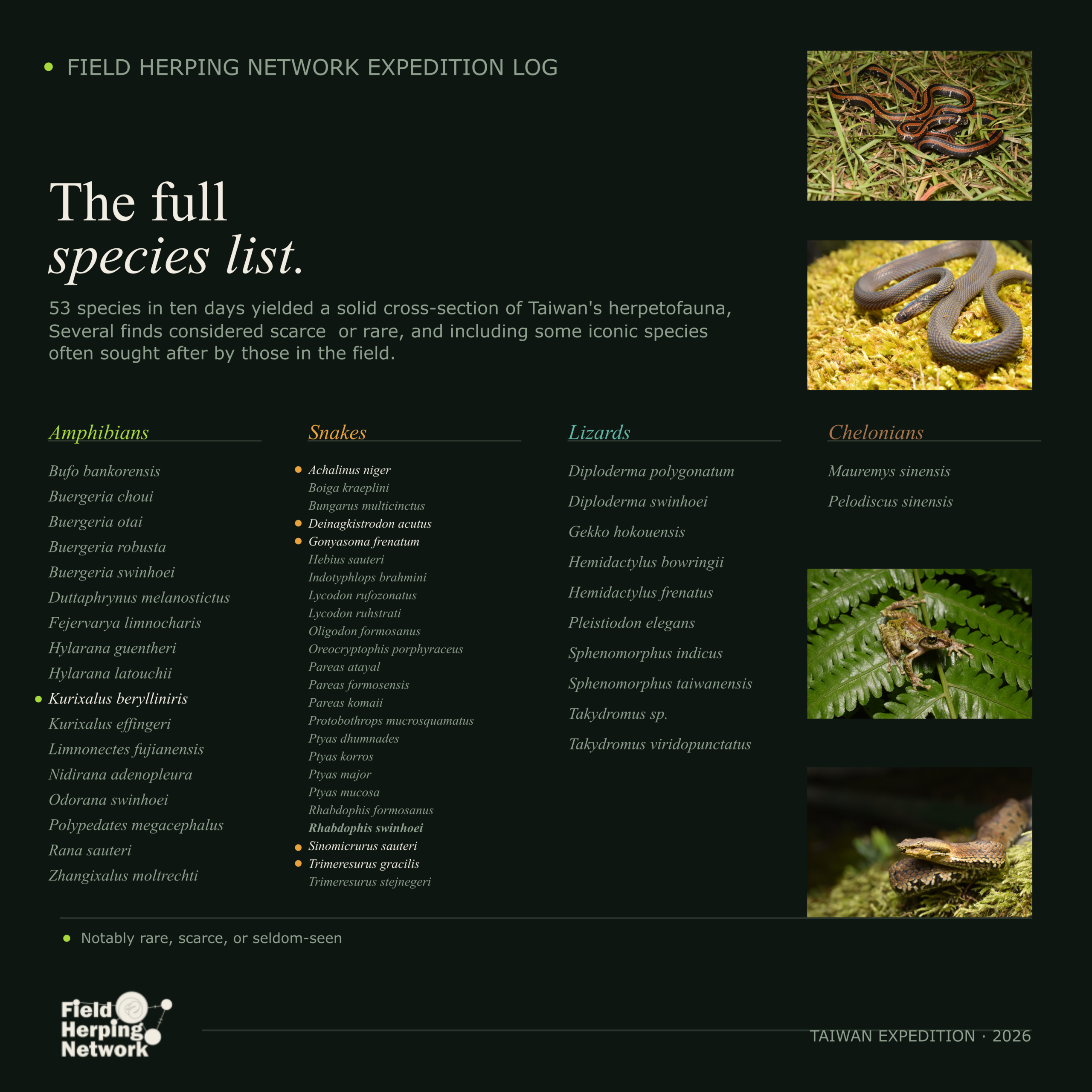
After somewhere in the region of 28 hours of travelling, I had finally landed in Taiwan. Taiwan’s geography is special because its mountains rise rapidly from tropical sea level to create a steep gradient of bioclimates, which packs a huge amount of biodiversity, much of which is endemic, into a small space. I picked up the hire car mid-morning and started the drive to Yilan province, in the northeast of the country, an area renowned for its herpetofaunal abundance and diversity.
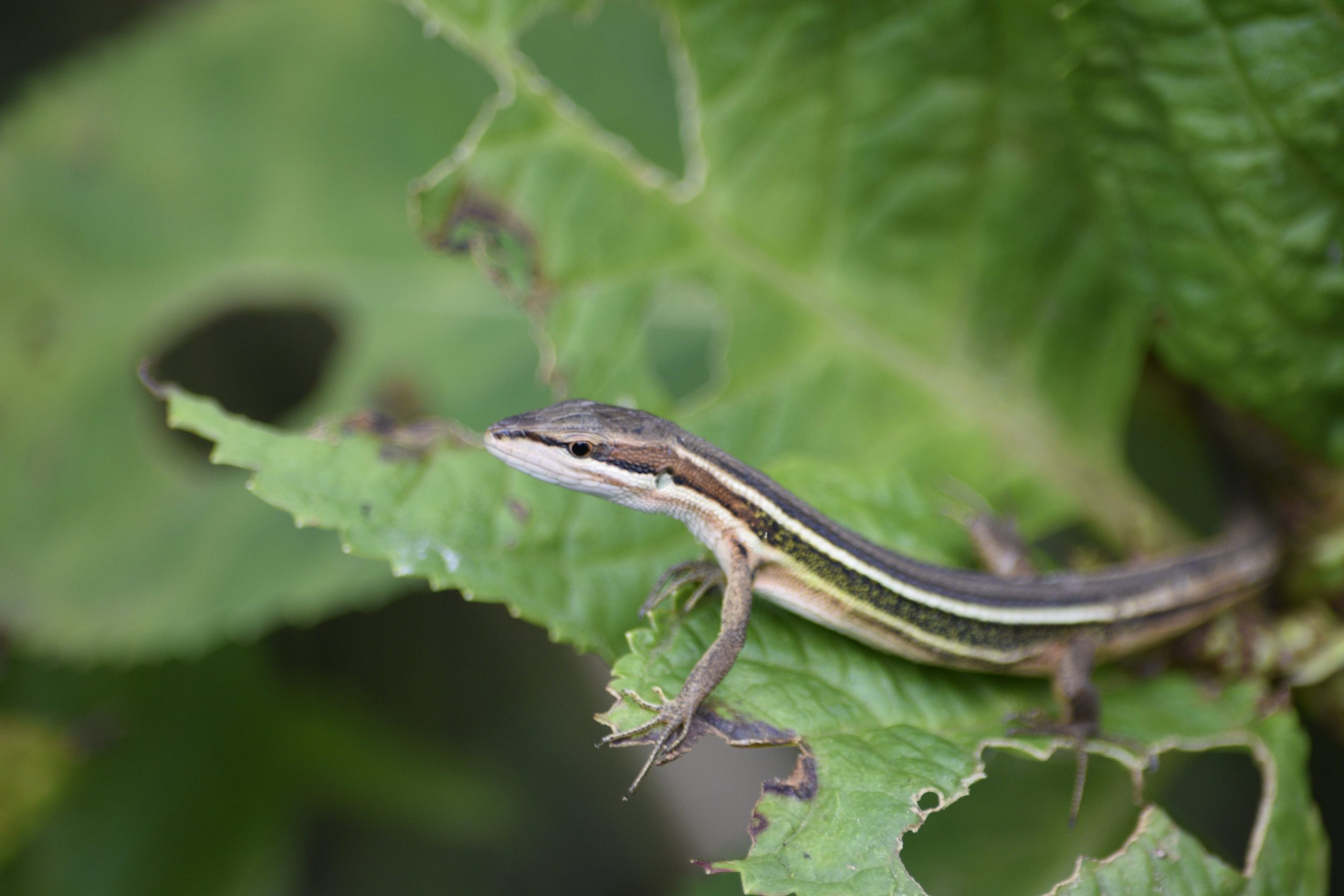
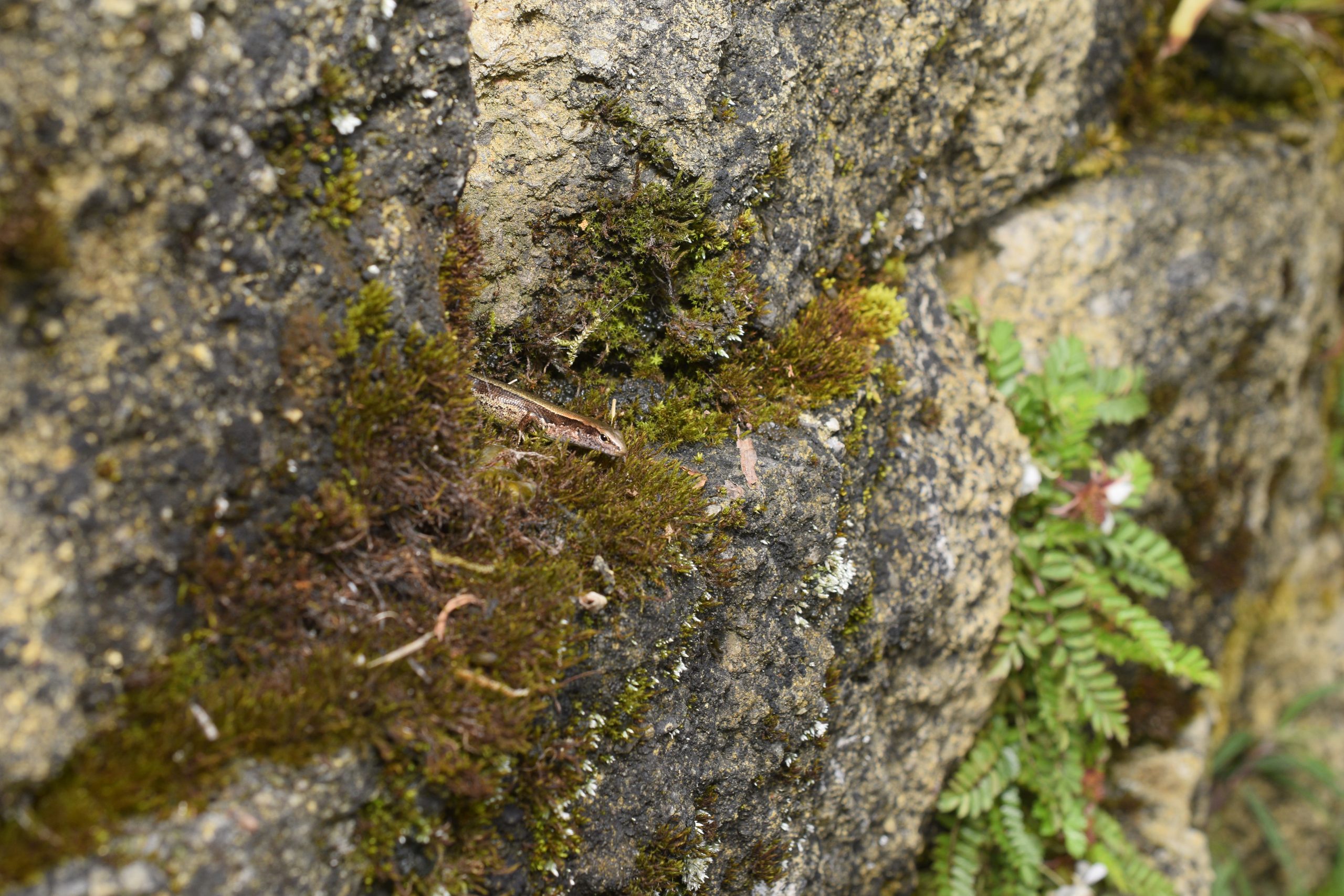
I stopped off for a quick look around at the Taipei-Yilan Border Park to break up the drive, where I spotted a number of individuals of the first species of the trip: Takydromus viridopunctatus (Taiwan Grass Lizard). The habitat was hot and humid, the ground covered in moss and ferns, and the sound of cicadas ringing all around me – the classic trademarks of the tropics, which, boy, have I missed. It was clear these were fertile grounds for a host of herpetofauna.
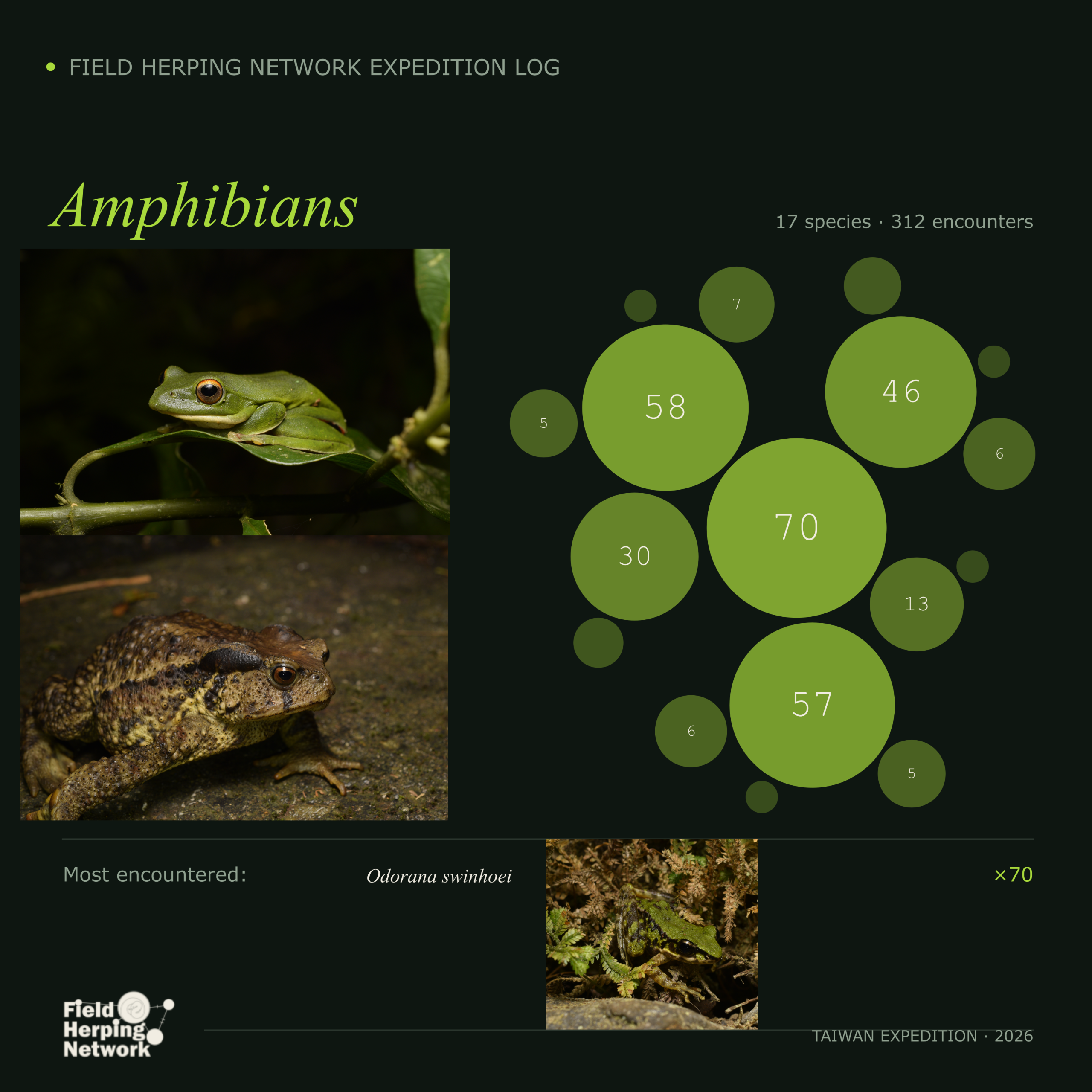
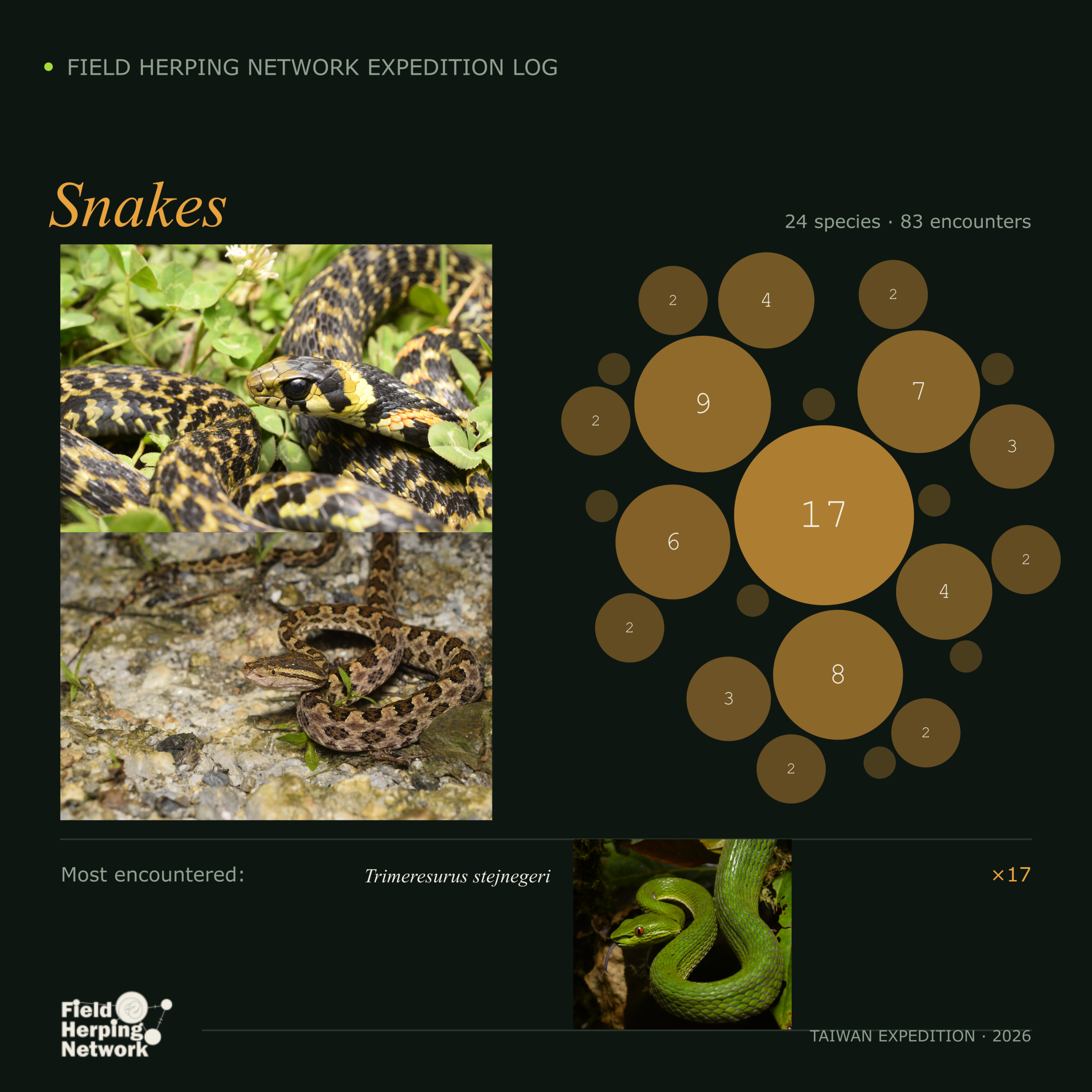
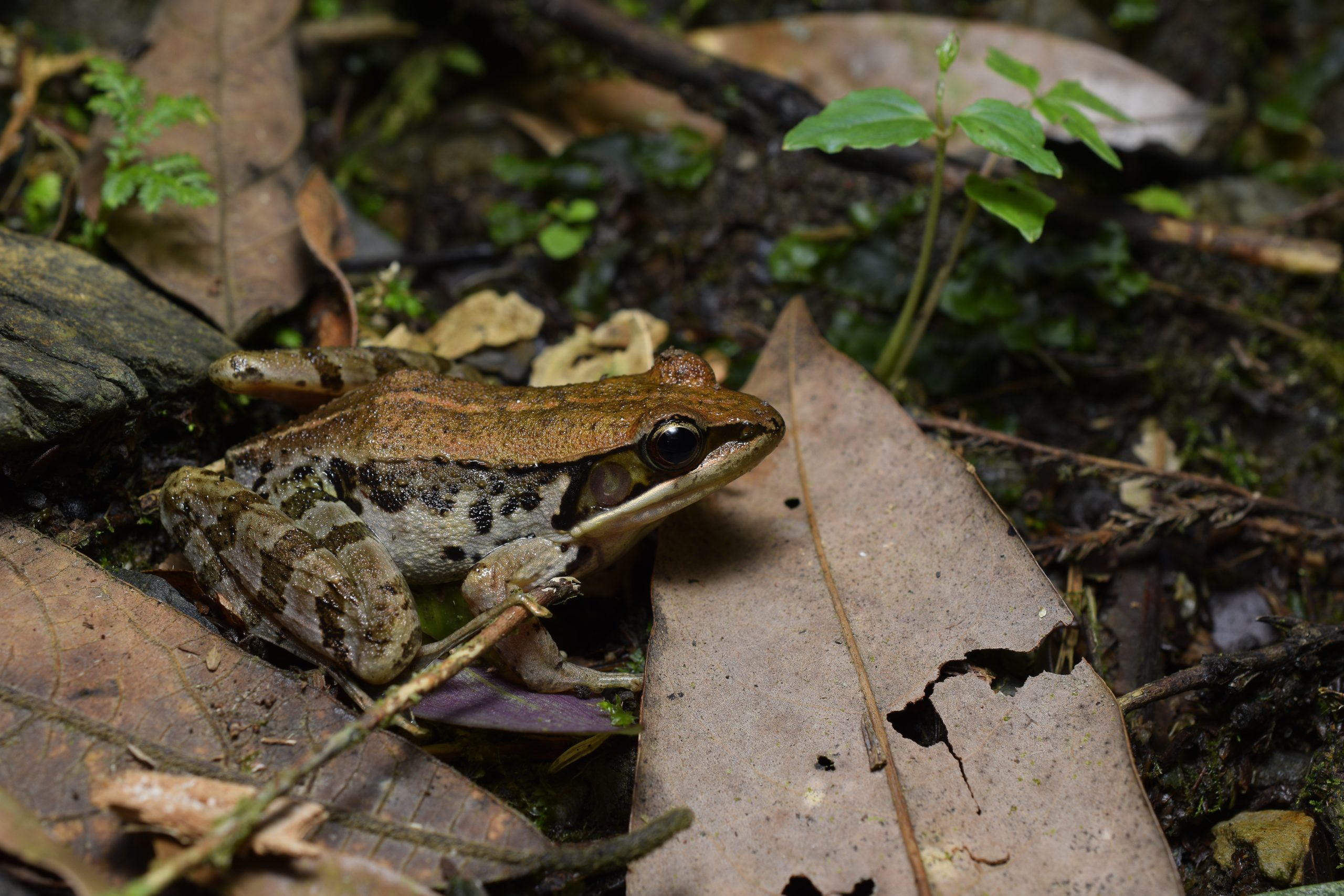
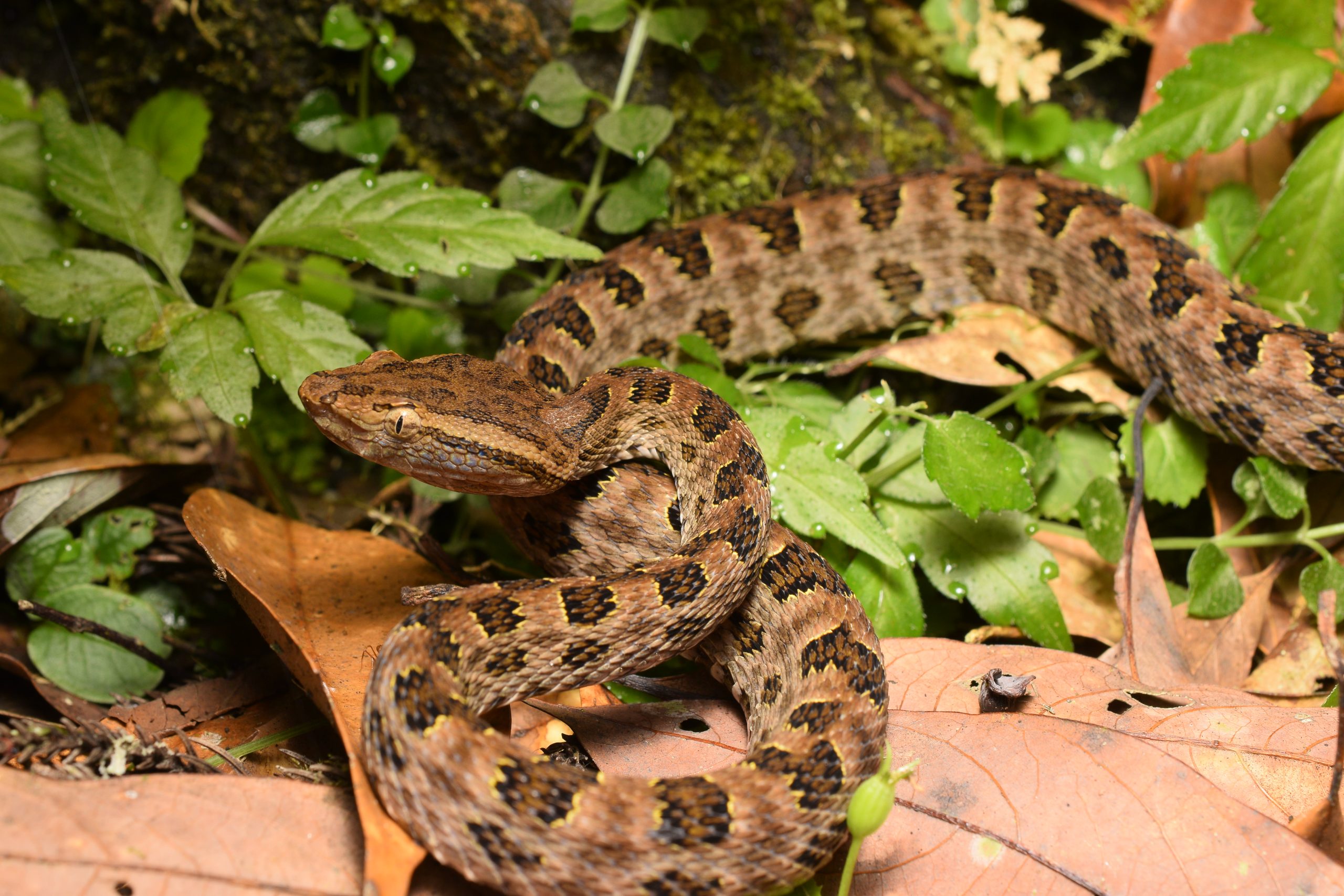
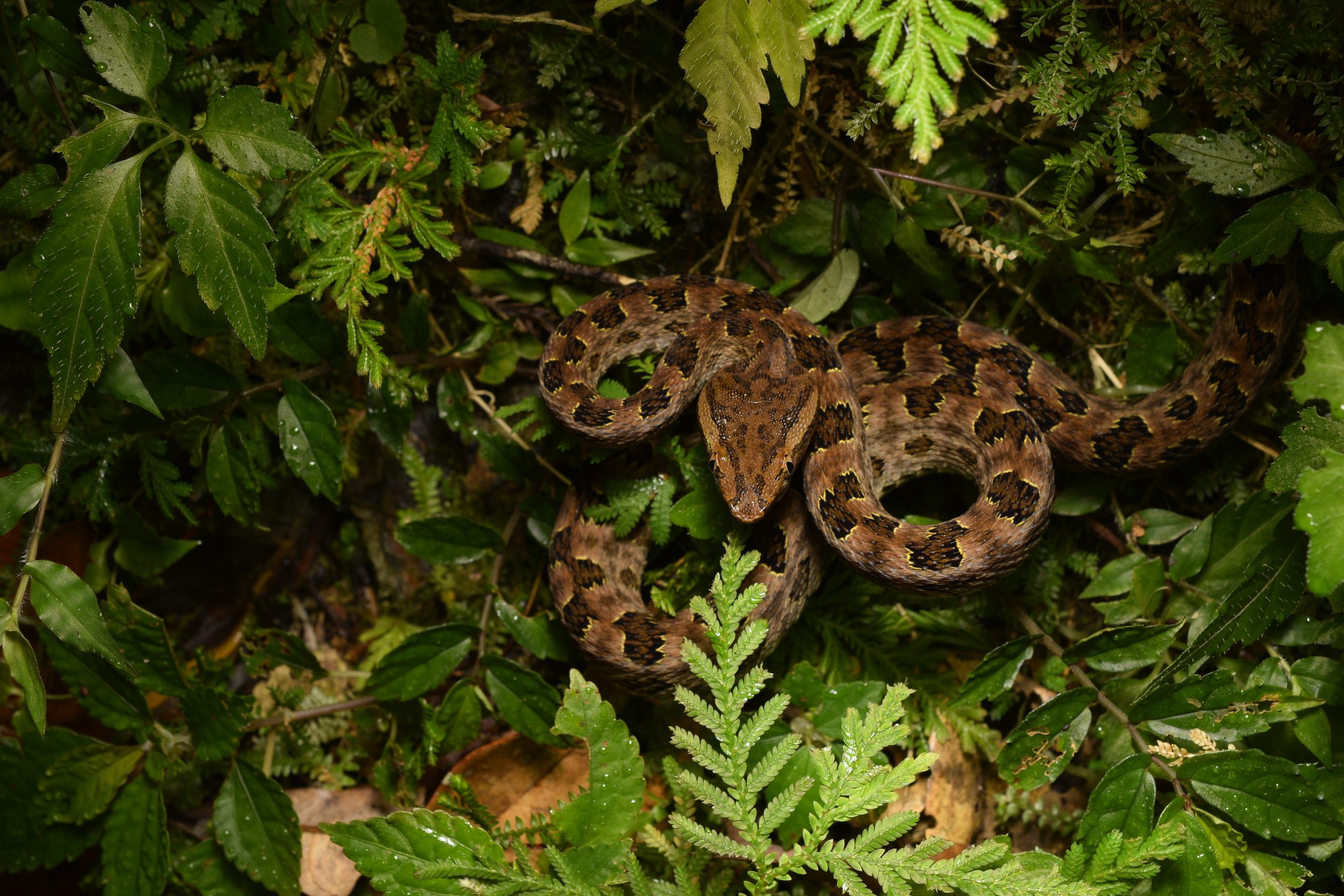
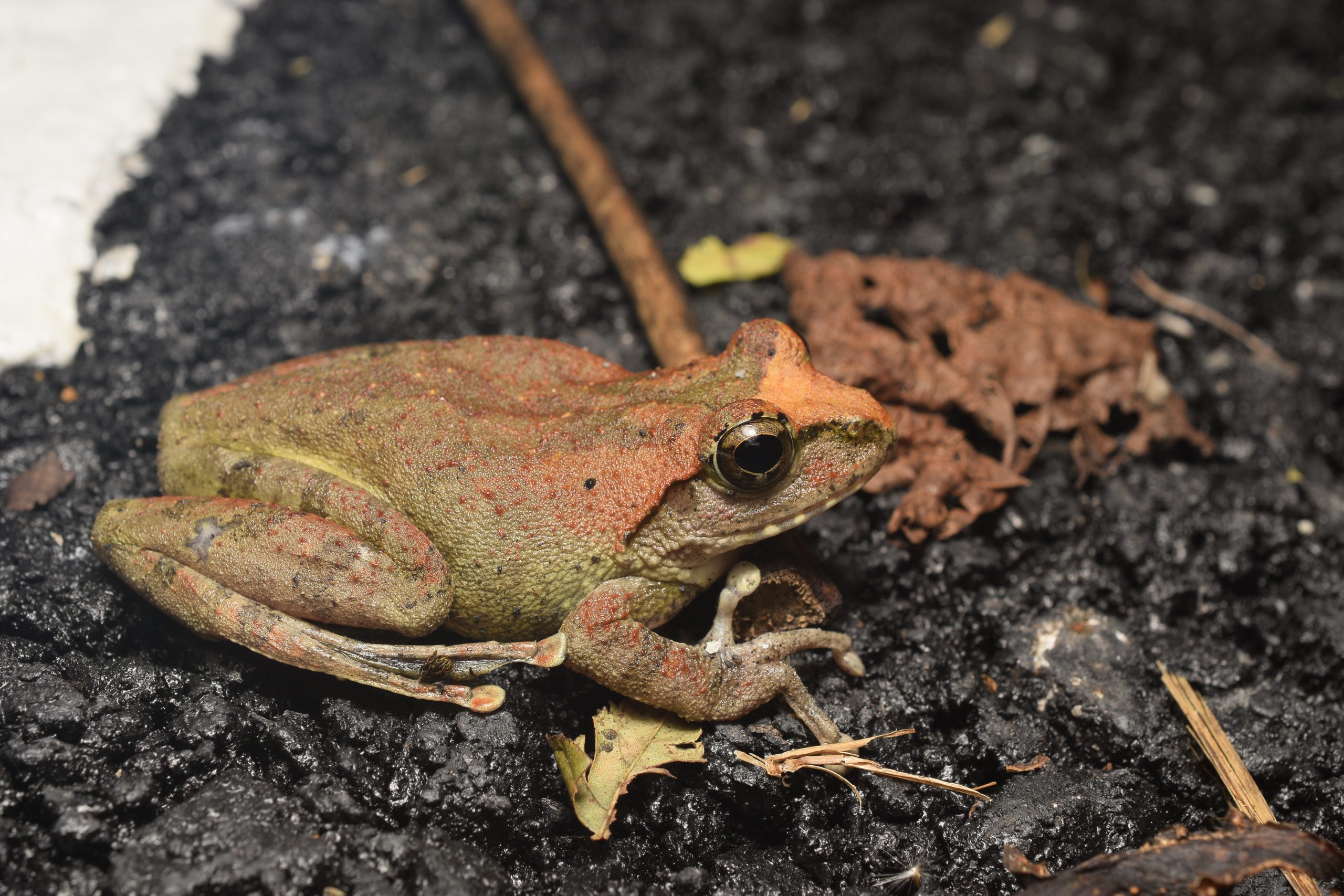
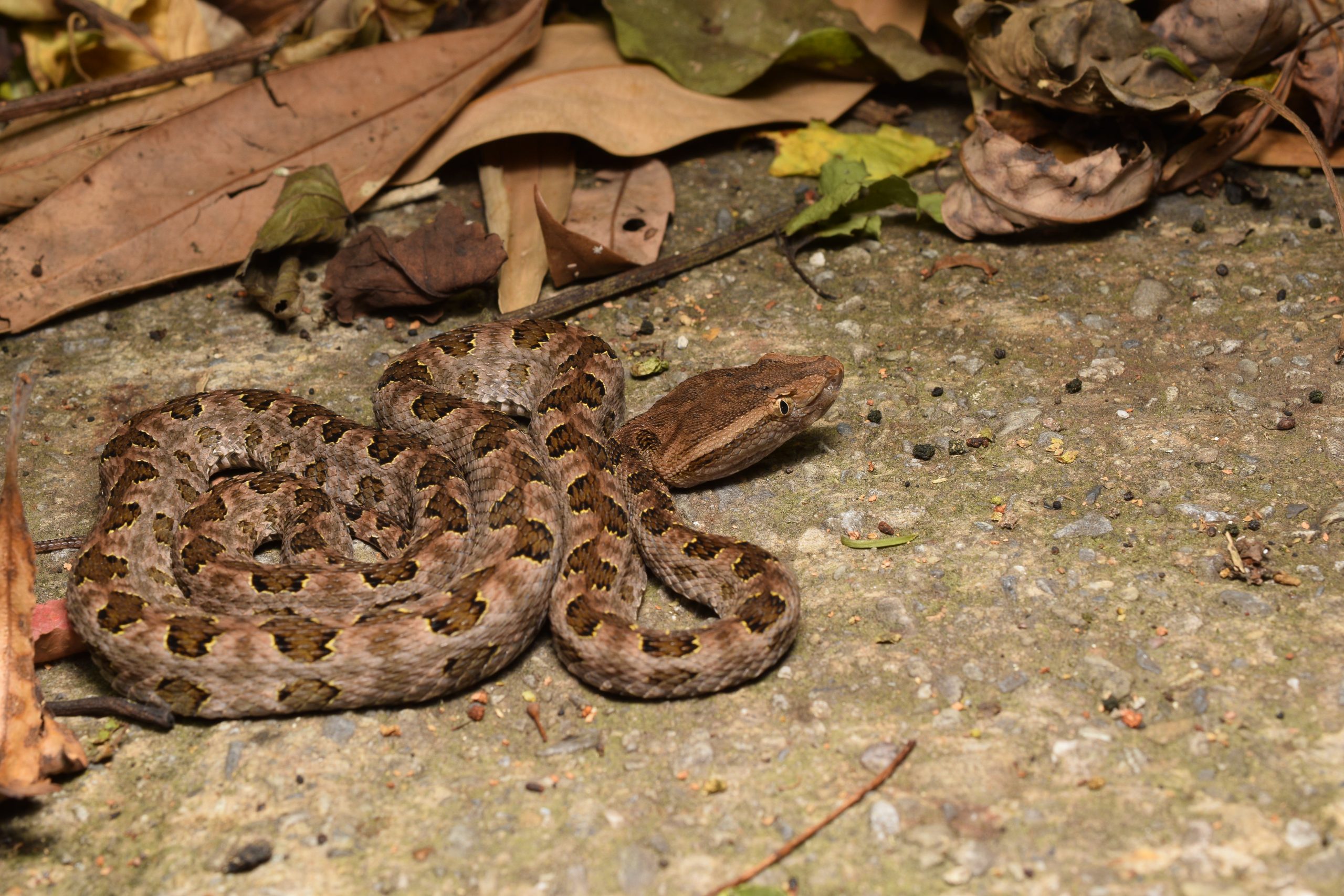
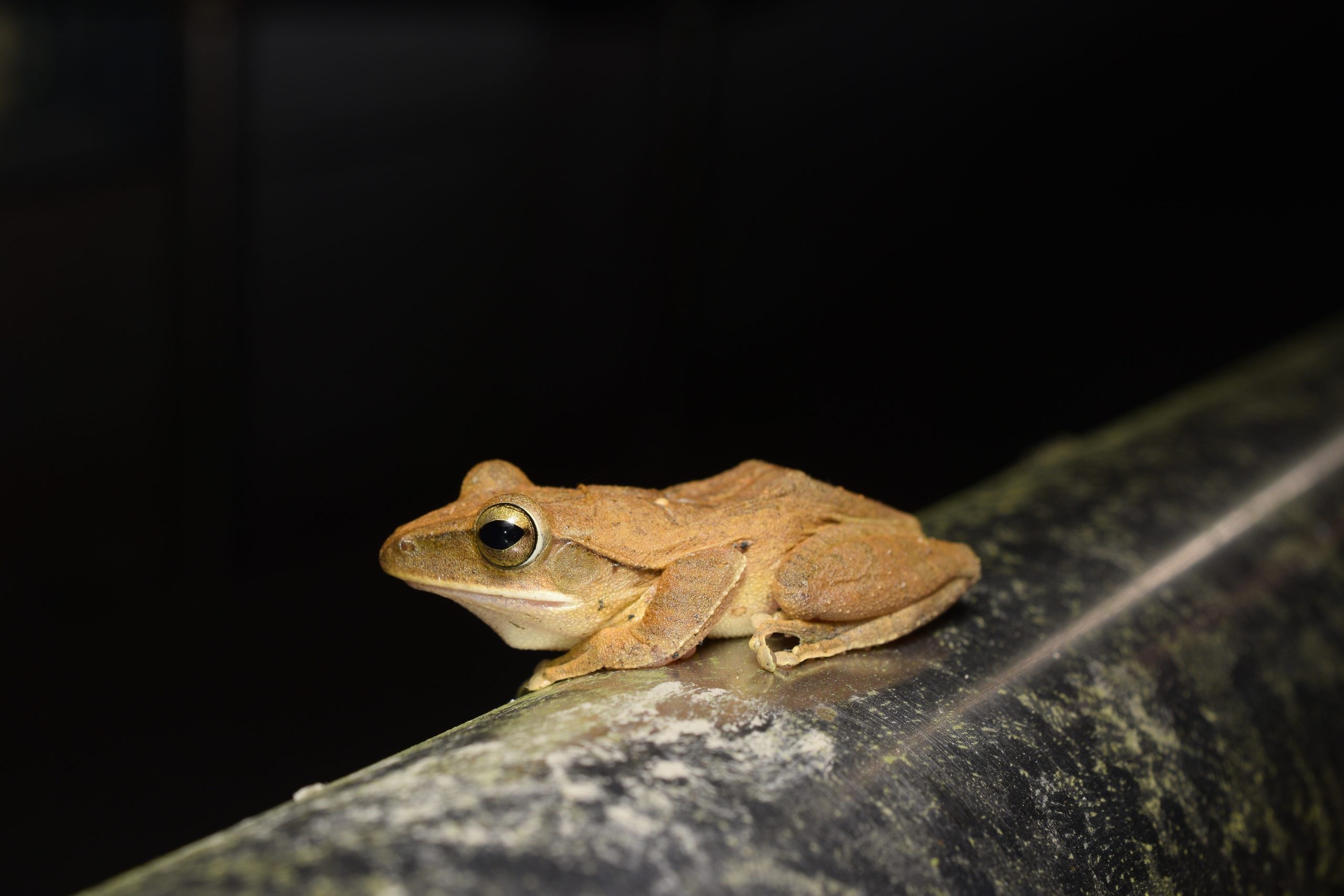
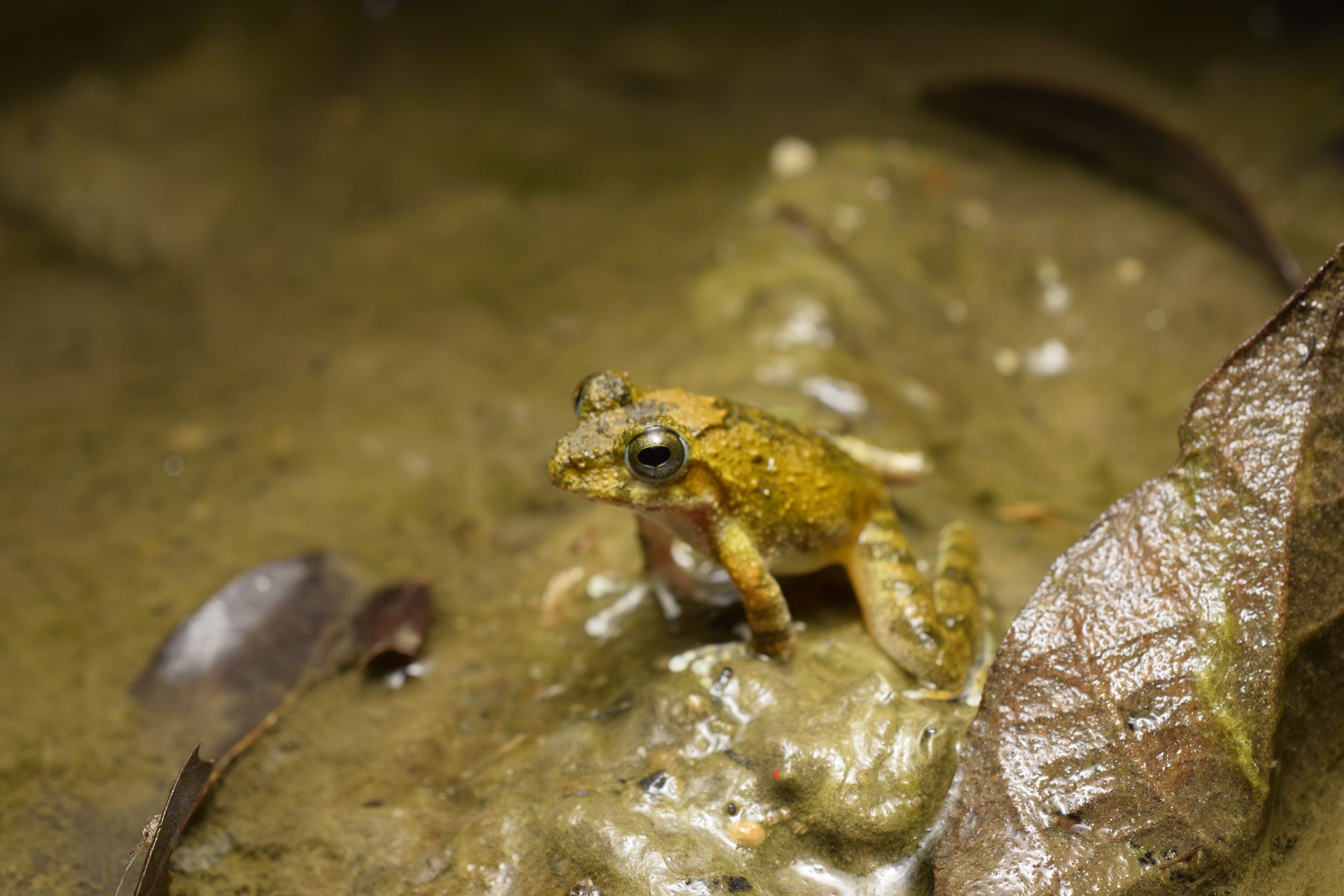
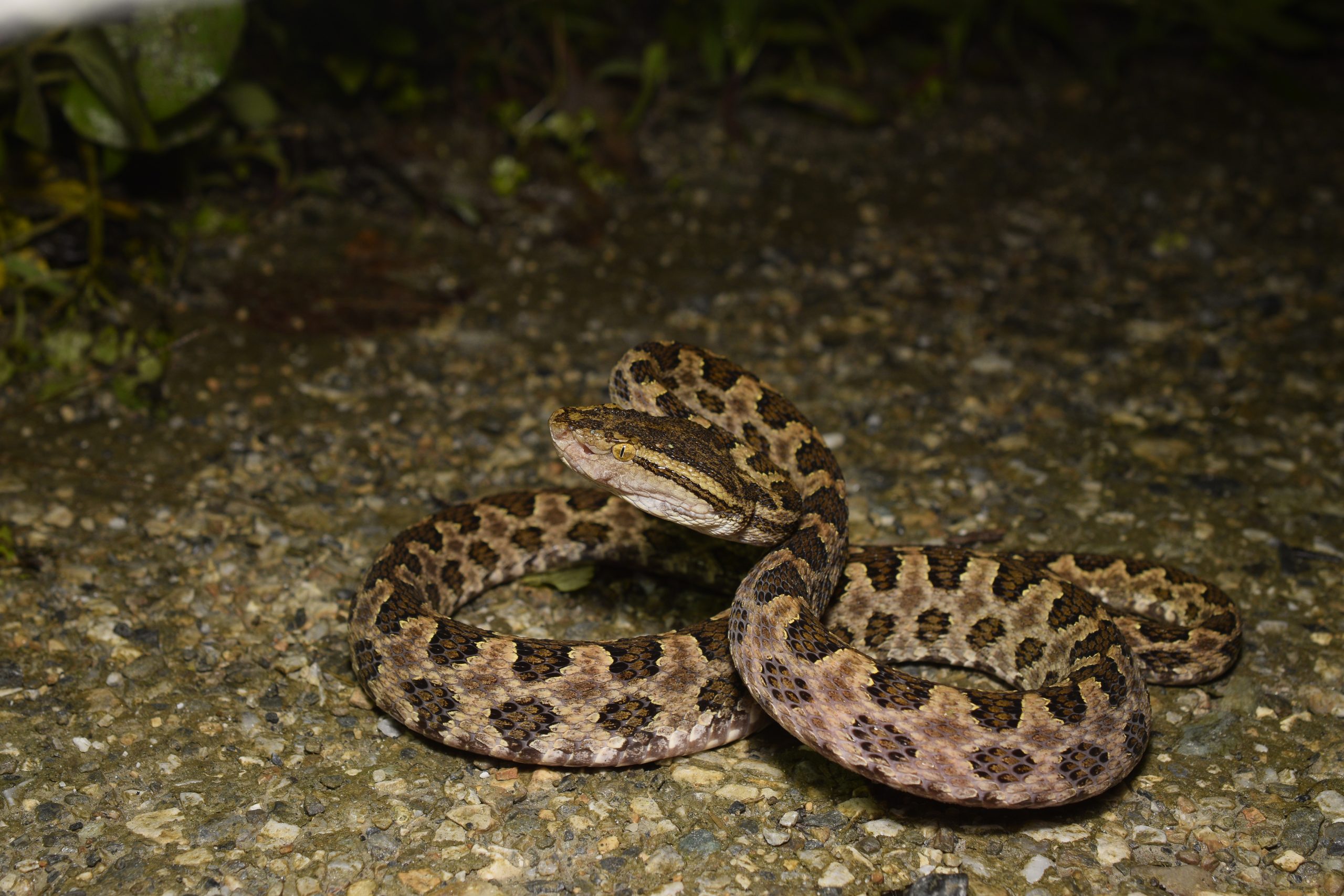
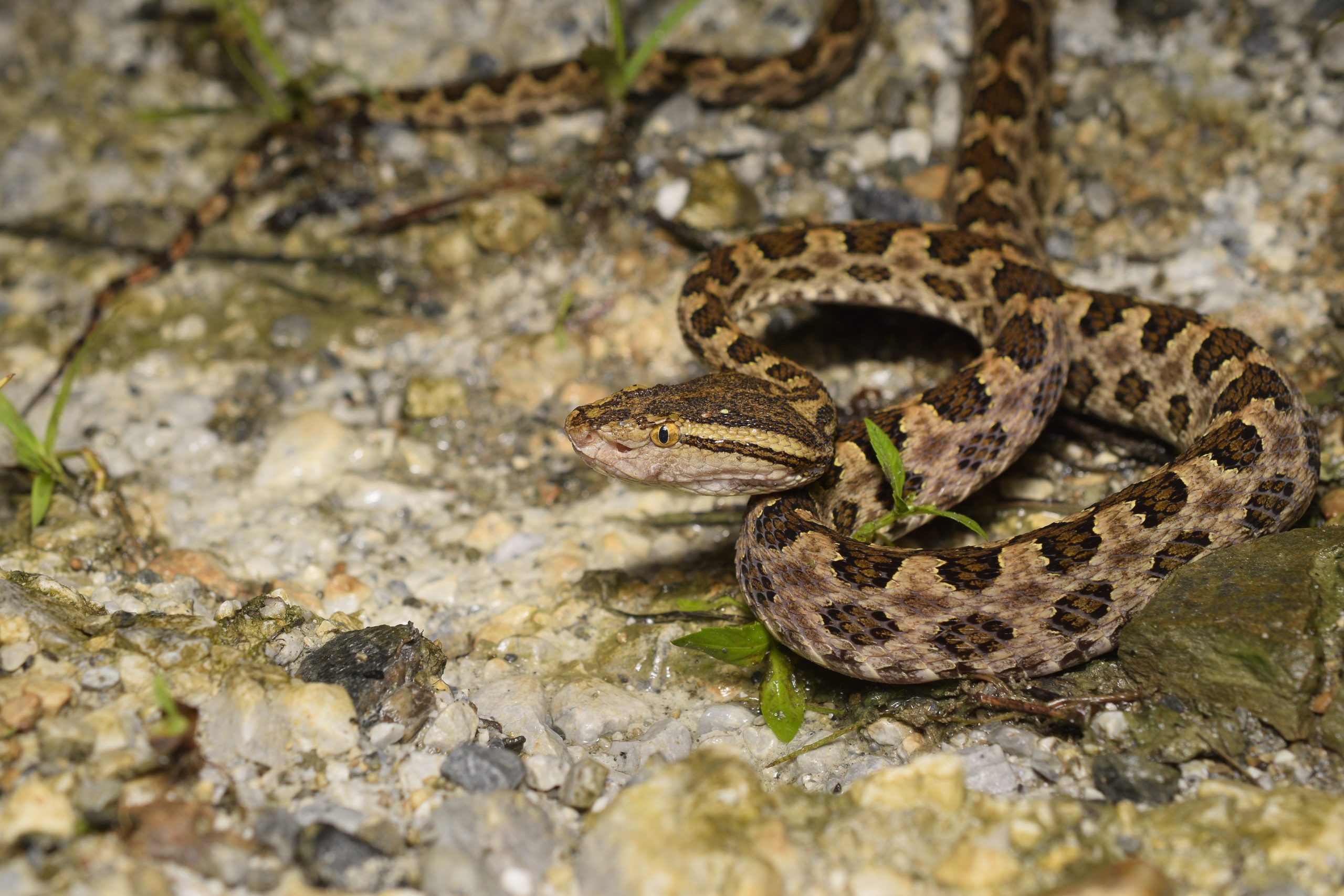
I continued my journey to my first accommodation, situated amongst some agricultural land. I took some time to shuffle my bag and belongings to have my camera, trusty snake hook, and suitable fieldwear ready for my first night of herping, and before I knew it, sundown had come around and it was time to hit the road. I headed to a spot well known amongst herpers, and I did end up crossing paths with a few (I guess that would also be my Friday night activity if I lived somewhere like Taiwan). As I started cruising the winding roads, slowly gaining elevation, I encountered the first amphibian of the trip: Nidirana adenopleura (Olive Frog, or East China Music Frog). Perhaps a plain brown frog to most, and indeed amongst the most abundant amphibians in the country, but a new record for me nonetheless. A sister species, Nidirana shyhhuangi (Yuchi Music Frog), was formally described in 2025 from two isolated wetlands near Sun Moon Lake in Nantou County (Lianhuachi and the Xiangshan area) and was immediately classified as critically endangered, with a wild adult population estimated at only 300-700 individuals (Lin et al. 2025, ZooKeys). It had previously been confused with the Ryukyu-endemic Nidirana okinavana, and molecular, morphological, and acoustic analyses were needed to confirm it as a genetically and vocally distinct, Taiwan-endemic lineage. Taipei Zoo has since begun a captive-breeding programme for the species, raising several thousand individuals since 2022. Pay attention to the small brown frogs – they might disappear before we even get a chance to know them. After crossing paths with a few herpers, I decided to park up and walk along the road a little bit so as not to be stuck in a herping convoy. This ended up being one of the most productive ways of herping – intermittent driving and walking along the roadside. Not long after walking along the side of the road, I found the first snake, a juvenile Lycodon rufozonatus (Red-banded Wolf Snake). It proved to be one of the most common snakes of the trip, seeing at least one almost every night; however, when it’s the first snake of the trip, of course you are excited. I later spotted a decent-sized adult rooting around a rock complex, which was nice, to see the comparison between the juveniles and adults. I continued my walk and came across a number of amphibians, including the omnipresent Odorana swinhoei (Swinhoe’s Frog), an impressively sized Bufo bankorensis (Taiwan Toad), and the spectacularly green Zhangixalus moltrechti (Moltrecht’s Treefrog). Wary of being burned out after a long flight, I turned around after a couple of hours out on the road and headed back to the car. On the walk back I encountered the second Lycodon species (also one of the more common), L. ruhstrati (Ruhstrat’s Wolf Snake). I took a few photos and observed an interesting defensive behaviour of tail-wagging while “S-ed” up. I am quite familiar with tail vibrations analogous to that of Crotalus (rattlesnakes), but this was almost like a happy dog wagging its tail! Happy to have recorded another species, I started the drive back, but the night had not ended yet. On the cruise home, just around a blind corner, I saw a snake crossing the road and slammed on the brakes, mere inches from it. I got out to have a look and saw a fantastic example of one of our main viper targets, Protobothrops mucrosquamatus (Brown Spotted Pitviper, also known as the Taiwan Habu). I quickly moved the car off the blind corner (even though the road was not busy at this time) and returned to the snake, which was not going anywhere. I moved the snake off the road and spent a few minutes admiring it and taking some photos. I am not sure of the general consensus on the aesthetic value of this species – I have met those who love “brown vipers”, but have conversely noticed them get passed over without much notice. They are a fairly frequently encountered species in Taiwan. Nevertheless, I was enamoured by this species: the ornate, yellow-bordered brown blotches, the diamond-shaped head, the delicate facial markings. Its resemblance to New World Bothrops (lanceheads) is uncanny, reflected in their generic name and evolutionary history as an early branch within Crotalinae. I left the snake in peace, conscious of not disturbing it for too long (and that I would no doubt see more), and went to bed a happy man.
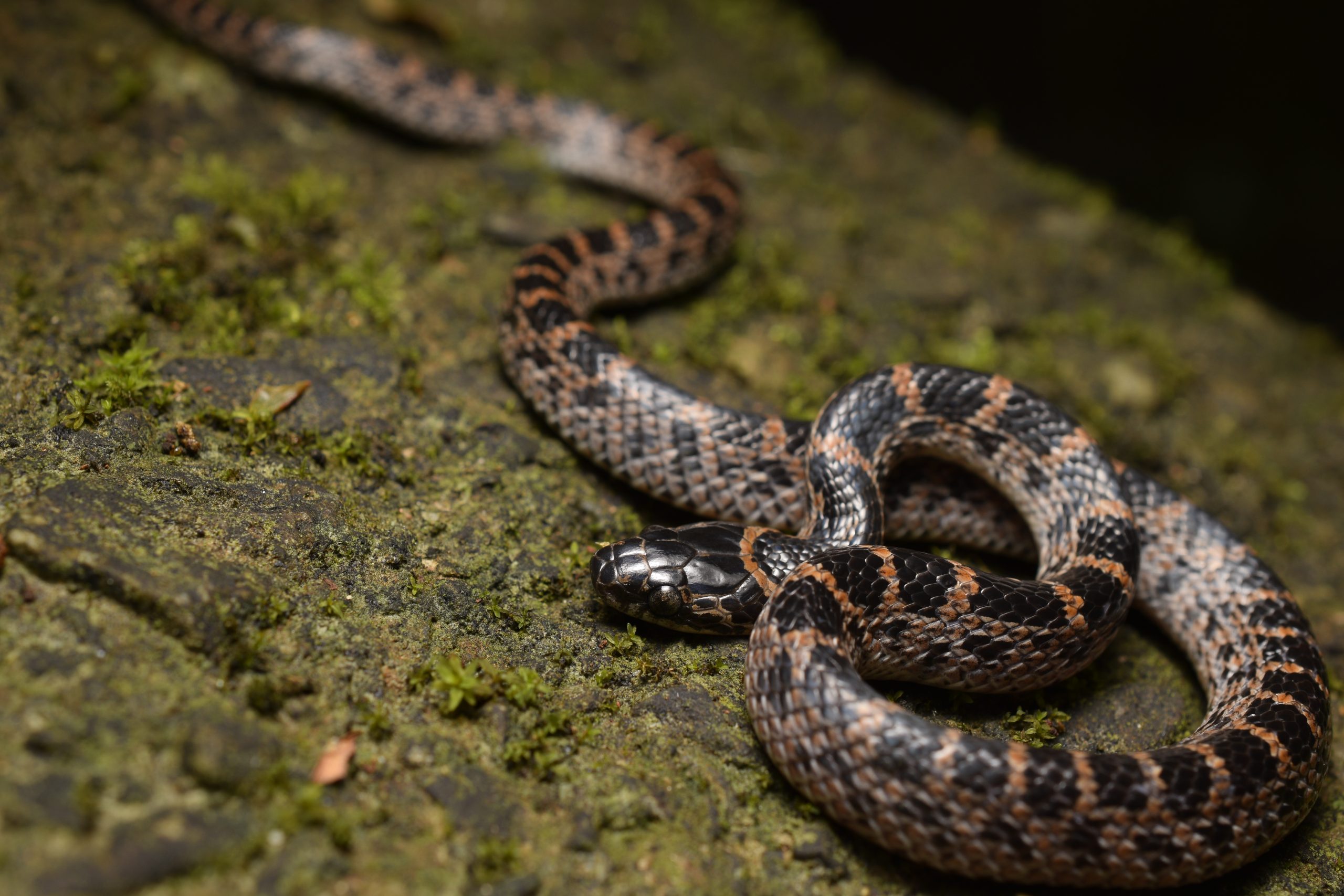
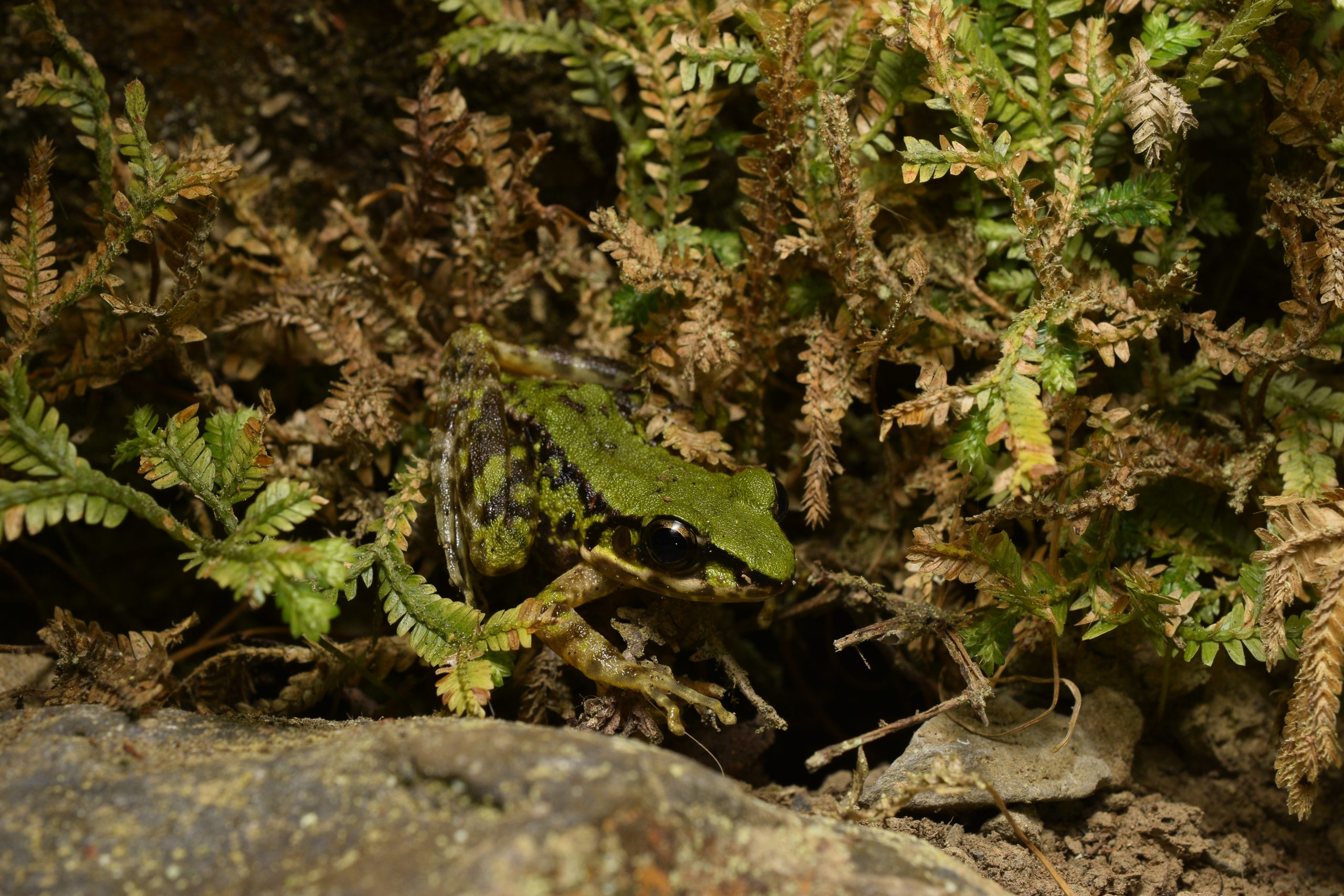
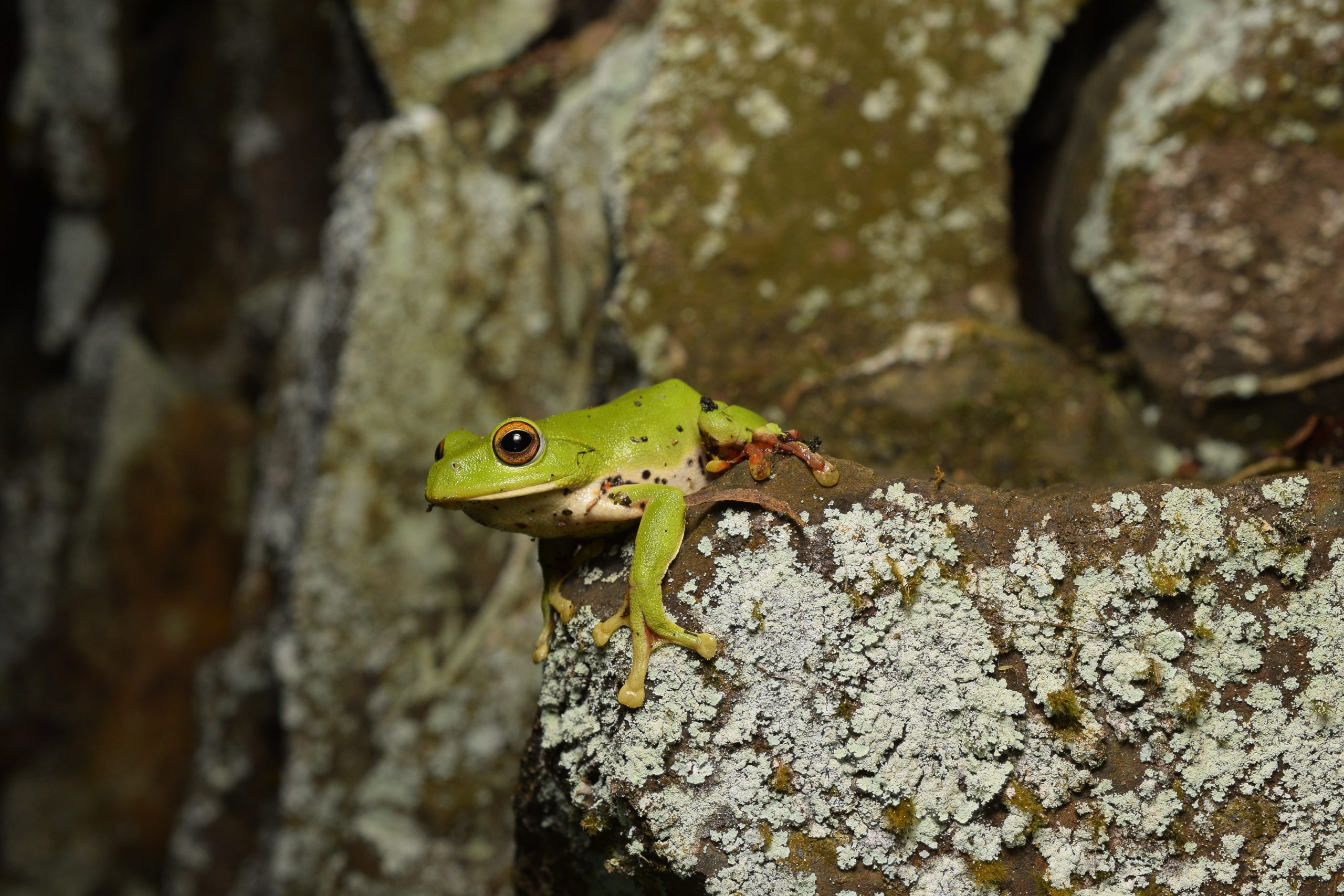
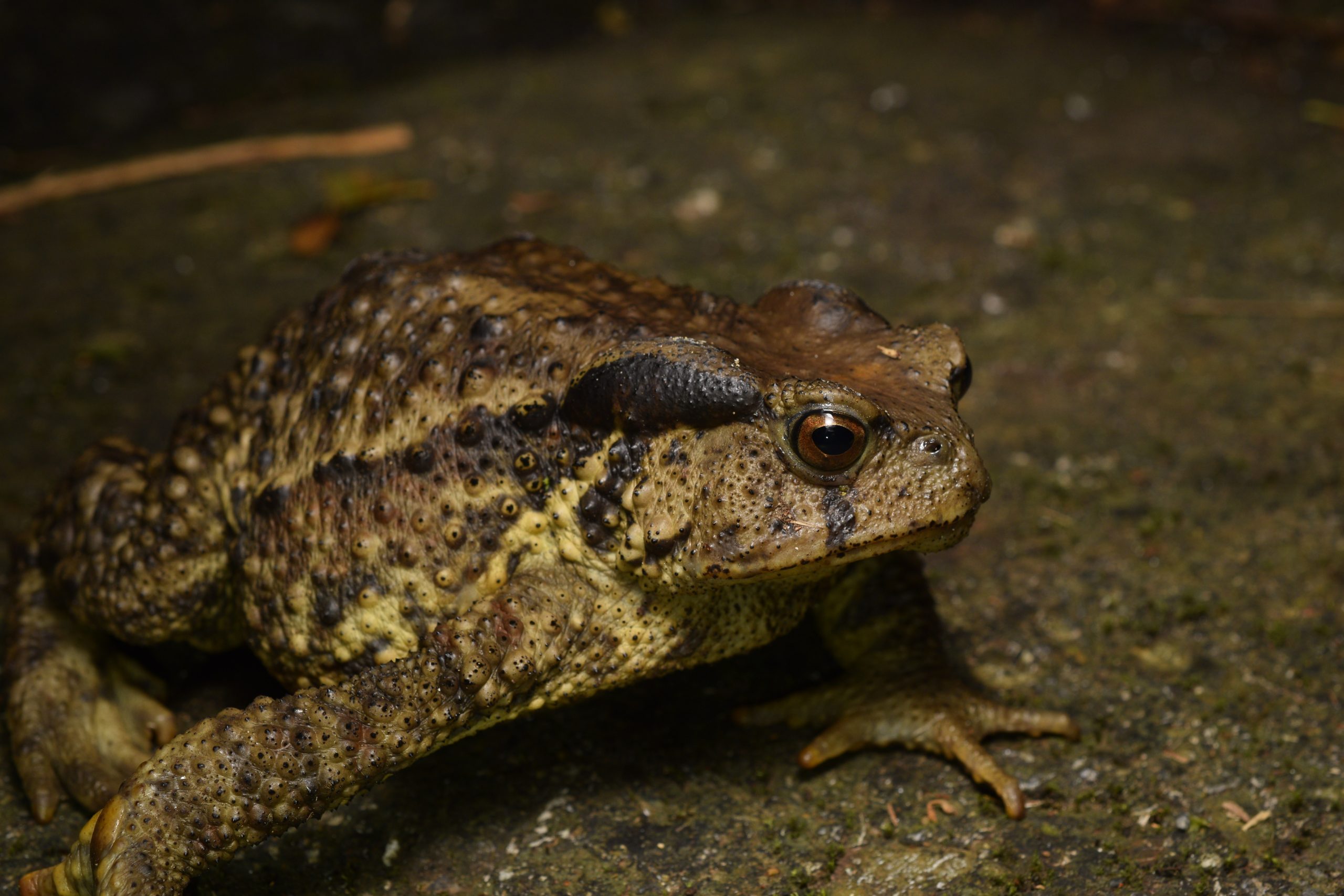
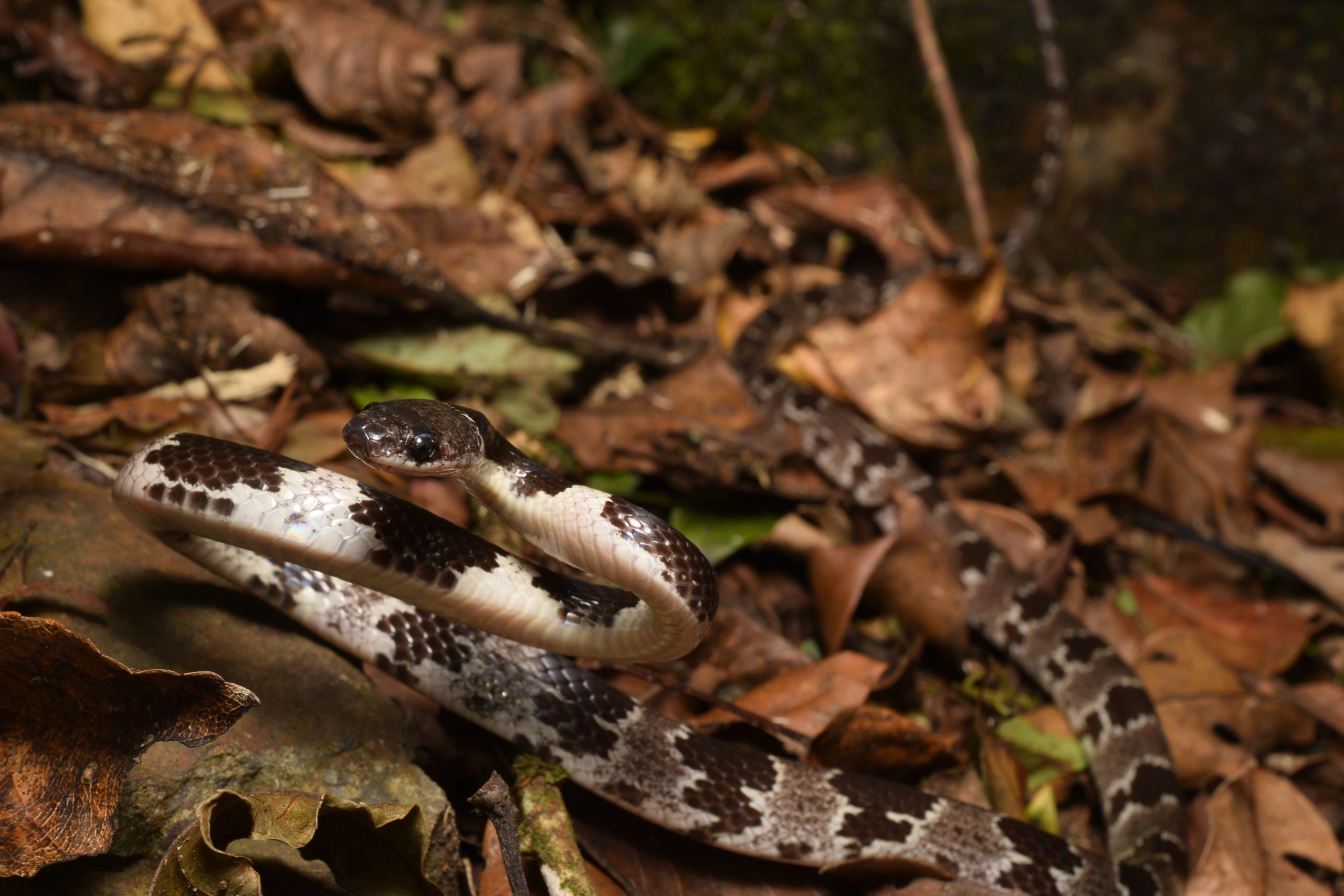
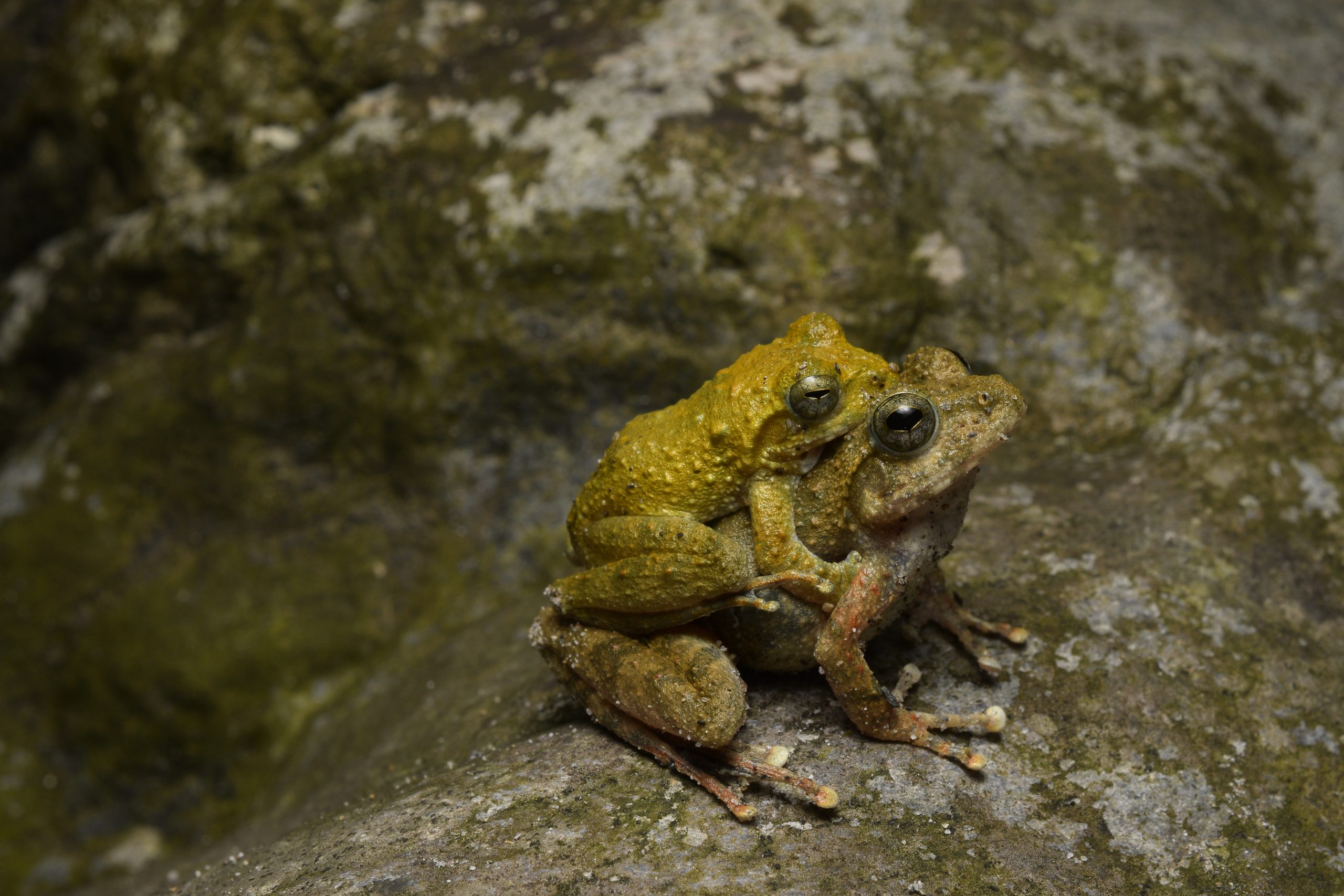
The next day I wanted to check out a different spot rather than the “popular spot”, so I drove to a nearby trail to check out during the day, and would later return after dark. On the way, I came across two large DOR (dead-on-road) Ptyas mucosa (Oriental Ratsnake) at the verge of fairly busy roads surrounded by small settlements and agriculture, both fairly close to each other. It was sad to see such large, impressive snakes meet an untimely demise, a reminder of the impact anthropogenic landscapes have on our biome. Walking up the trail I found a DOR Oligodon formosanus (Taiwan Kukri Snake), actually the second one, after seeing one on the way home the prior night. I make sure to record these DOR encounters as well – they can still provide important occurrence data and may also contribute to wildlife road-mortality statistics. I enjoyed the walk through some decent habitat, spotting a number of Sphenomorphus indicus (Brown Forest Skink), all of which were too quick to capture or even photograph. I also encountered a lone Formosan Macaque (Macaca cyclopis), Taiwan’s only endemic non-human primate. I went back to the accommodation to catch up on some data entry and rest before returning to this trail after sunset. I identified a number of amphibian species before even reaching the trail, including Buergeria robusta (Taiwan Buerger’s Frog), Limnonectes fujianensis (Fujian Fanged Frog), Fejervarya limnocharis (Asian Grass Frog), Hylarana latouchii (Latouche’s Frog), and more Odorana swinhoei. Many of these were calling, and a few in amplexus, which is always nice to observe. The trail itself wasn’t particularly productive – I found another L. rufozonatus, my first Trimeresurus stejnegeri (Chinese Green Tree Viper, or Bamboo Viper), and a few Diploderma polygonatum (Taiwan Japalure). Not as much abundance as I had hoped given the nice habitat, but nice to have ticked off a few extra species. I decided to road-cruise a bit afterwards, hoping to find a few more snakes out and about. I found an unfortunate DOR Boiga kraeplini (Taiwan Cat Snake) on a fairly wide road, and by complete chance spotted an Indotyphlops braminus (Brahminy Blindsnake) navigating the rock wall when I pulled over. I. braminus is sometimes touted as the most widely distributed snake in the world due to its soil-living, parthenogenetic habits facilitating transport to various countries via the plant trade. I am careful to use the term “invasive”, as I am not sure any negative effects are well documented in its non-native ranges. In Taiwan, however, it is a native part of the ecosystem, and the only blindsnake in the country. I continued driving to slightly higher elevations, and after a few more B. robusta and B. bankorensis I encountered two Pareas atayal (Atayal Slug Snake) and one Pareas formosensis (Taiwan Slug Snake) within a short span of each other, all around 1am. What is funny is that I spoke to a friend who also encountered three Pareas around 1am in the same area. The two species, while similar, can in this instance be discriminated by their eye colour, with the latter being more red and the former more orange. It was late and I had an early start tomorrow, so I called it a night.
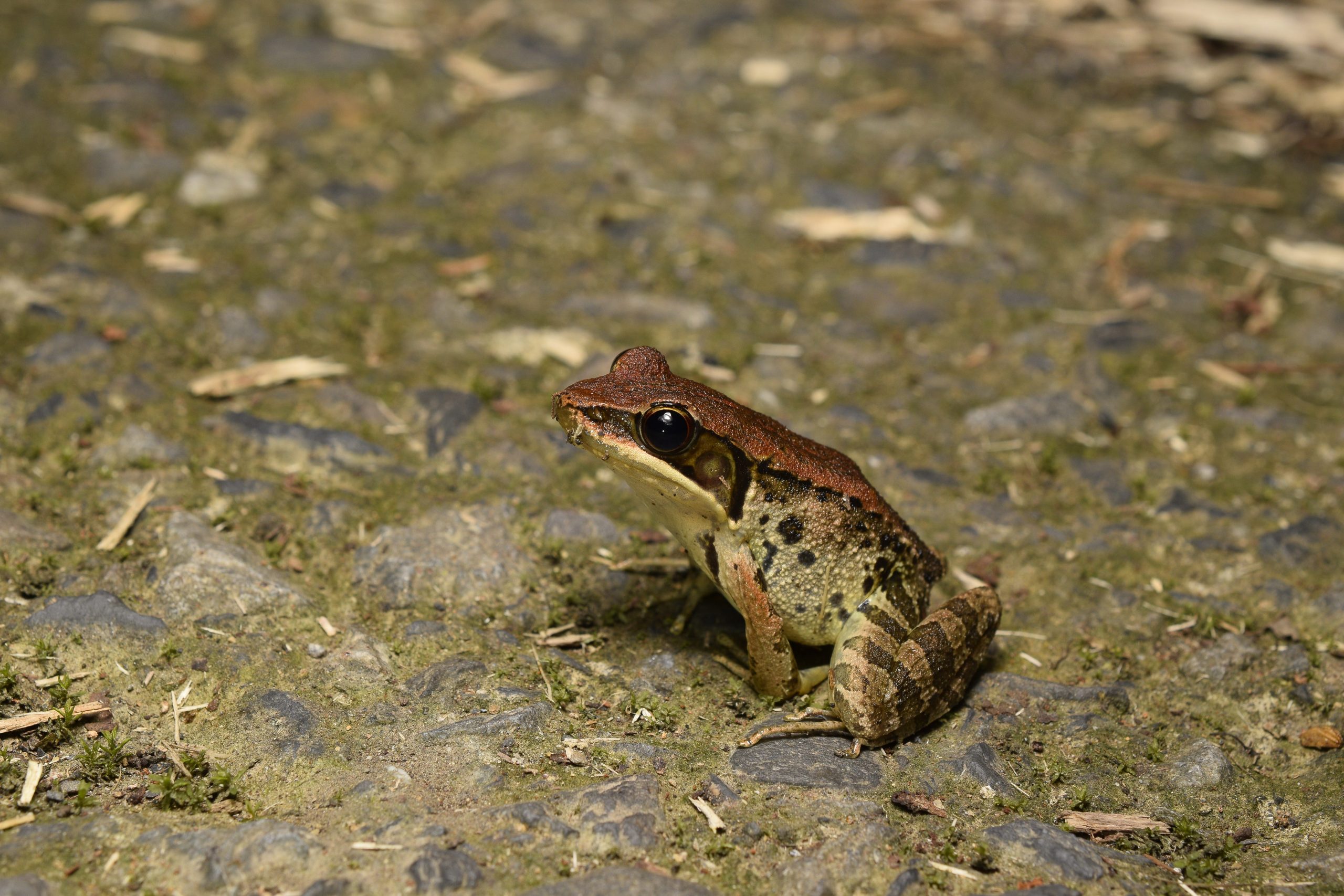
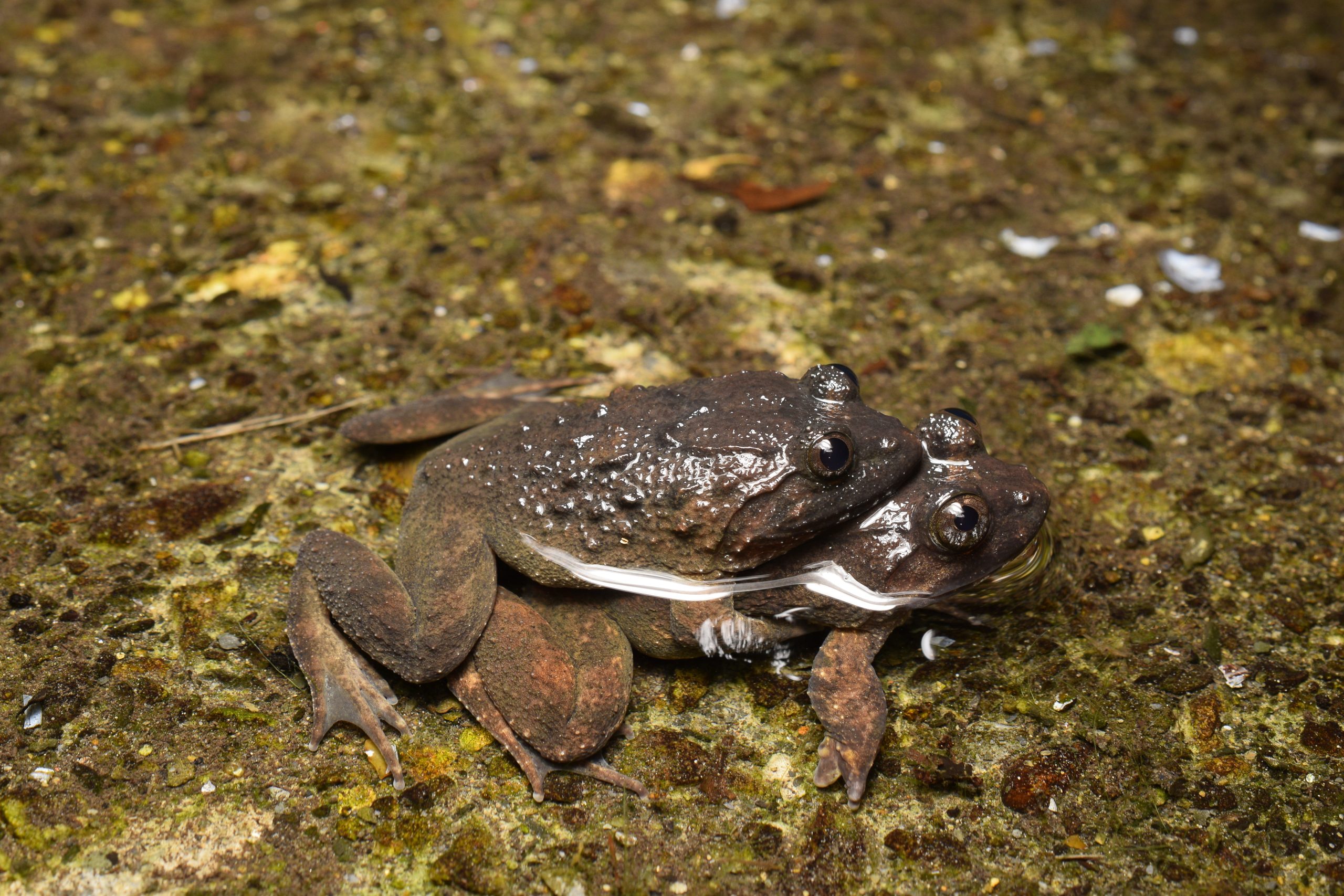
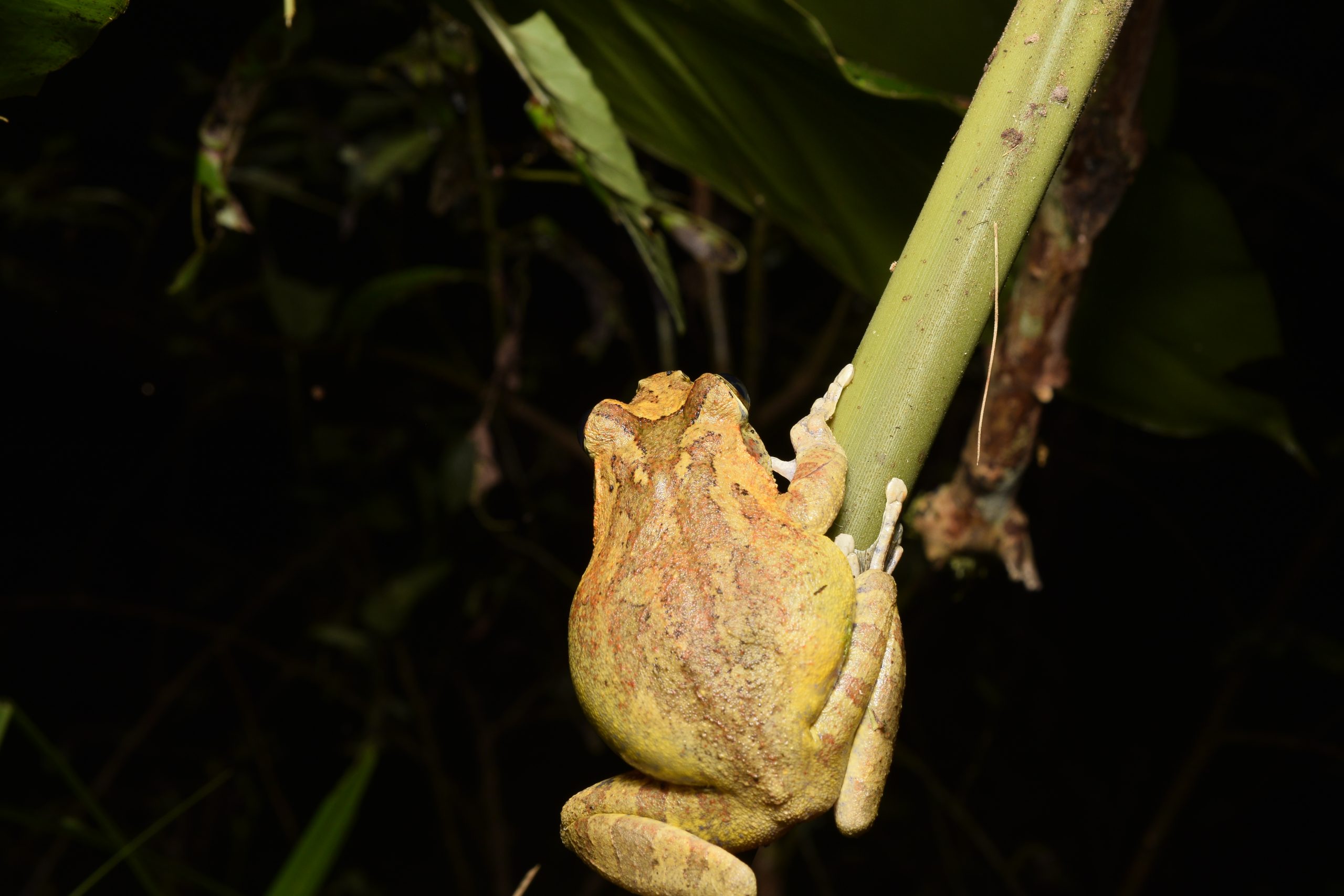
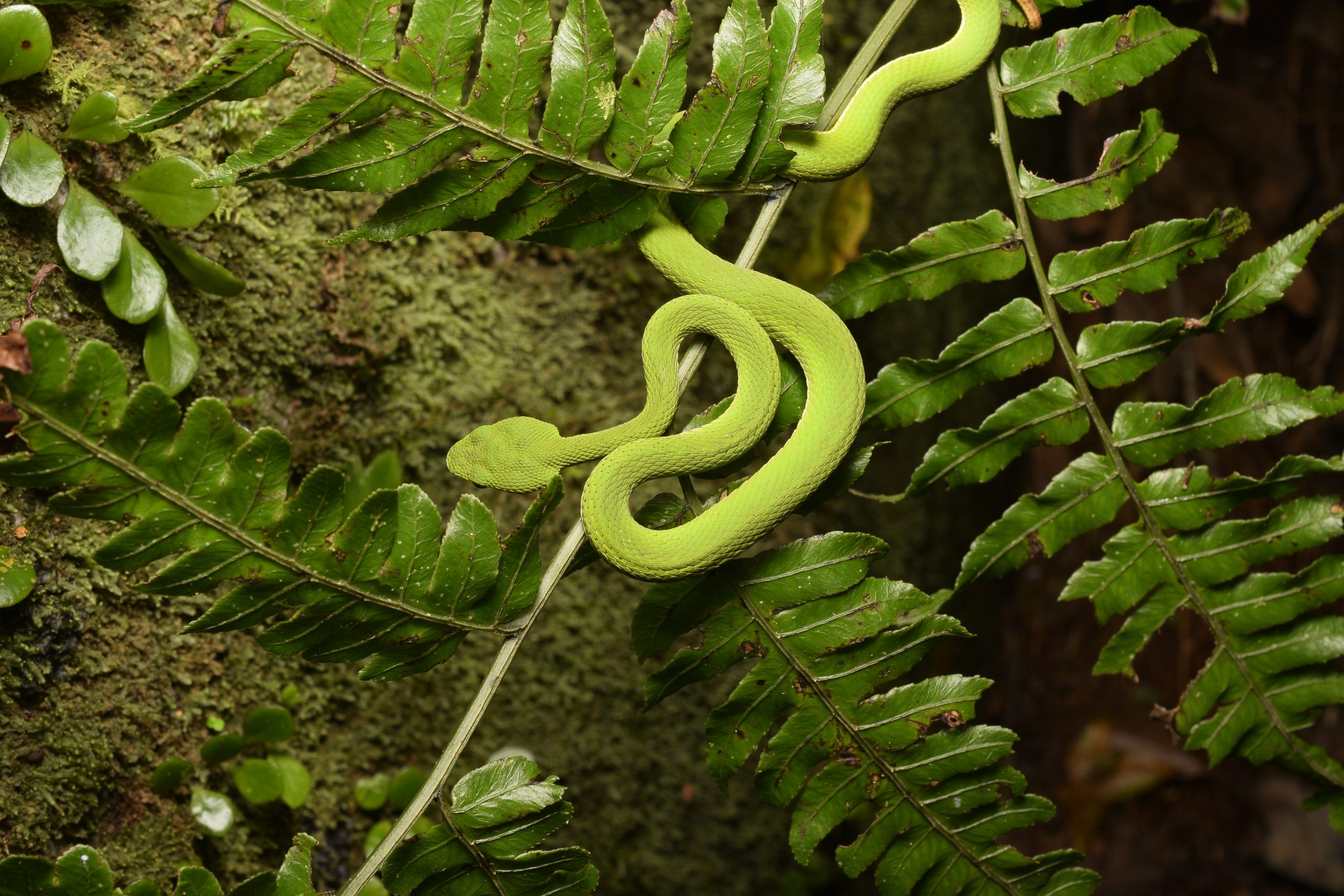
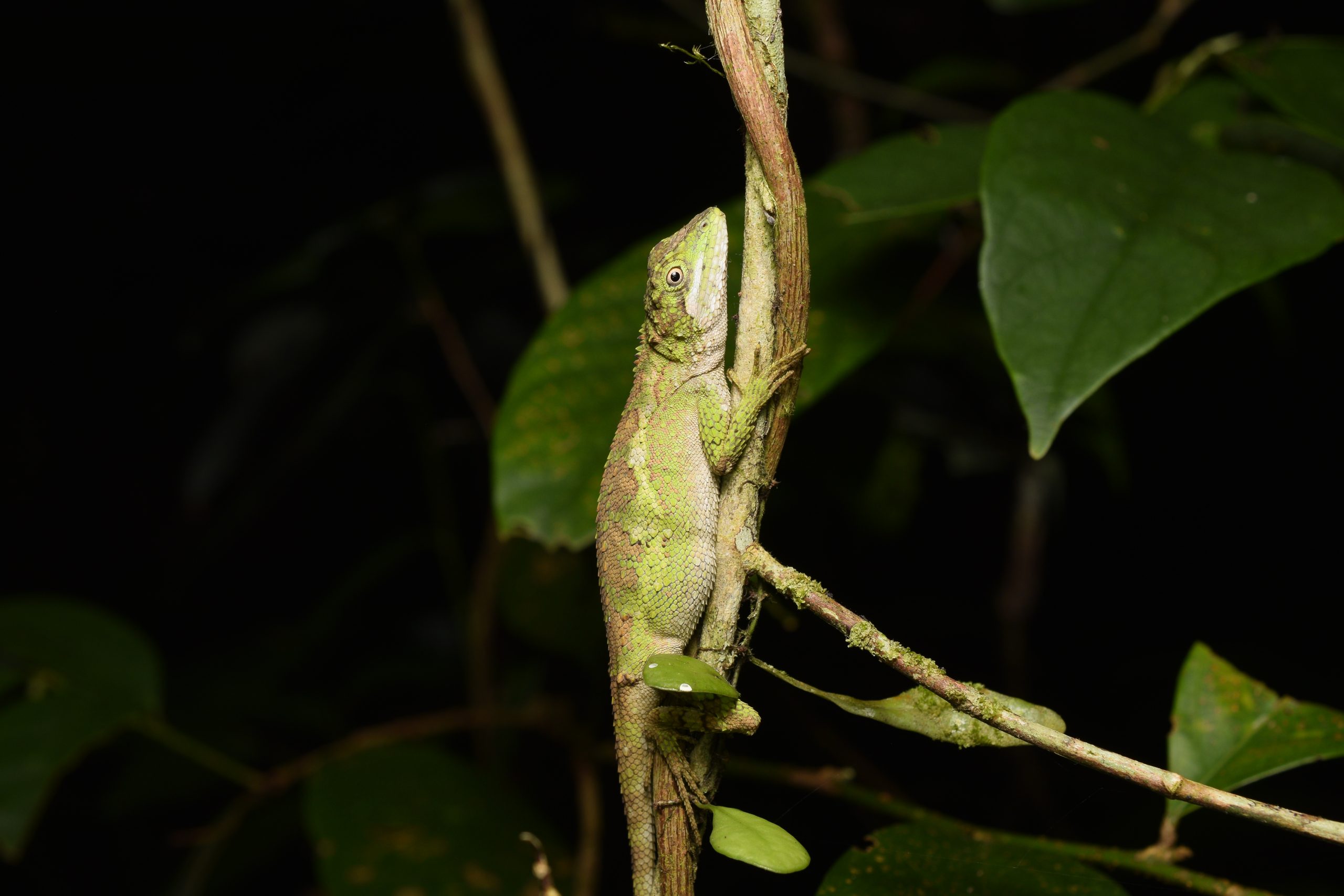
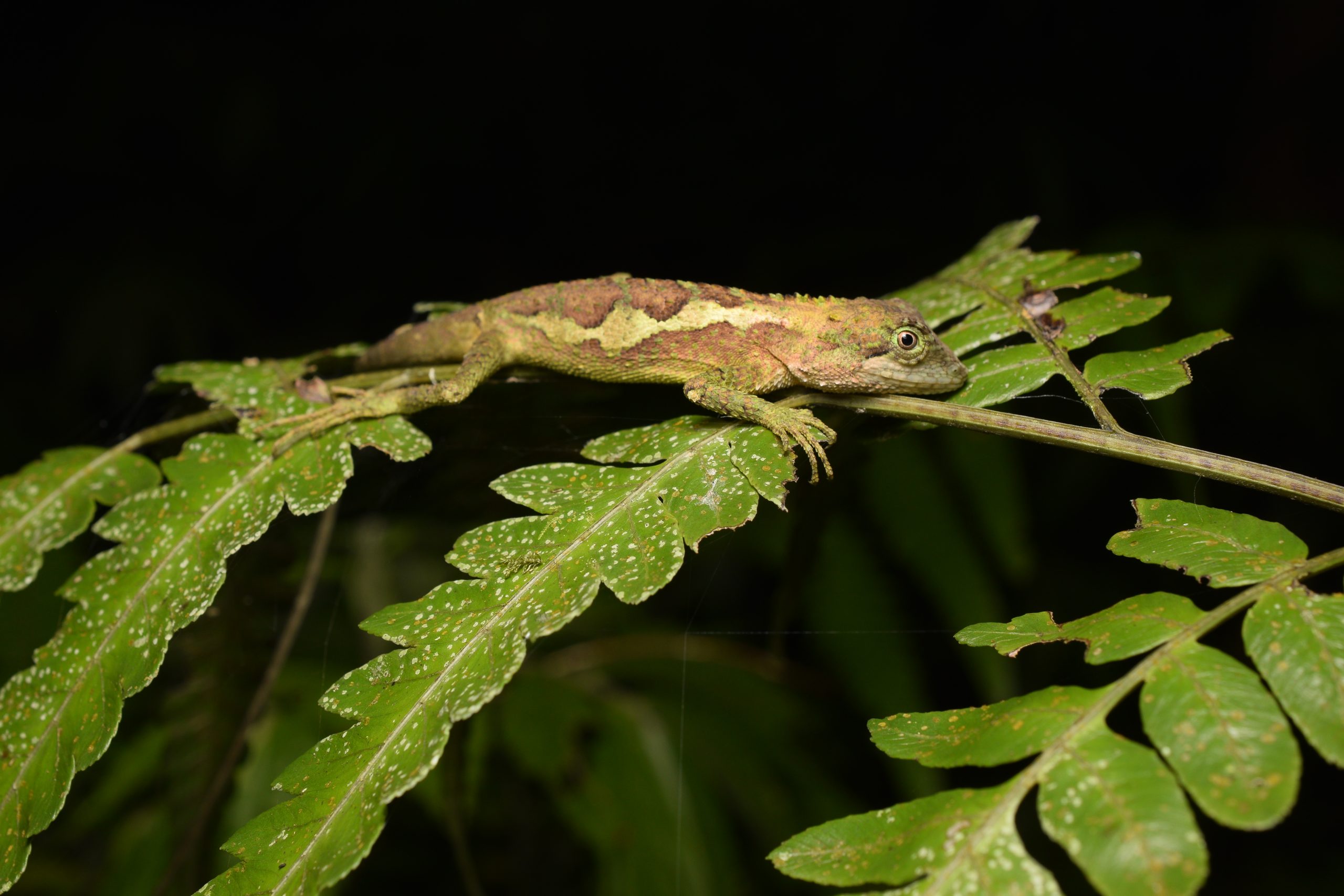
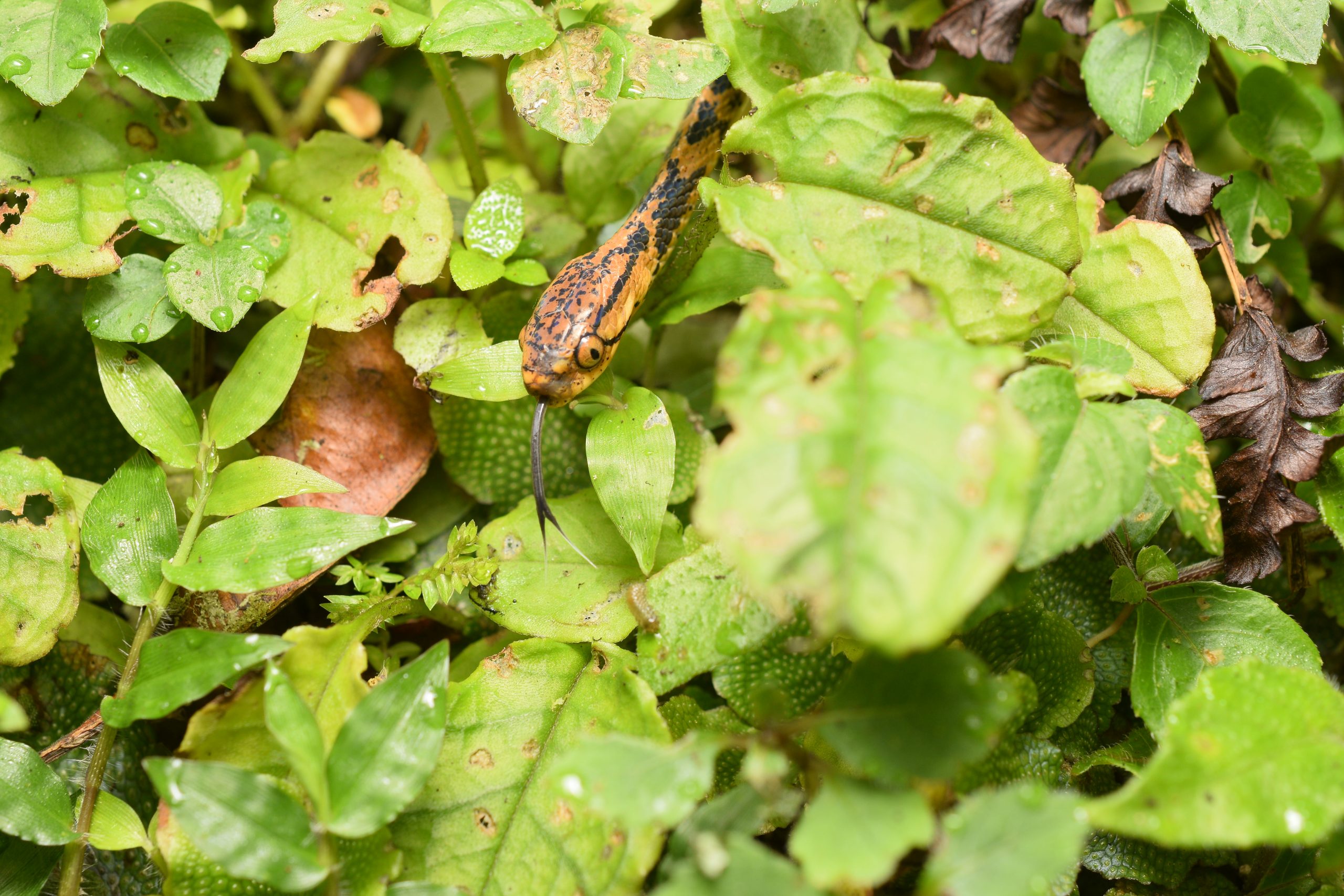
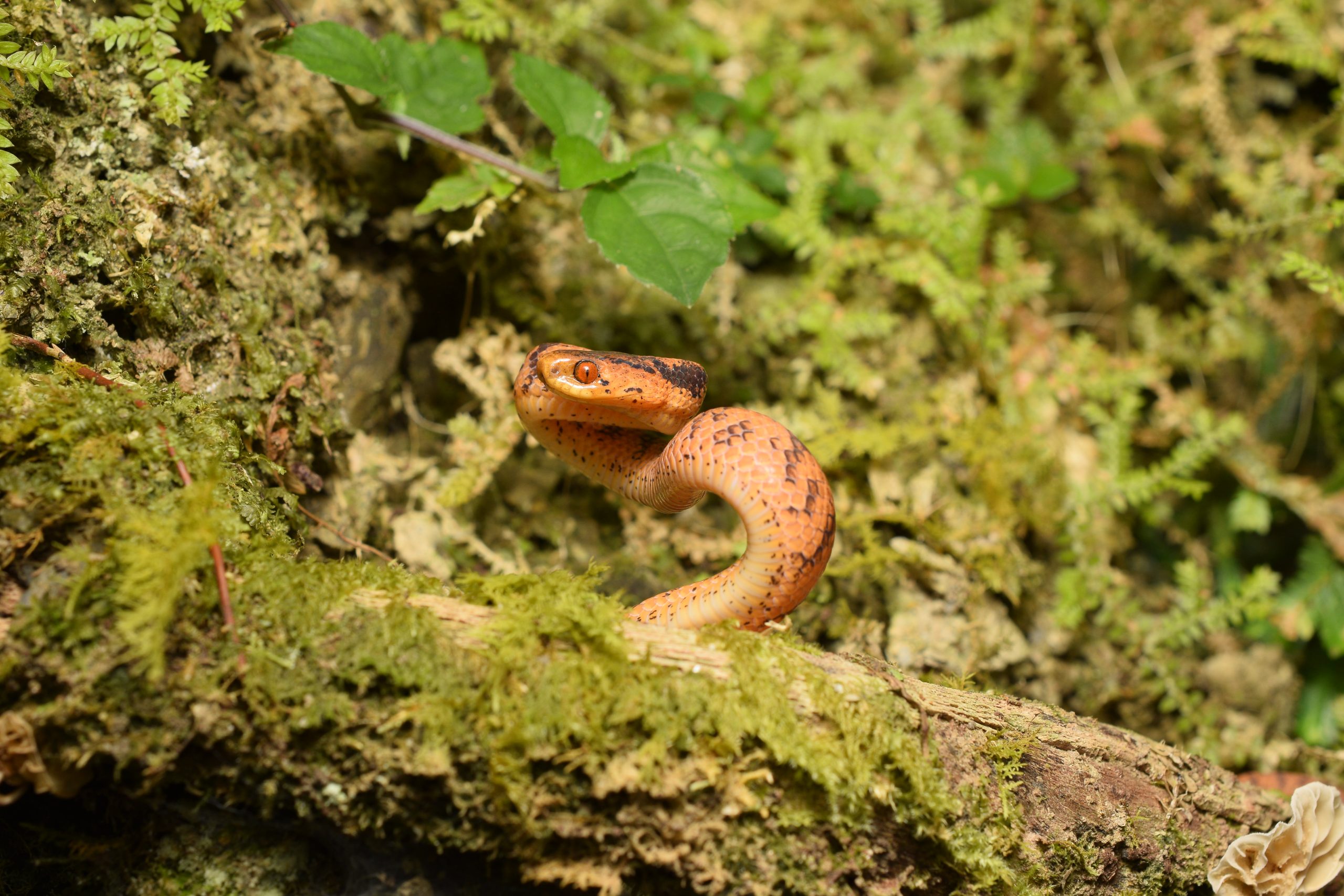
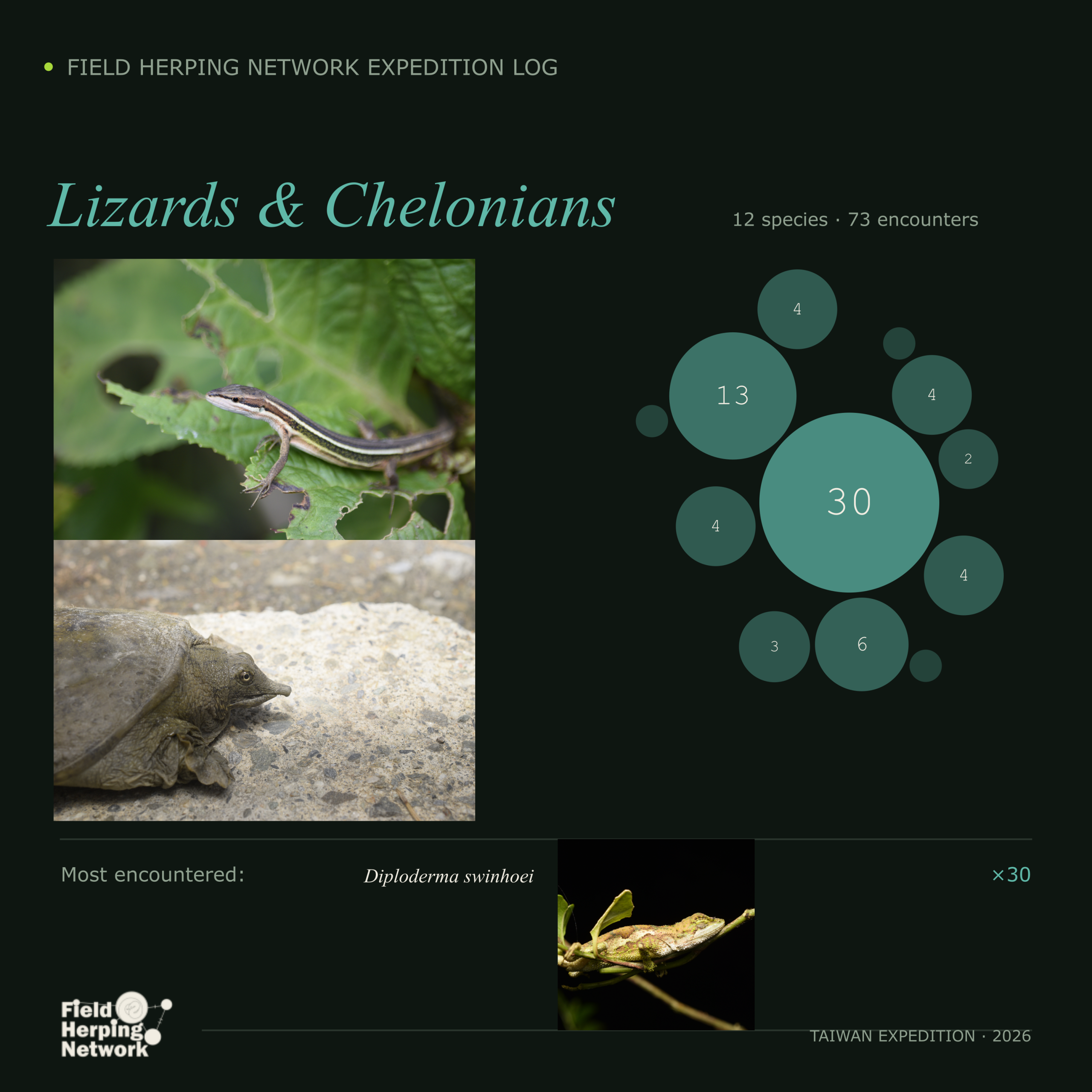
The next morning I headed to Fushan Botanical Gardens to meet with my friend and collaborator, Dr Chun-Kai Yang. He showed me the area, and we spotted a few D. polygonatum, a Ptyas dhumnades (Big-eyed Ratsnake, which made up for the roadkill one I saw on the way in), and some resident Mauremys sinensis (Chinese Stripe-necked Turtle) in the main pond. We saw plenty of Reeves’s Muntjac (Muntiacus reevesi), somewhat habituated to human visitors, and a large troop of Formosan Macaques, including some young.
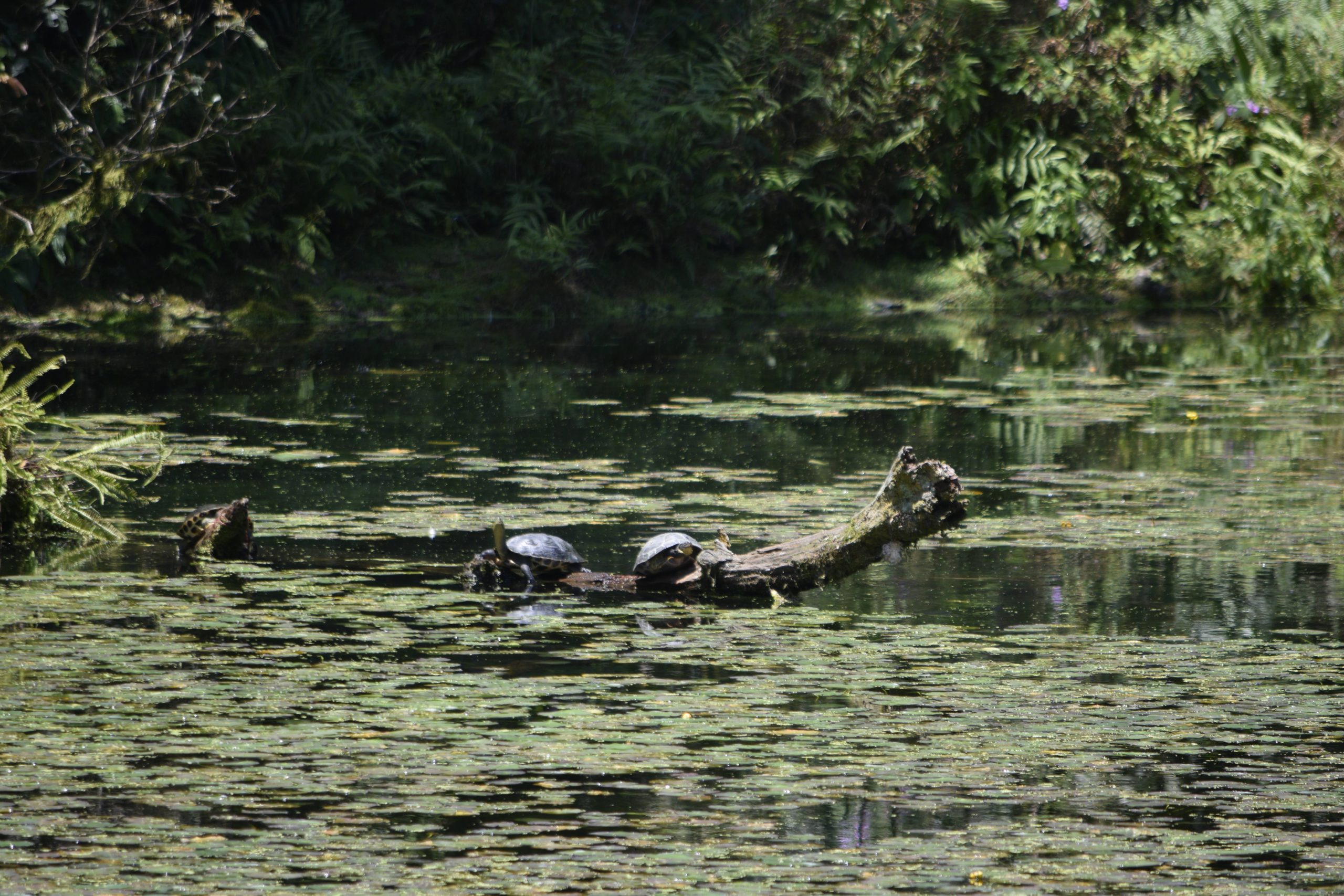
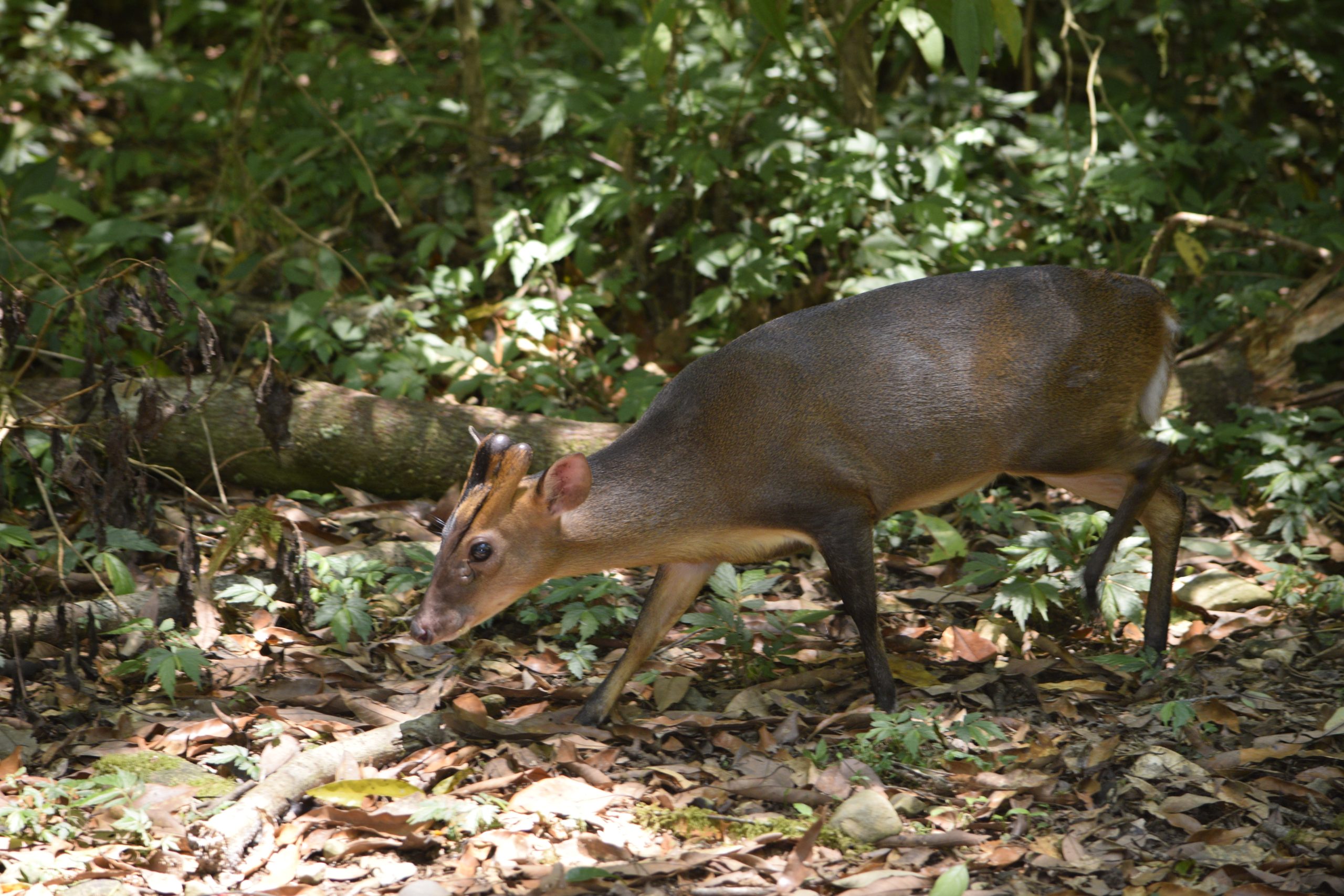
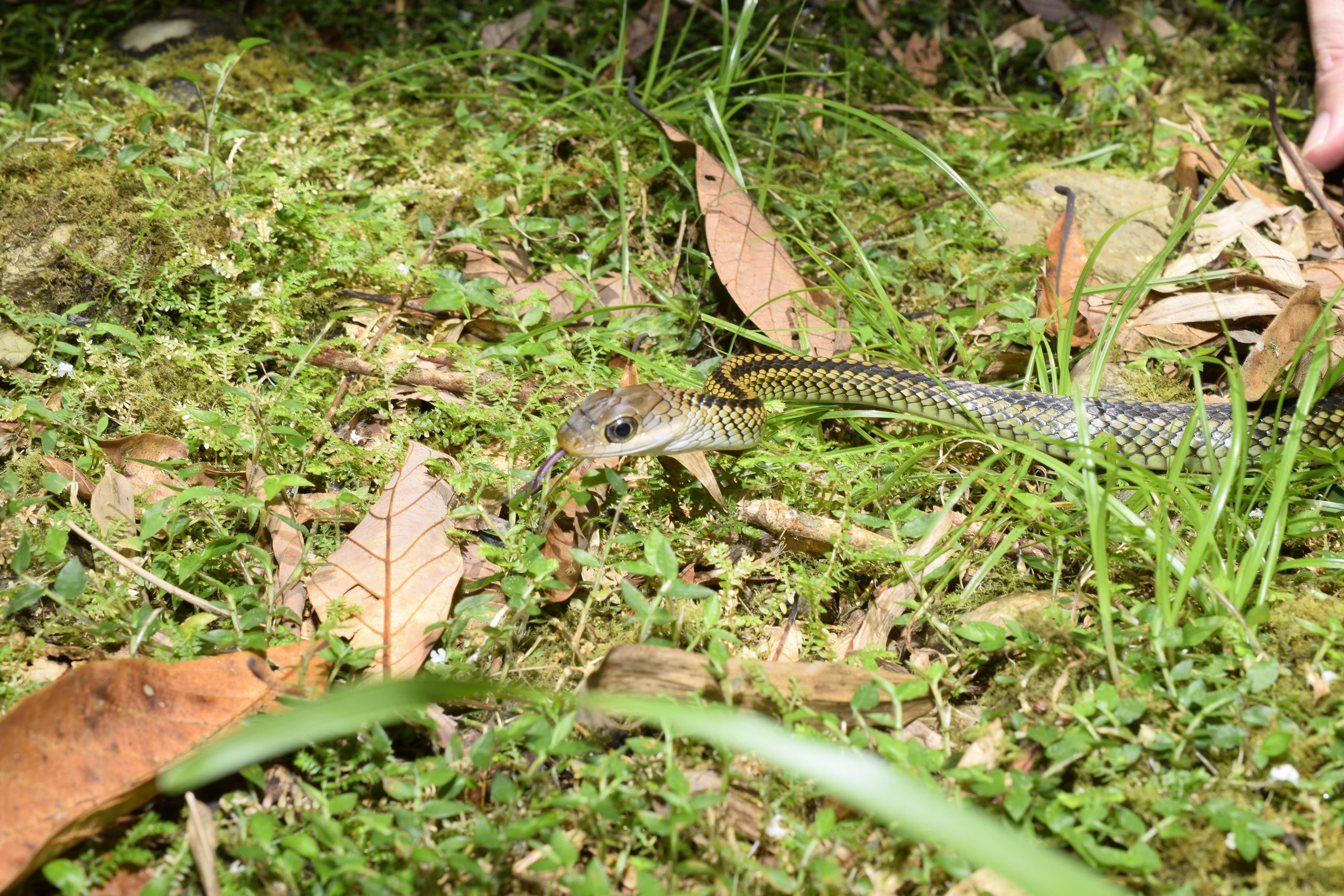
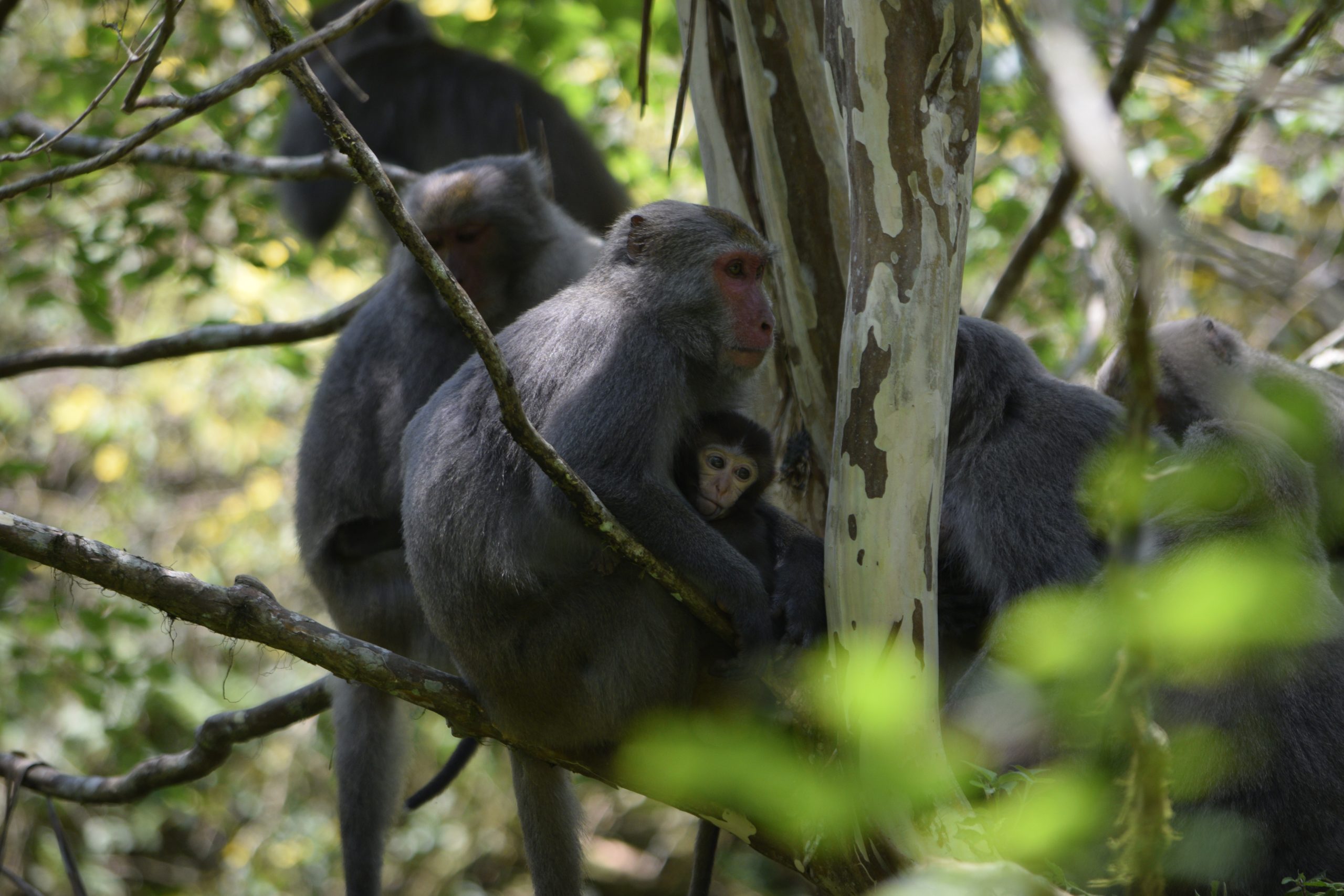
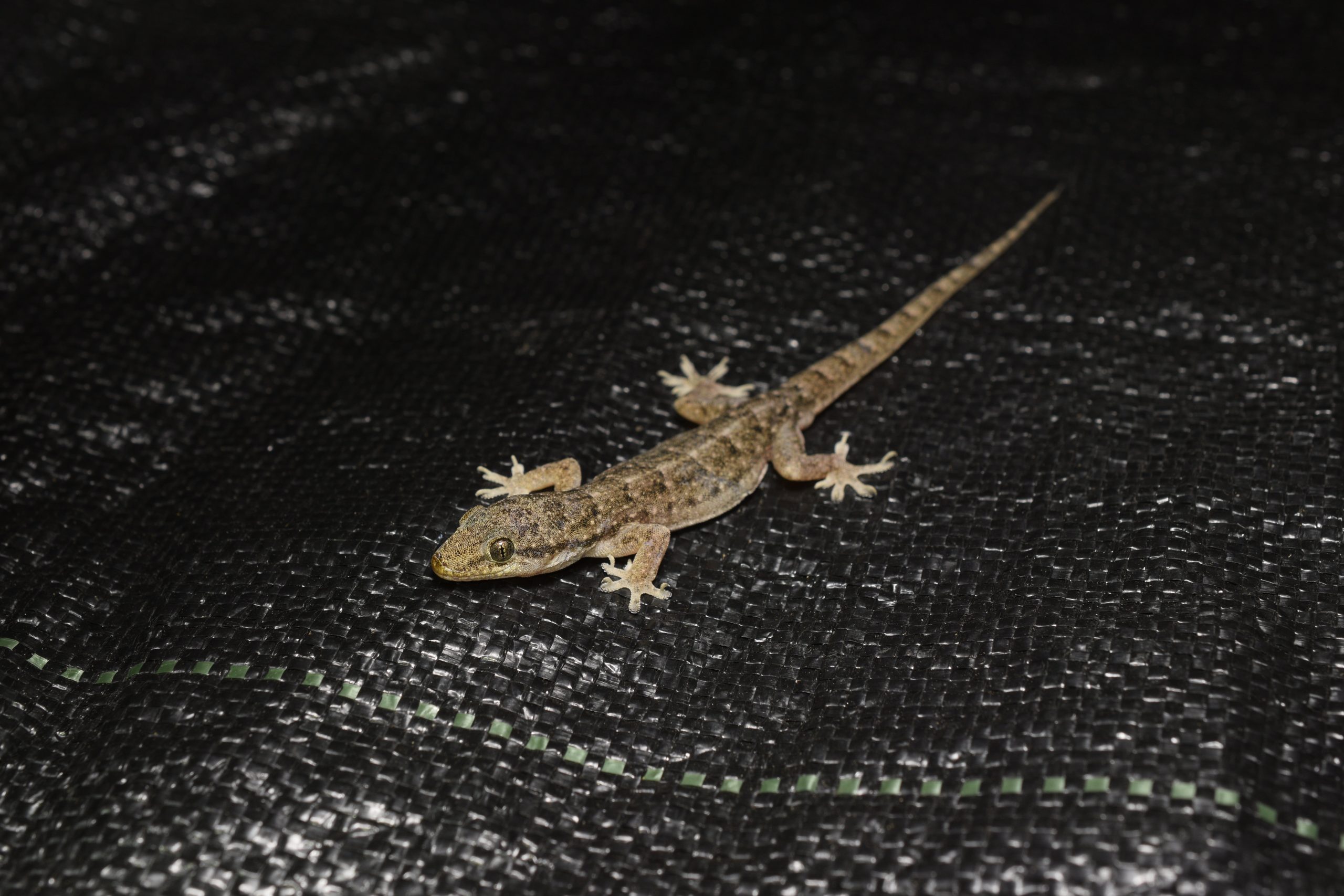
For this night’s herping, I returned to one of the popular herping spots for some more hike/cruise hybrid herping, with the intention of travelling the full stretch of the road/habitat. The amphibians were popping at the start, with multiple O. swinhoei, B. bankorensis, and B. robusta on and adjacent to the road. I found a small snake not long after walking along the road verge, which I initially thought was Sibynophis, but after closer inspection realised it to be Hebius sauteri (Sauter’s Keelback). More amphibians presented themselves, including another Limnonectes fujianensis, and a single Rana sauteri (Sauter’s Frog). I spotted two more L. rufozonatus, both with their heads poking out of a mossy embankment. I was happy to make note of them and carry on. Continuing on, I found another sleeping D. polygonatum, and after hike/cruising for a bit, I was able to observe a total of four T. stejnegeri and two L. ruhstrati. Pulling up behind a car stopped in the road, I automatically knew it must be some herpers who had found something. I got out of the car to see an absolute unit of a B. kraeplini, which must have been close to 1.4m in length – not giant by Boiga standards, but certainly around the upper limit for this species. I chatted with the herpers for a bit, who told me they had spotted a Euprepiophis mandarinus (Mandarin Ratsnake) earlier that night, which I was insanely jealous of, even more so as I must have missed it by a few minutes. The remainder of the night yielded another P. mucrosquamatus and a Kurixalus effingeri (Effing’s Treefrog) which disappeared before I could get a photo. I also saw an unidentified gecko species, likely a Hemidactylus, on the road. A long but productive day and night of herping accomplished.
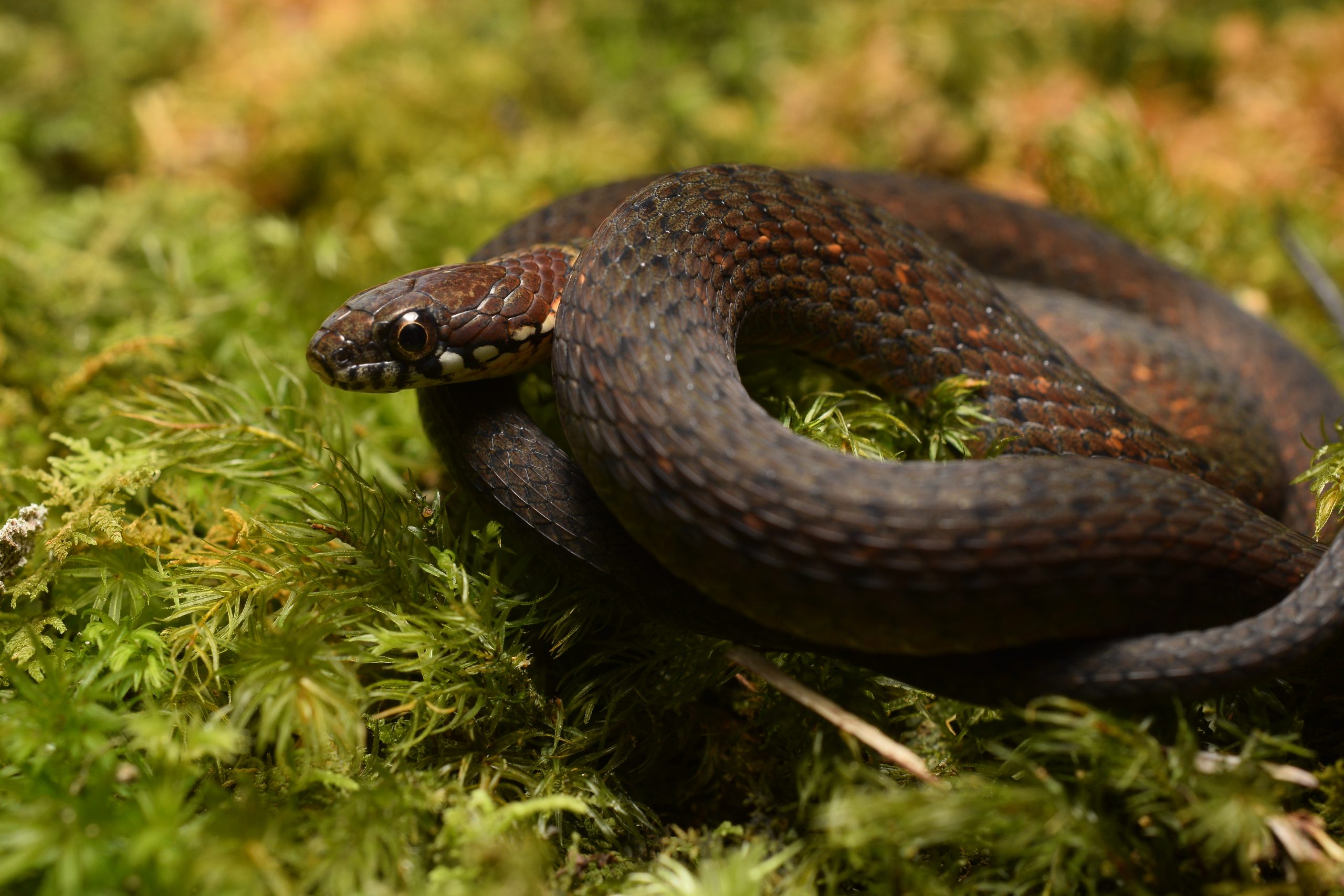
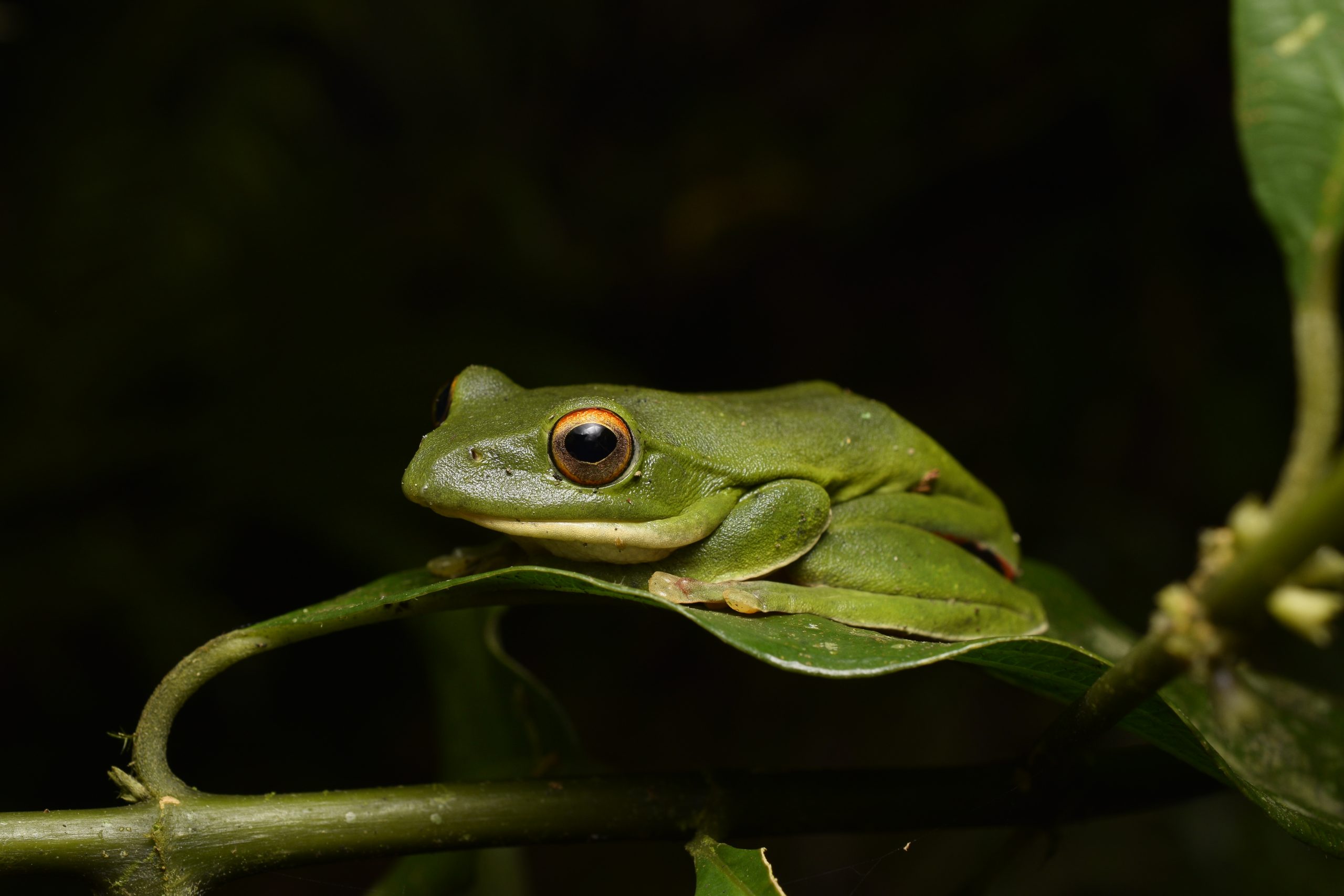
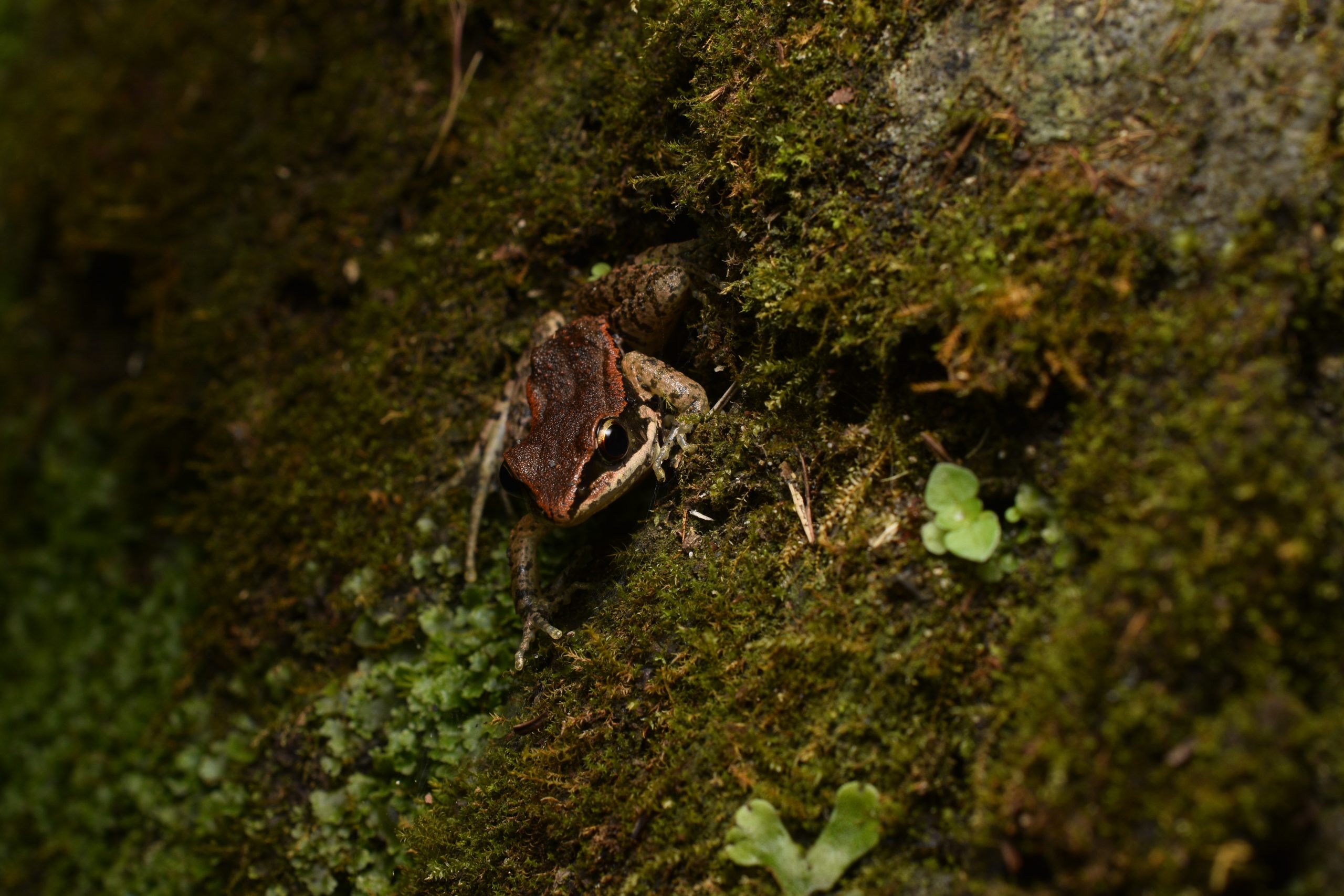
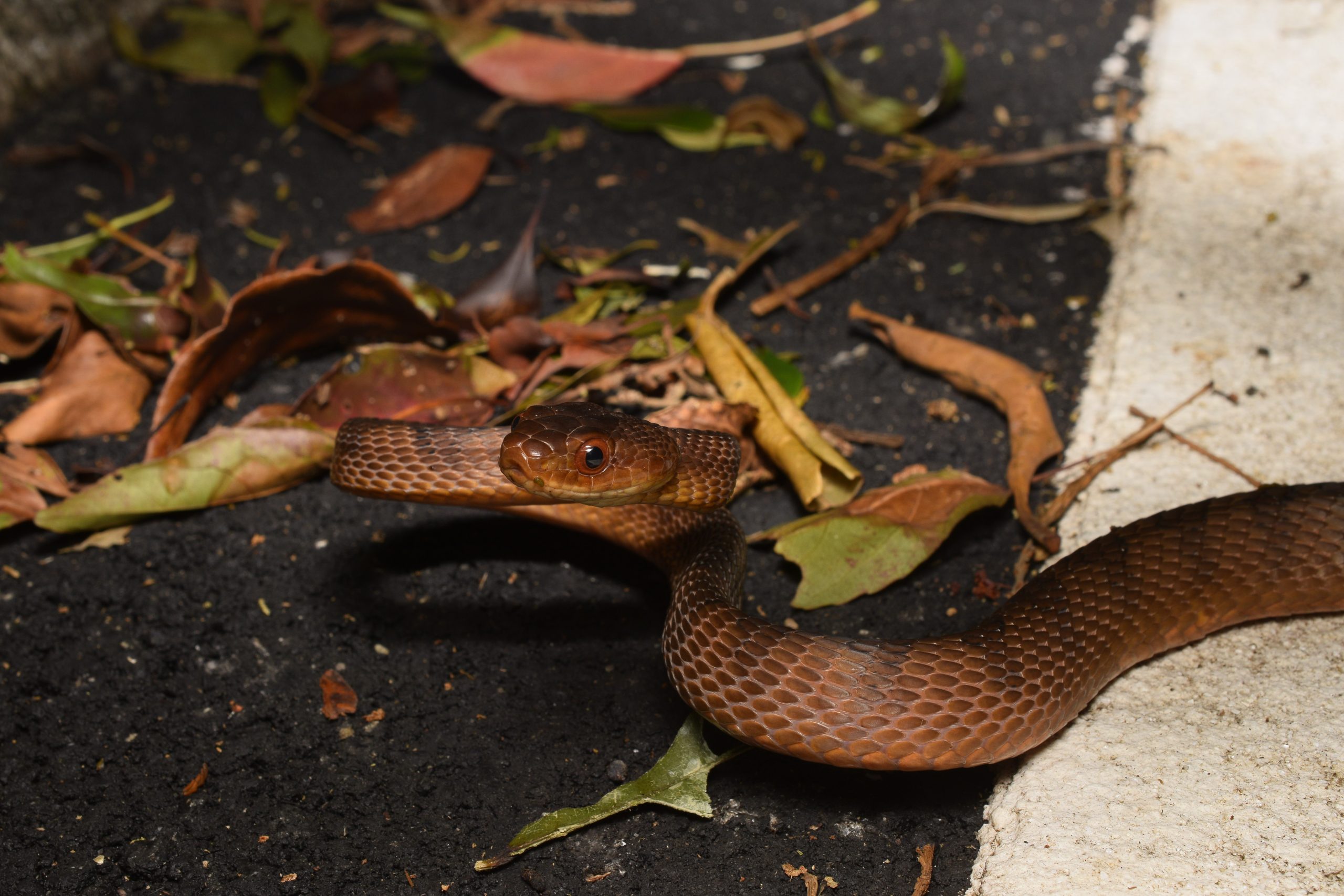
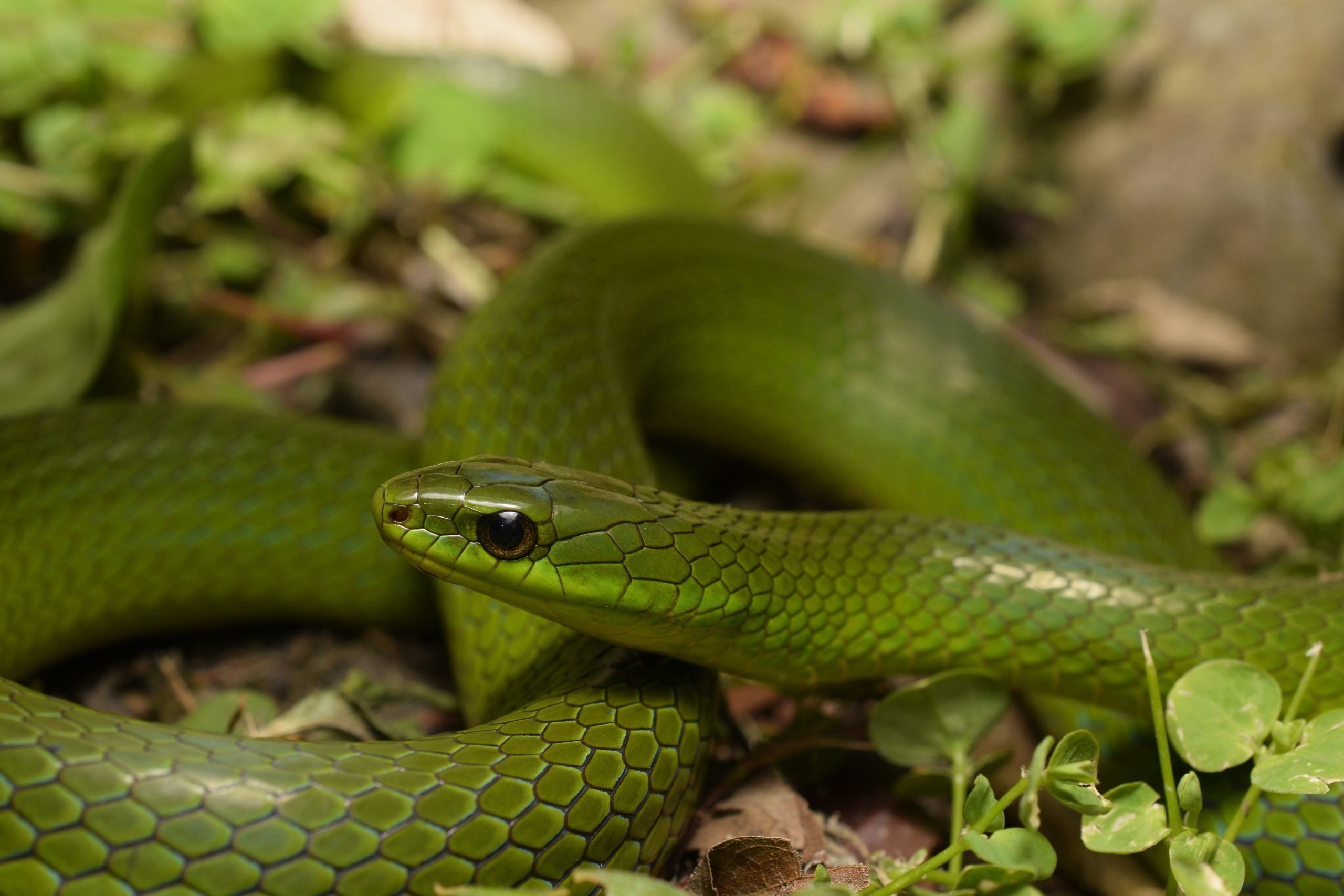
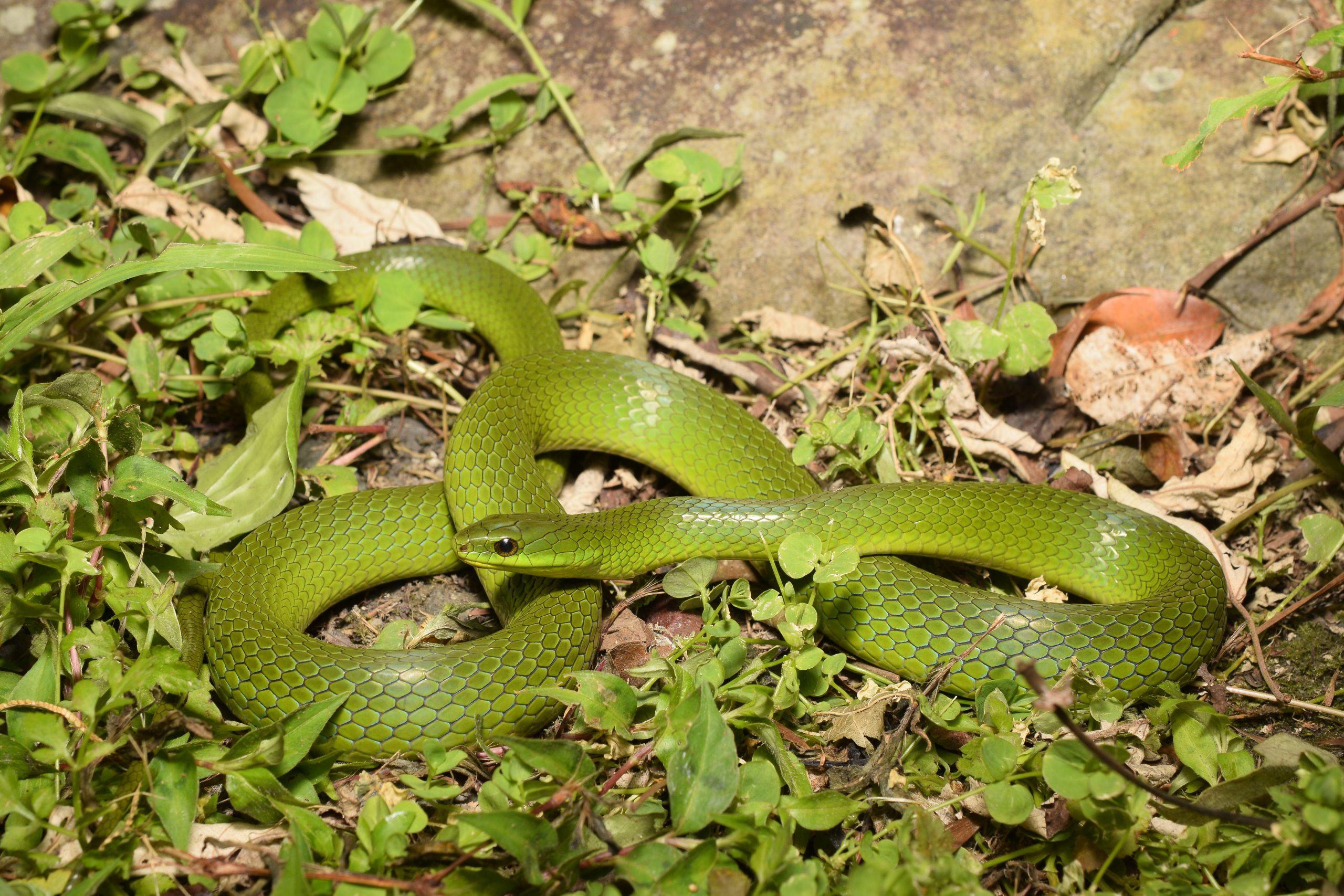
Because I had a late night, I decided to chill during most of the day, exploring the local area and getting some food. That evening, I joined my collaborator with a group of students to observe his approach to data collection in the field – something I want to align on for future FHN expeditions. This kind of collaborative fieldwork is what FHN will build on: standardising simple, repeatable, non-invasive protocols (photo-vouchering, GPS-tagged occurrence records, basic morphometrics) so that data collected on expeditions like this one can feed directly into national biodiversity datasets and species accounts rather than remaining anecdotal. Straight out of the car park, I spotted a Ptyas major (Chinese Green Snake, also called the Greater Green Snake); while common in the right places, this was actually the only one I observed on this trip. A beautiful and fascinating member of the genus, it was nice to see one up close. Almost straight away, a member of the group spotted a juvenile T. stejnegeri, still small enough to see its umbilical slit. We walked for a bit, searching a streamside where we encountered multiple B. robusta and what we identified as Buergeria choui (Chou’s Treefrog), based on the ventral speckling on the leg. I still need to double-check the reliable morphological characters used to separate B. choui and its close relative B. otai (Ota’s Treefrog), since both were only recently split from the wide-ranging Buergeria japonica sensu lato – B. otai by Wang et al. (2017, PLOS ONE) and B. choui by Matsui & Tominaga (2020, Current Herpetology). What was long treated as a single, Ryukyu-to-Taiwan-spanning species turns out to be at least three genetically and acoustically distinct lineages, with the true B. japonica now restricted to the central and northern Ryukyus. I photographed a few Hemidactylus bowringii (Bowring’s Gecko) in some outbuildings, and we walked a little to find the introduced Polypedates megacephalus (Brown Tree Frog), which is displacing the native Polypedates braueri (Brauer’s Treefrog) in parts of its range through competitive exclusion. We also spotted Hylarana guentheri (Günther’s Frog), a big brown frog that evaded photography. We finished around 10pm, which is quite early for us nocturnal herpers, so I had arranged to meet a friend to road-cruise a little in a different area. On the way to meet him I found the usual suspects: multiple B. bankorensis, O. swinhoei, and a P. mucrosquamatus. A couple of minutes later, he called to say he had found something special. In typical field-herper fashion, he refused to tell me what and kept me in suspense. I drove (completely safely) the remaining five minutes or so to catch up with him. I pulled up behind him to see him standing by the side of the road with an ear-to-ear grin. We had spoken earlier about one main target species he was after. As I got closer I saw it: just a juvenile, coiled in ambush at the side of the road, the “Mountain God” that is Deinagkistrodon acutus (the Hundred Pacer, or Sharp-nosed Pitviper). This was of course a big target for me as well, and it is a snake many international herpers travel to Taiwan specifically to see – it is far more reliably encountered here than on mainland China, though it is not necessarily guaranteed even in Taiwan. The species is assessed as Vulnerable by the IUCN Viper Specialist Group, with continuing population decline across its Chinese range driven by overharvesting for traditional medicine and venom liquor; Taiwan’s populations, and community education efforts around them, are an important part of the species’ wider conservation picture (Li & Zhou 2021, IUCN Red List). It certainly takes a bit of patience and dedication to see this species. We revelled in its beauty for a short while, took a few photos and some video footage, and made sure it was safely off the road. The juvenile really reminded me of Calloselasma (the Malayan Pit Viper); however, that sharp nose, from which it gets its name, is truly a unique feature. We cruised for a bit longer together, only to find another rare and seldom-recorded showstopper. At the edge of the road, a matte-coloured stick stuck out from the surrounding sticks and leaves. We thought, “yeah, let’s just double check” – and I’m glad we did. It was a decent-sized Sinomicrurus sauteri (Taiwan Coral Snake), the endemic coral snake of the region. Once again, we took some time to carefully photograph it, which it kindly obliged, before leaving it on its way. The proper recording of such species is meaningful, as they are only occasionally encountered and, like several of Taiwan’s endemic snakes, still lack a well-resolved account of their natural history. I called it a night, finding a final L. ruhstrati on the way home, and had a long drive to my next location the following morning.
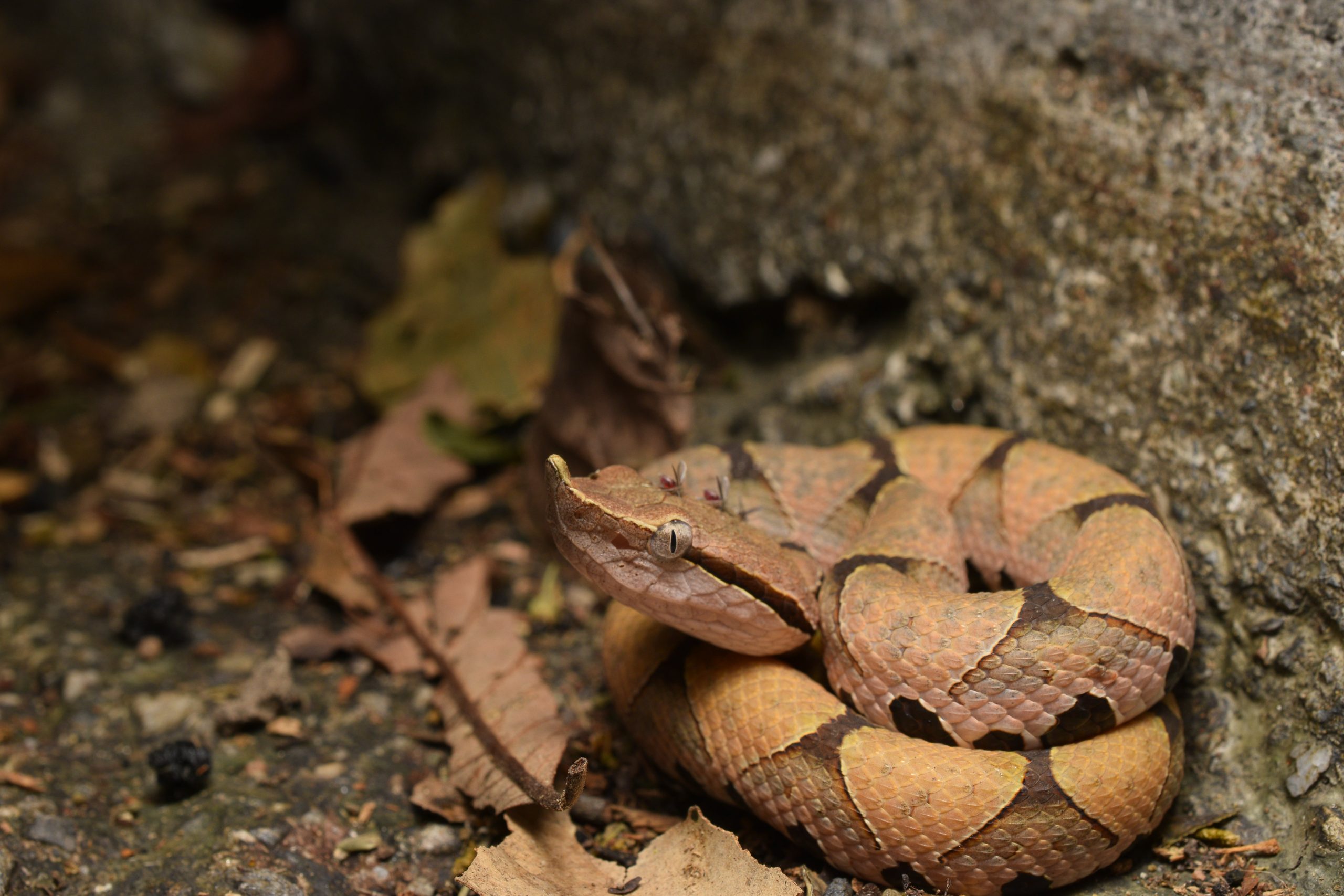
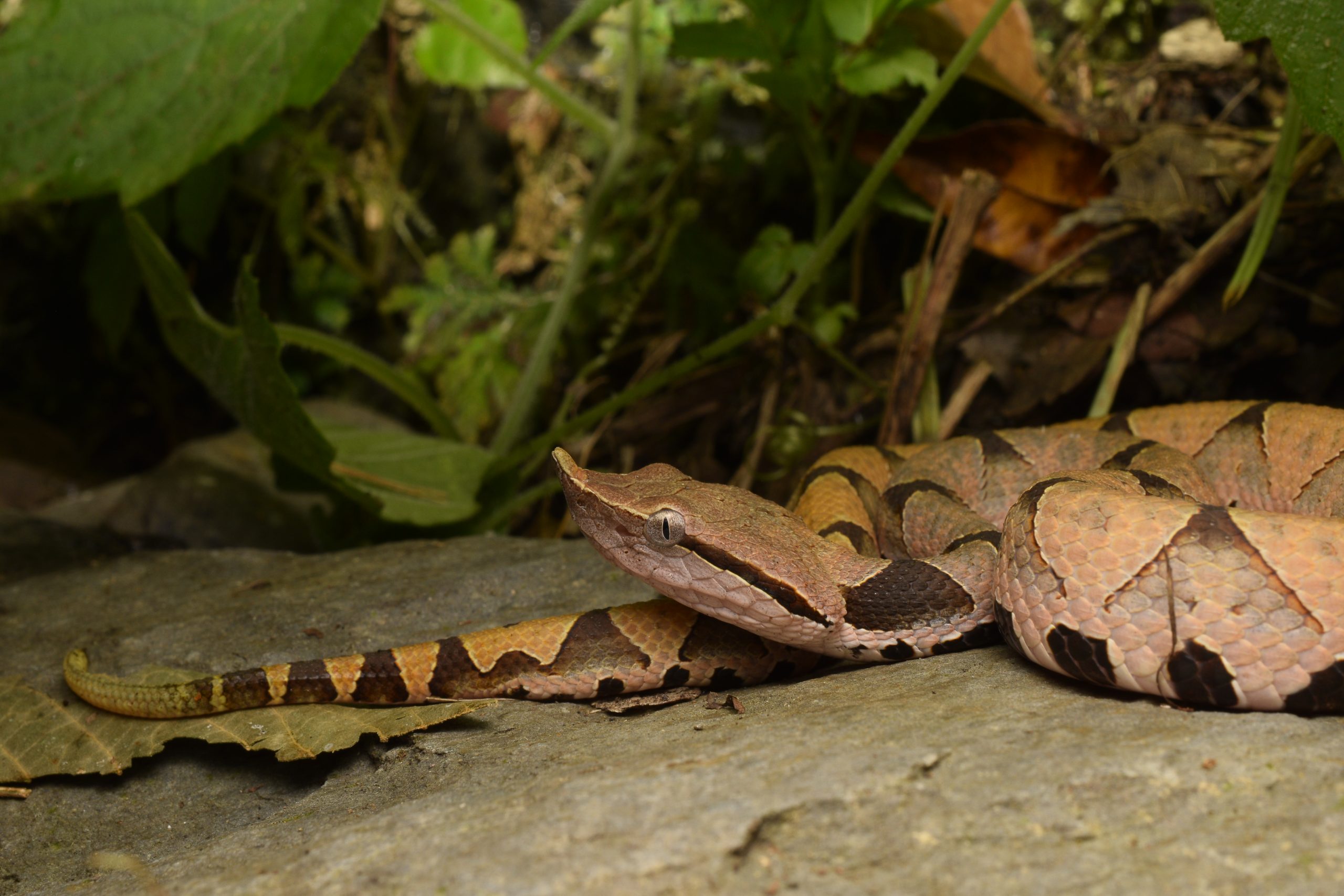
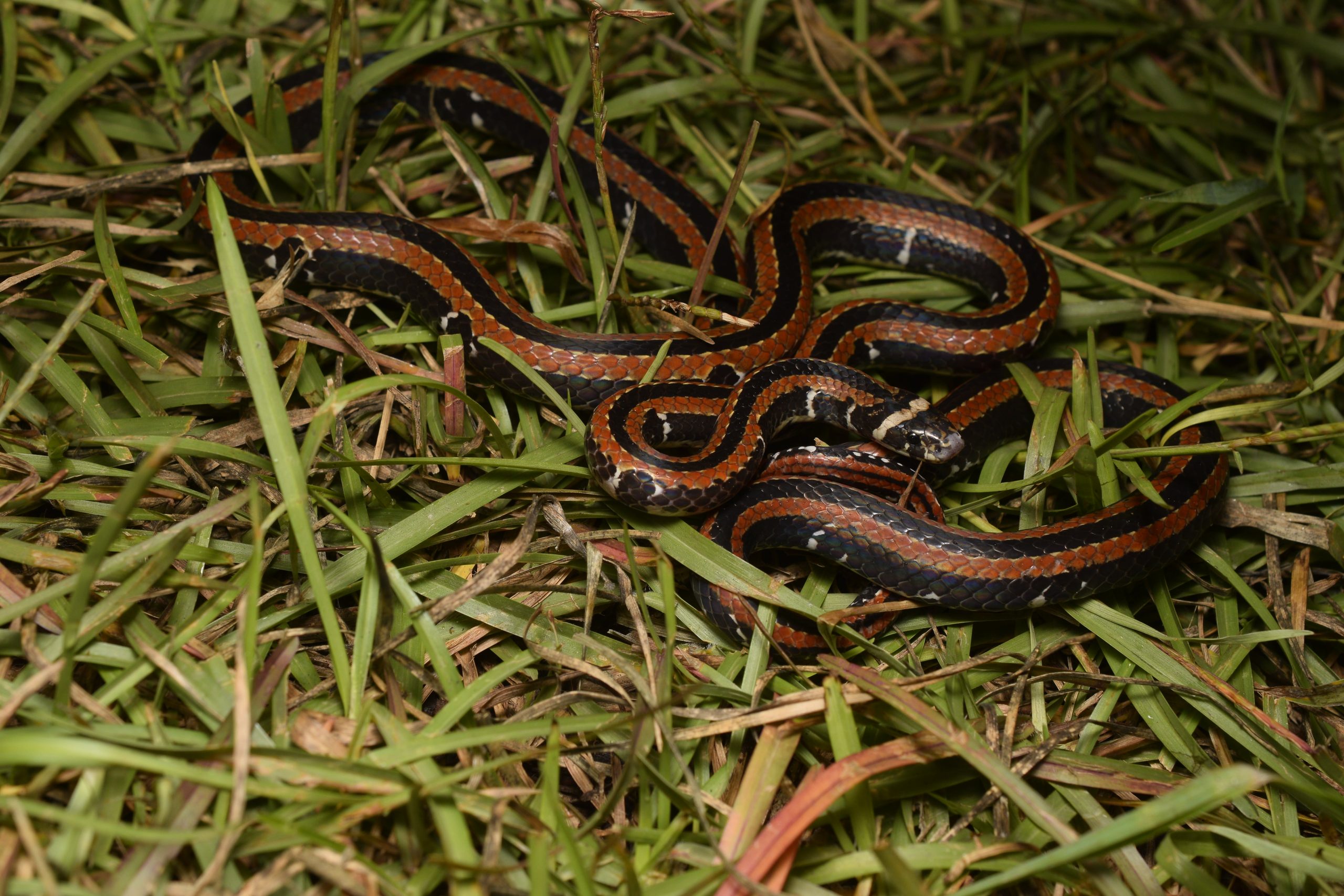
After a lie-in, I spent the whole day travelling south to the next herping location, Taitung and surroundings. I checked in to the accommodation a bit late and then, through a slight miscalculation in logistics, had to travel a decent distance to the next survey site. It was decent cruising habitat, so I was okay with it, but this was actually my least productive night, with just a single, recently hit Oligodon formosanus. It’s always painful to see these animals still alive but with potentially fatal injuries. I have to admit I did not have it in me to euthanise it, thinking that if there was the slightest possibility it might recover, I should just leave it by a shelter site, where perhaps it would recover – and if not, it would provide nutrients for another life form. Other than a few B. bankorensis, I cut my losses and headed home. The next morning I had another long drive to National Dong Hwa University to meet with my collaborator and some of his colleagues, where we processed a few snakes and discussed at length how the mission of Field Herping Network can align with herpetological research in Taiwan. The plan was to head back south towards Taitung to check out a fragment of low-lying primary forest. Along the way we made some stops to try stinky tofu (it was delicious) and see the Taiwan Black Bear Education Centre. We met up for a classic pre-herping 7-Eleven dinner and drove up a decrepit, single-lane mountain road toward a prime piece of hiking habitat. We cruised my lifer Bungarus multicinctus (Many-banded Krait) on the way up, which unfortunately slipped off the road before we could get a closer look. Once we arrived, we started walking and immediately spotted a male and female Diploderma swinhonis (Swinhoe’s Japalure), which was nice, to see the sexual dimorphism. A number of B. bankorensis were out and about, and our eagle-eyed colleague spotted a Z. moltrechti. We were actually after Zhangixalus aurantiventris (Orange-bellied Treefrog) at this site, and we even heard its distinctive blipping call; however, we did not manage to spot one on this occasion. Close to the canopy along a steep slope, our colleague spotted a Kurixalus berylliniris (Emerald-eyed Treefrog), a beautiful frog I really wanted to see, though it was far out of reach. While walking we managed to record another two Pareas sp., which, according to their distribution, should be Pareas komaii (Komai’s Slug Snake); however, my collaborator informs me that the morphological distinction from P. atayal is a bit blurry. While in discussion about some of the interesting species present in Taiwan, I spotted some eyeshine up ahead on the trail. It was quite clearly a snake, and a decent-sized one at that. With eager excitement we cautiously approached, and our lights revealed an adult D. acutus, the second one of the trip! What an absolutely pleasant surprise, to have seen a juvenile and then an adult a few nights later. We admired this specimen from a distance – it was surprisingly grouchy, as they usually have a chill disposition. The sharp nose, the dark head, the cryptic patterning, and impressive size easily made this a highlight of the trip. The “Hershey’s Kiss” dorsal pattern really does show striking similarity to Agkistrodon (copperheads and cottonmouths) from the New World, which, although obvious according to the nomenclature, hadn’t really occurred to me until I saw how similar they actually were. Obviously, head morphology, size, and a number of other characteristics easily separate this species, but it’s an interesting comparison nonetheless. The ambush position was also striking to me – I had heard they like open spaces, akin to how many people find Lachesis (bushmasters) in the New World, but the fact it was just “there” was still surprising to me, coiled up approximately 50cm from any vegetation. I had definitely imagined them closer to some shelter site or leaf litter, at least. Perhaps it’s a sign of convergence that these two impressive vipers, from opposite sides of the world, have little to fear in their respective ecosystems. We walked a short while, but decided to head back down the mountain, still elated from finding this impressive snake. On the drive back we got a redemption B. multicinctus – this time we were able to catch it, allowing me to take a few photos and observe it up close. Safe to say I once again got a good night’s sleep, knowing I could call that a successful survey.
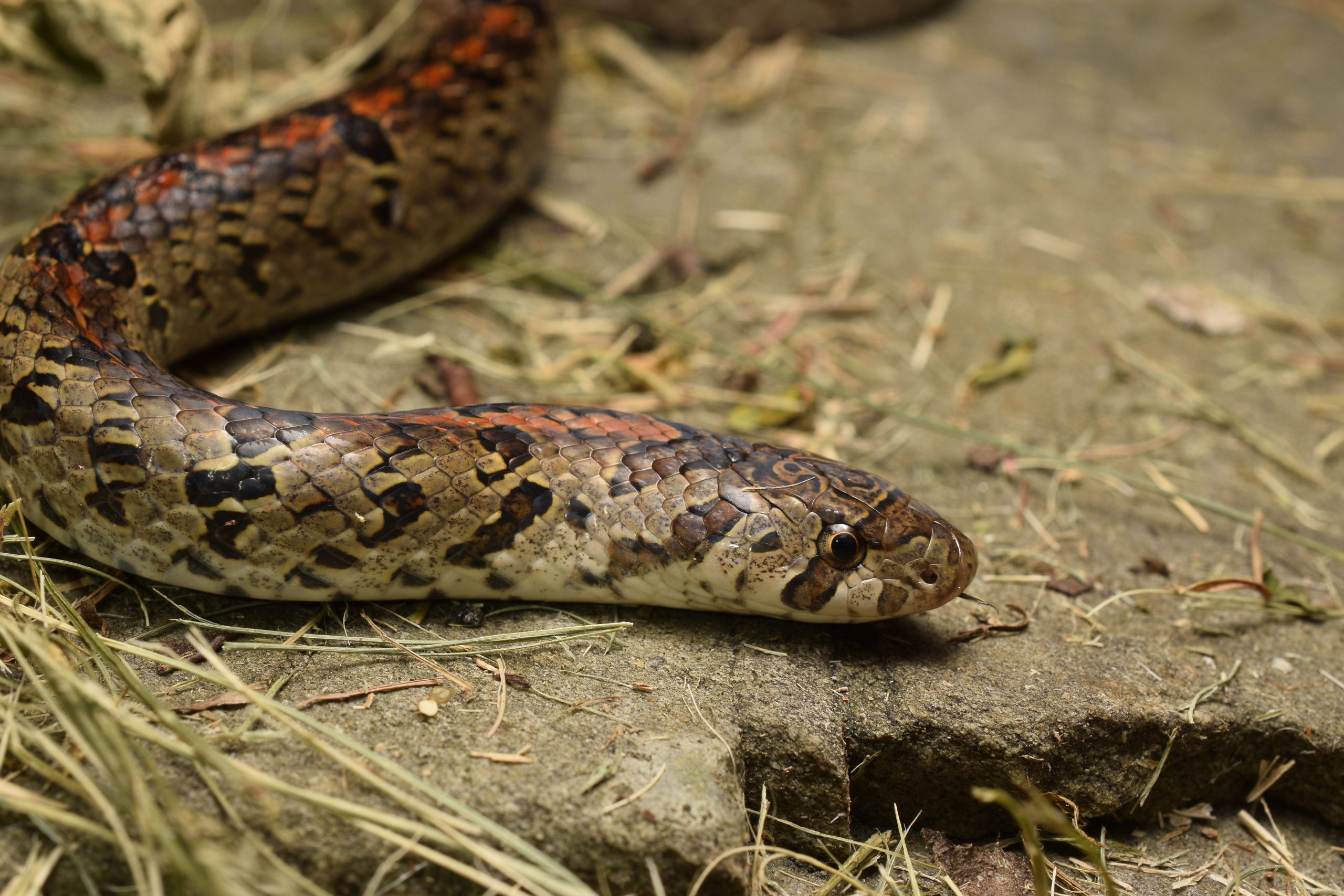
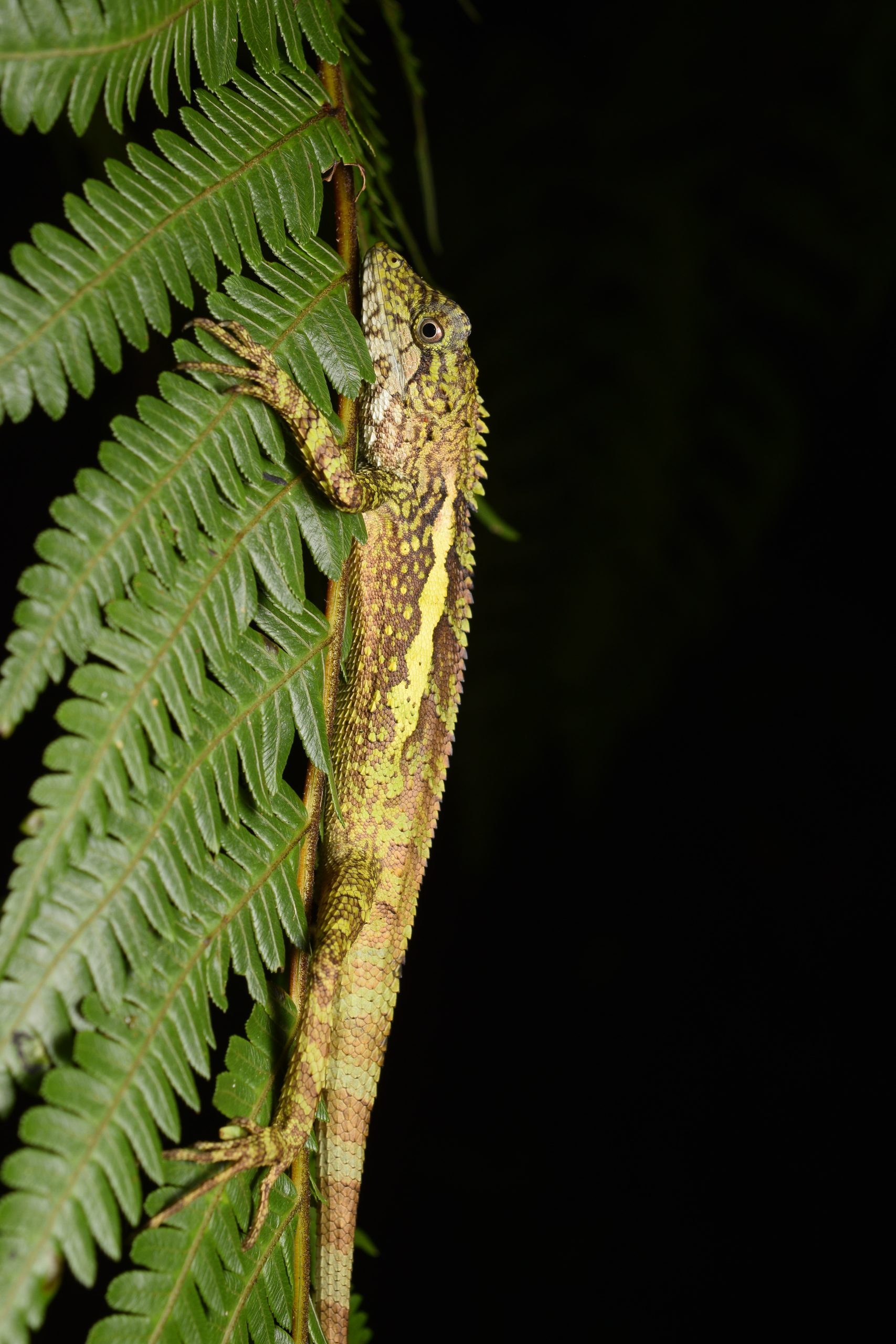
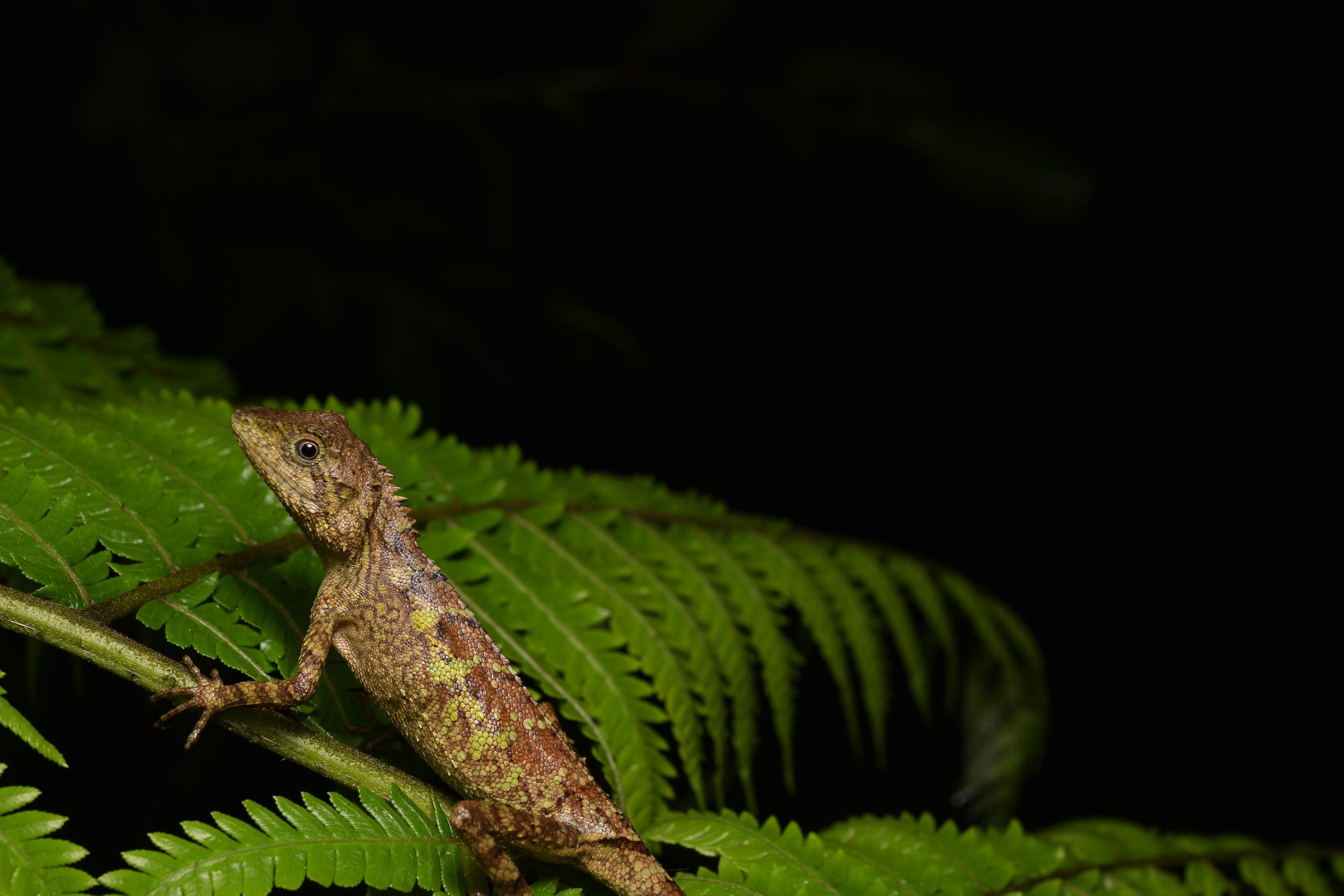
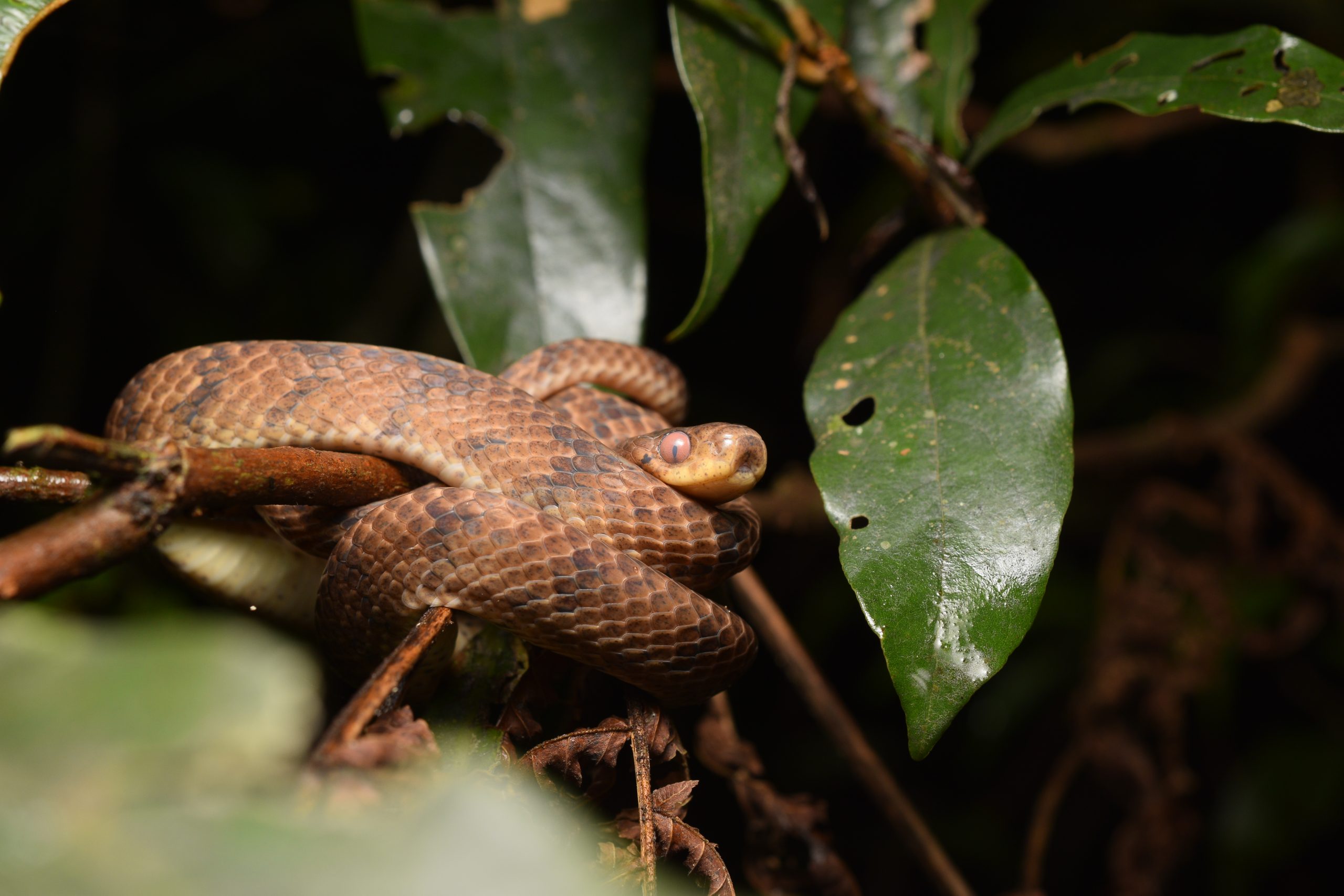
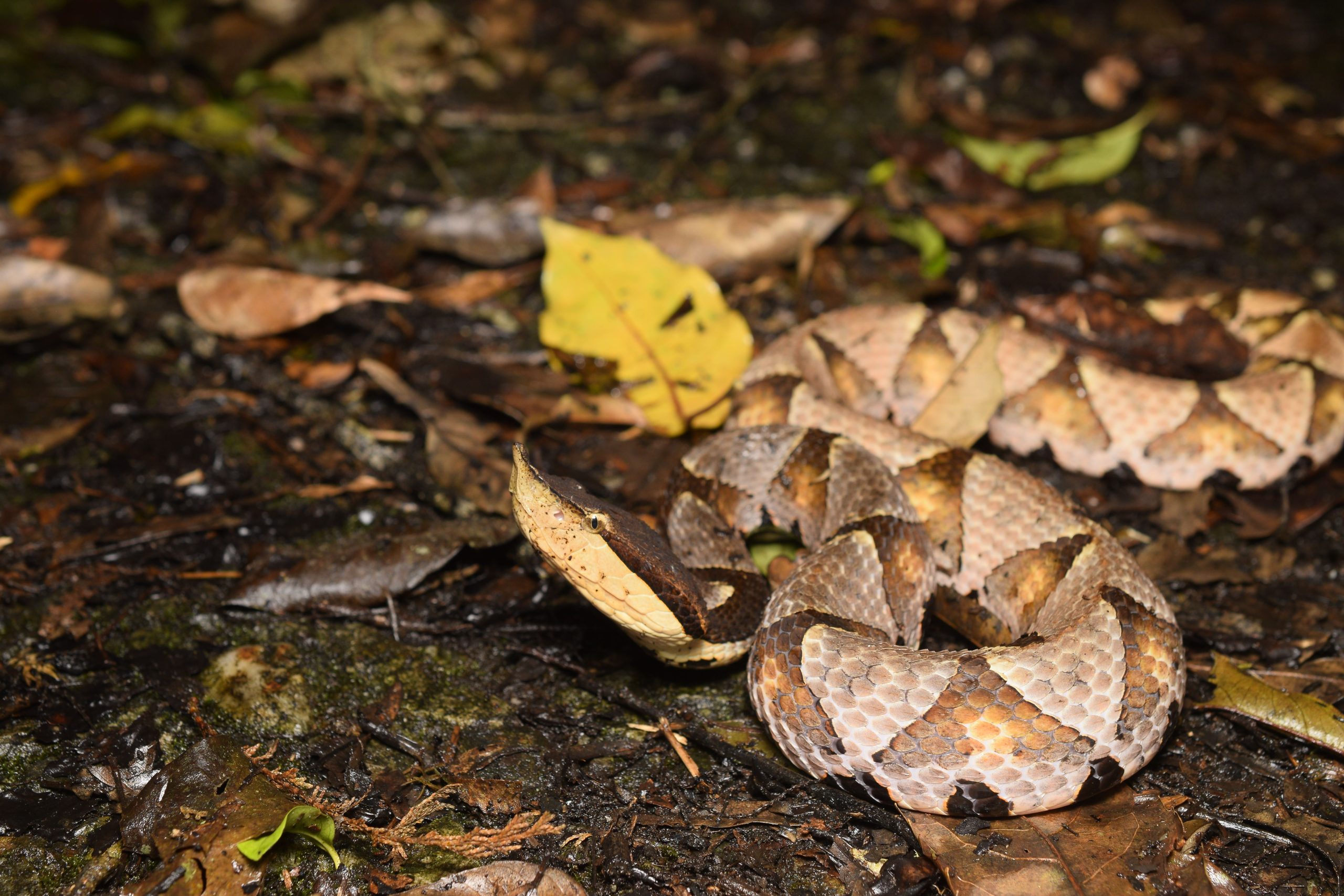
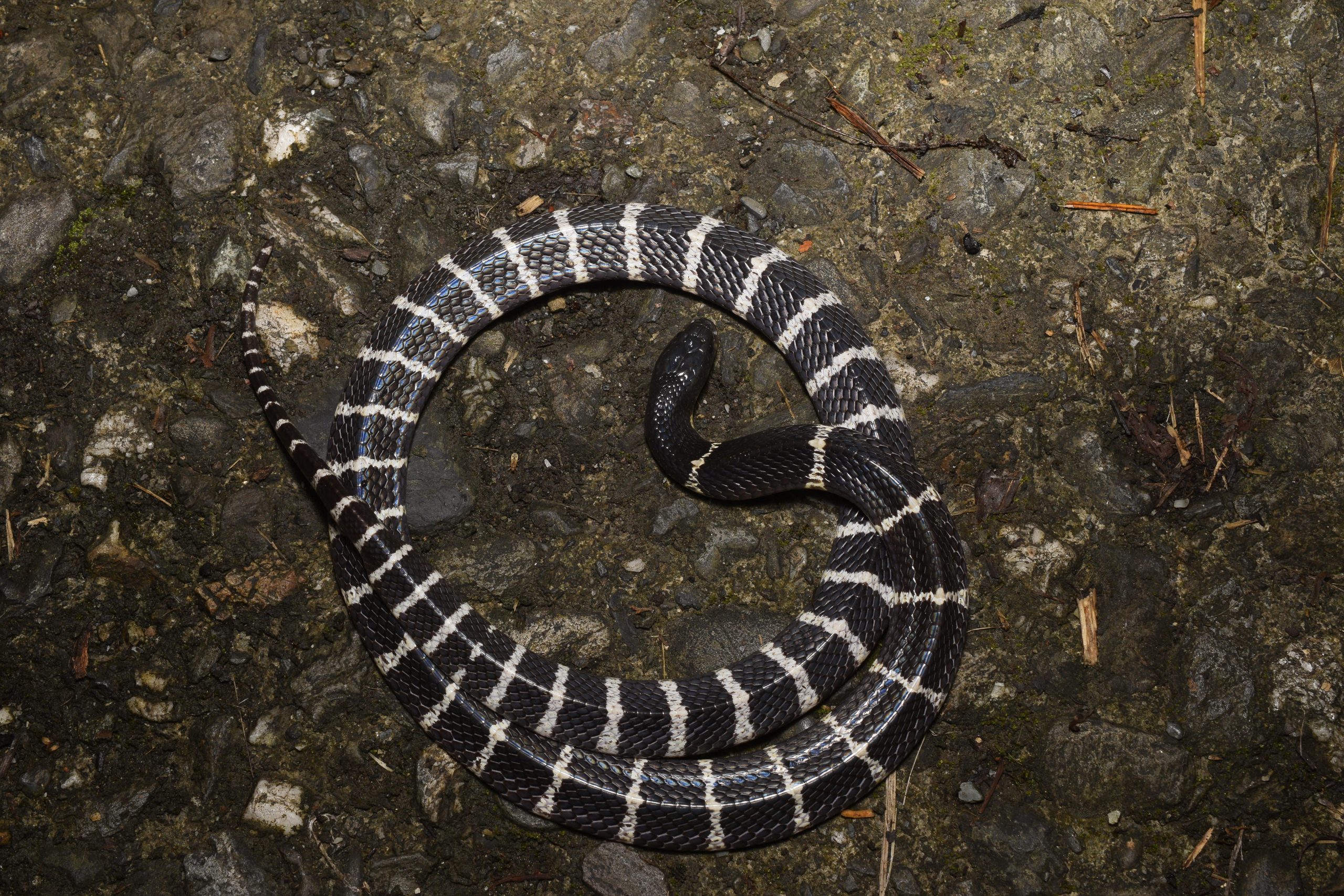
The next morning we met to survey some agricultural areas in hopes of seeing the rarely encountered Daboia siamensis (Eastern Russell’s Viper), and also Naja atra (Chinese Cobra) and Ptyas species. Despite good conditions, we turned up nothing except a few skittish Plestiodon elegans (Blue-tailed Skink). As night approached, a light but persistent rain started for our night survey. It had been mostly dry up until now, so I was curious whether the rain would bring out a different assemblage. Although I have to admit I am not a fan of herping in the rain – it certainly proves an extra challenge when it comes to photography, fortunately we were surveying a more open area along a road, so I could make good use of my umbrella (perhaps not your typical piece of field kit, but definitely useful to bring!). Safe to say that, due to the rain, the amphibians were popping. I stopped counting at 30+ Duttaphrynus melanostictus (Asian Common Toad), a common species I had seen before but new for Taiwan, and 50+ Buergeria otai. A few Fejervarya limnocharis were also hopping around. The sheer amount of amphibian activity did, unfortunately, lead to a lot of road mortalities. We recorded a total of 11 sleeping Diploderma swinhonis along this road, and had a bit more gecko action in the form of Hemidactylus frenatus (Common House Gecko) and potentially Gekko hokouensis (Hokou Gecko). We also observed three medium-sized B. kraeplini out and about, a T. stejnegeri in ambush, and a P. mucrosquamatus on the verge. Most of the group decided to call it a night, and myself and another cruised around for a few more hours, turning up another T. stejnegeri, P. mucrosquamatus, and B. multicinctus. A fairly productive night – we decided to leave it there.
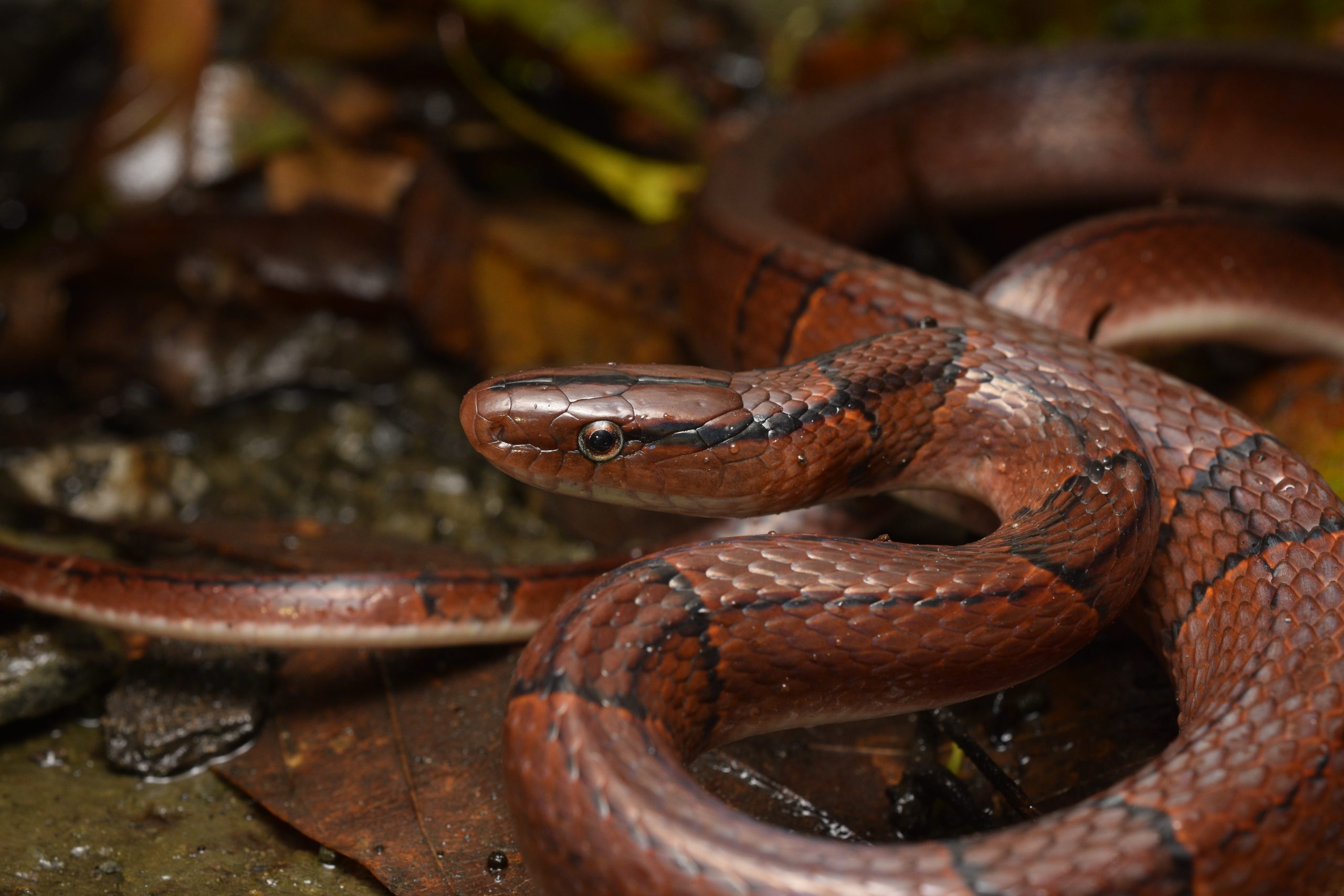
The next morning, we were still really keen to try for a cobra, and the possibility of a Daboia in the same habitat was something we really couldn’t pass up on. We put some serious effort into checking drainage ditches, hiking field margins, flipping cover boards, trying every trick in the book – but to no avail. We did save a kitten from a gulley, so I guess it wasn’t a complete waste of time. We went back for a brief sunset cruise and drainage-ditch check, but only saw a few of the common amphibians already recorded. We decided to head back to the more productive mid-altitudes for some hiking/cruising. We were rewarded with the usual suspects – plenty of Buergeria otai, T. stejnegeri, L. rufozonatus, L. ruhstrati, P. mucrosquamatus – and then, as if by magic, one of my biggest targets appeared in the middle of the road. Not a big red stick or some leafy debris, but very much an Oreocryptophis porphyraceus (Red Bamboo Ratsnake, sometimes called the Mountain Ratsnake). Often touted as one of the more beautiful snakes in the region, this snake was truly a sight to behold. A little bit bitey, but the small head and teeth did no damage – and I guess I would be too, if a giant lifted me off the ground while I was out looking for some food. The deep red, mahogany colours blended in well with the leaf litter, and I have a theory that the more brightly coloured juveniles might mimic Sinomicrurus. It even did a little tail curl. After a few photos, I gently moved it to some roadside vegetation, where it peacefully slithered off, hopefully never to be disturbed again. The rest of the night provided a decent-sized Pareas komaii and some more amphibians of species already seen, and I was quite happy to head home after that star find.
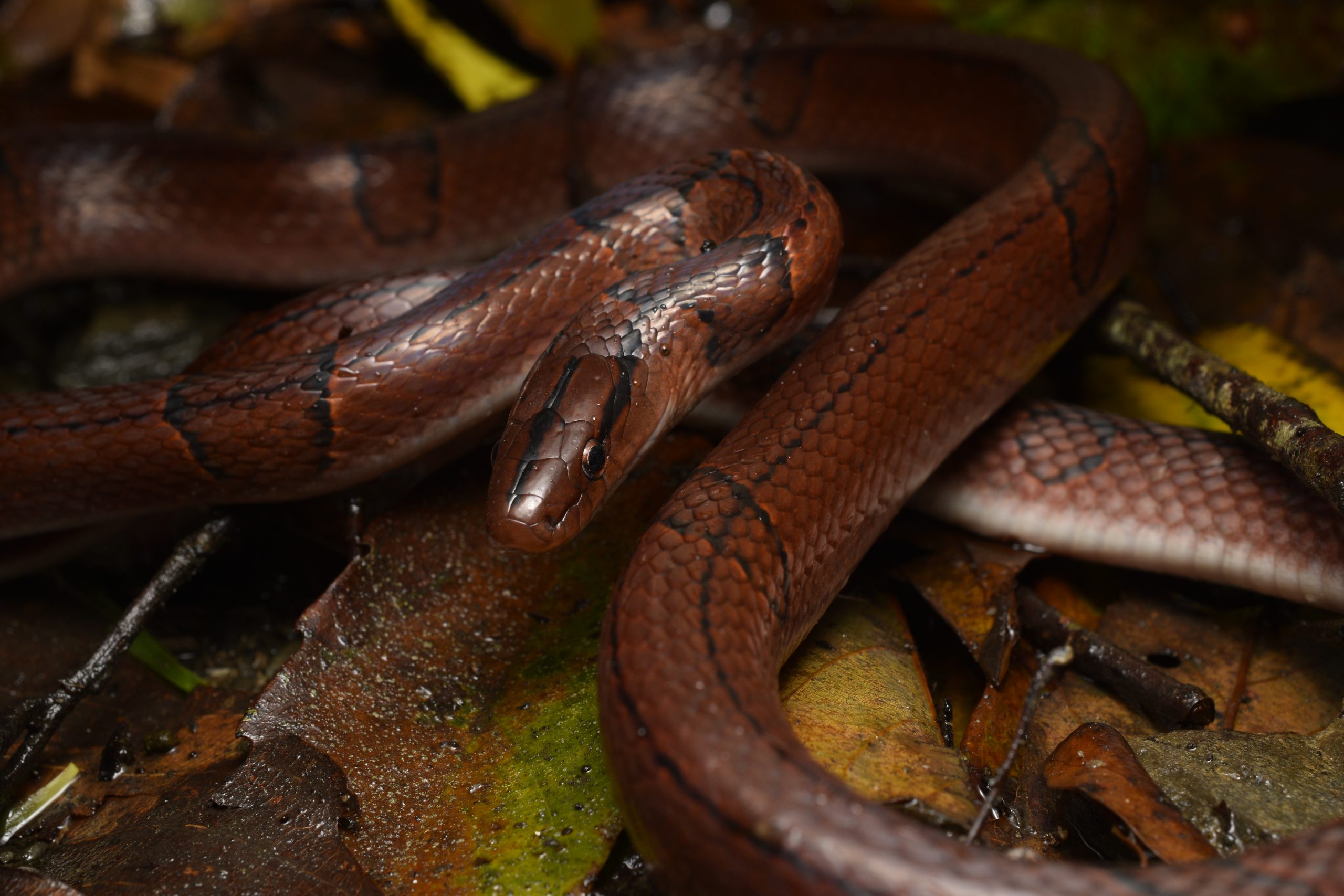
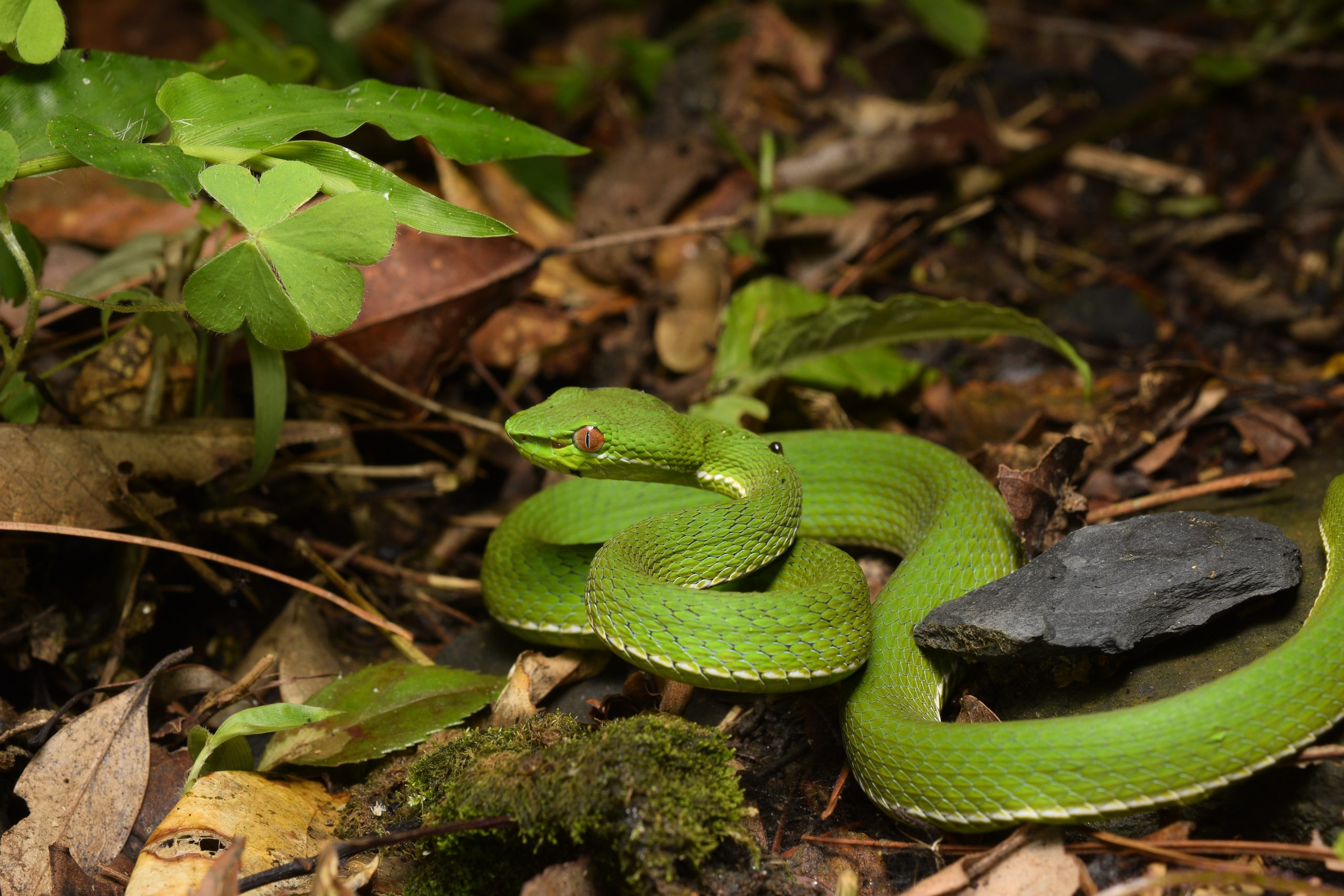
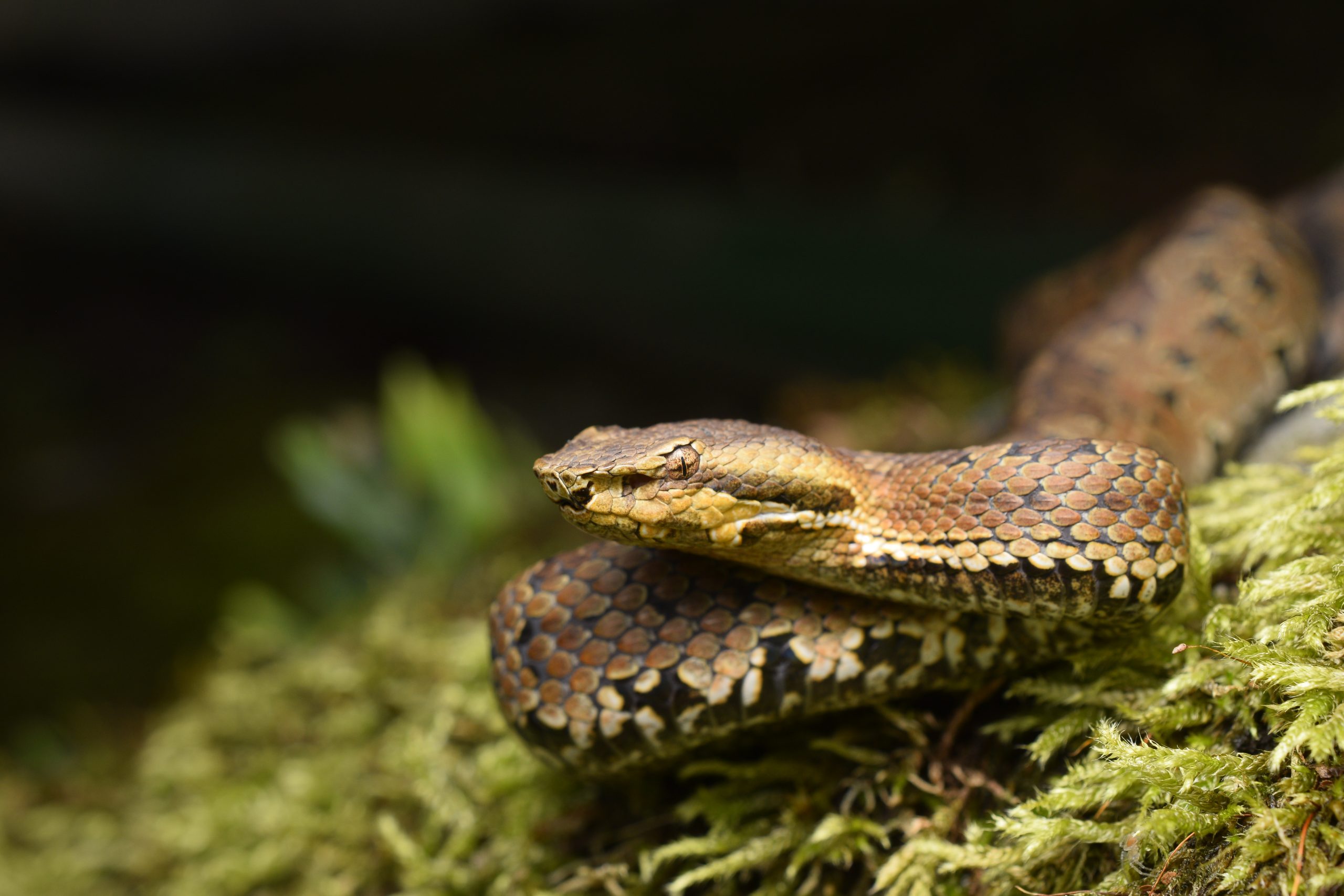
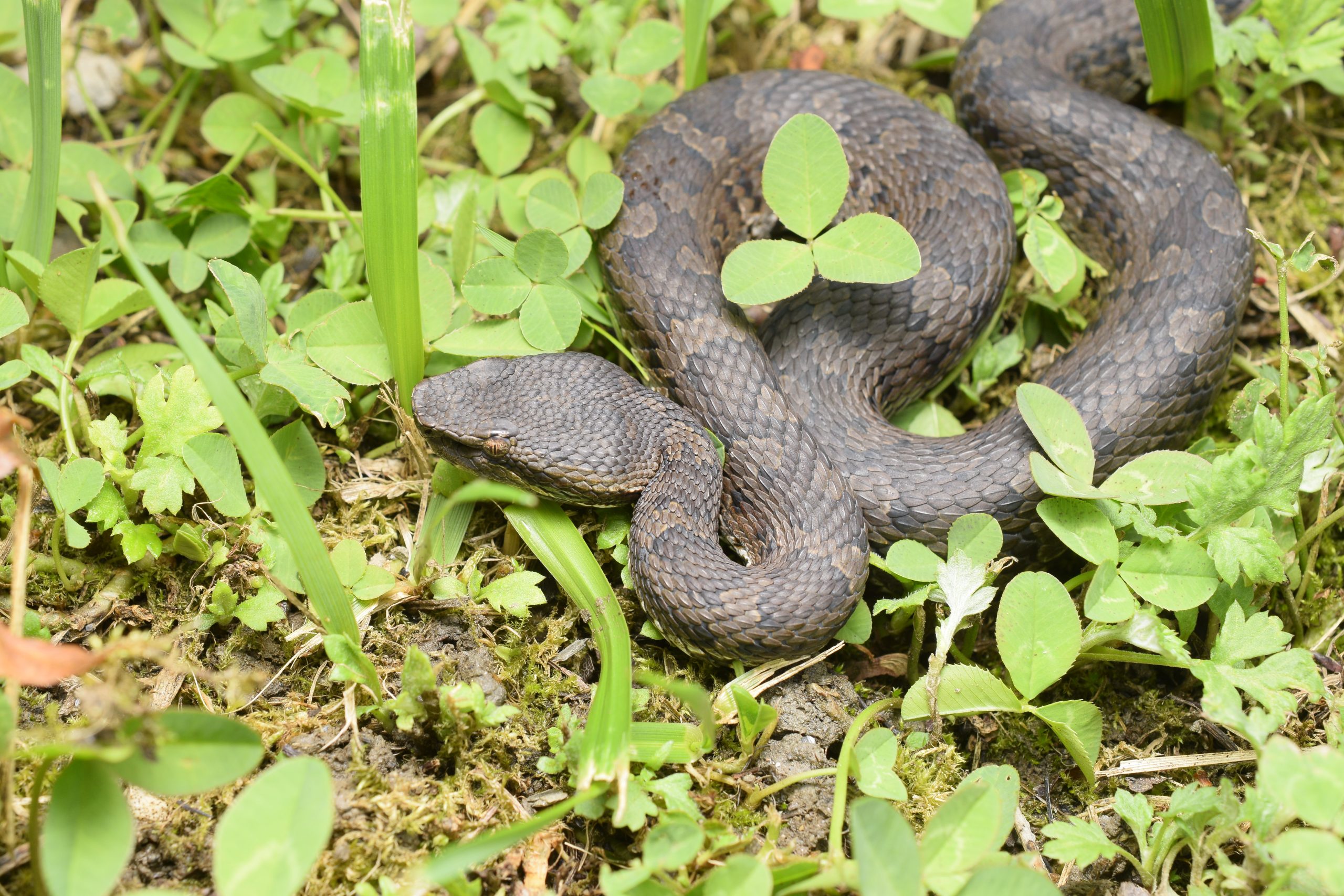
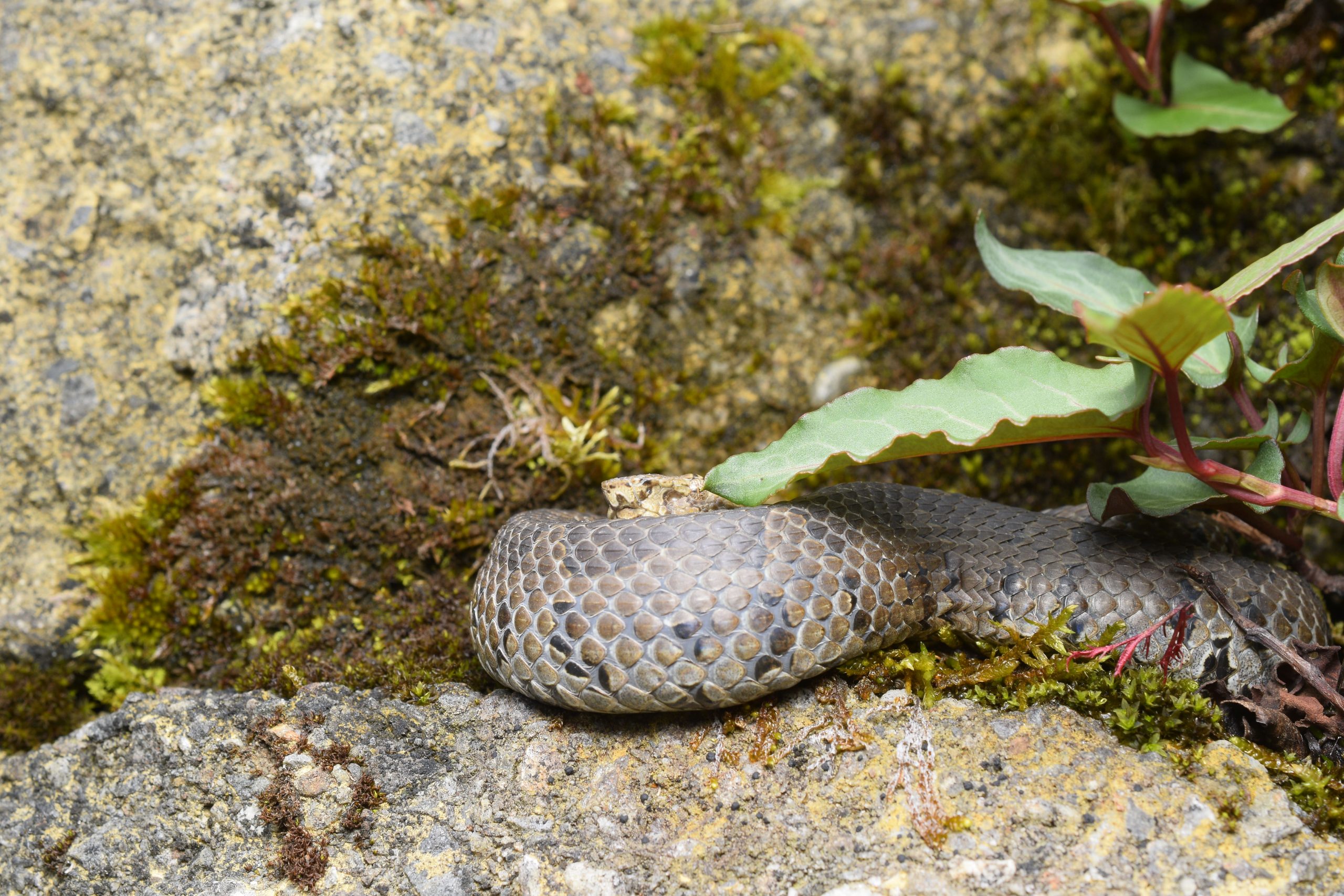
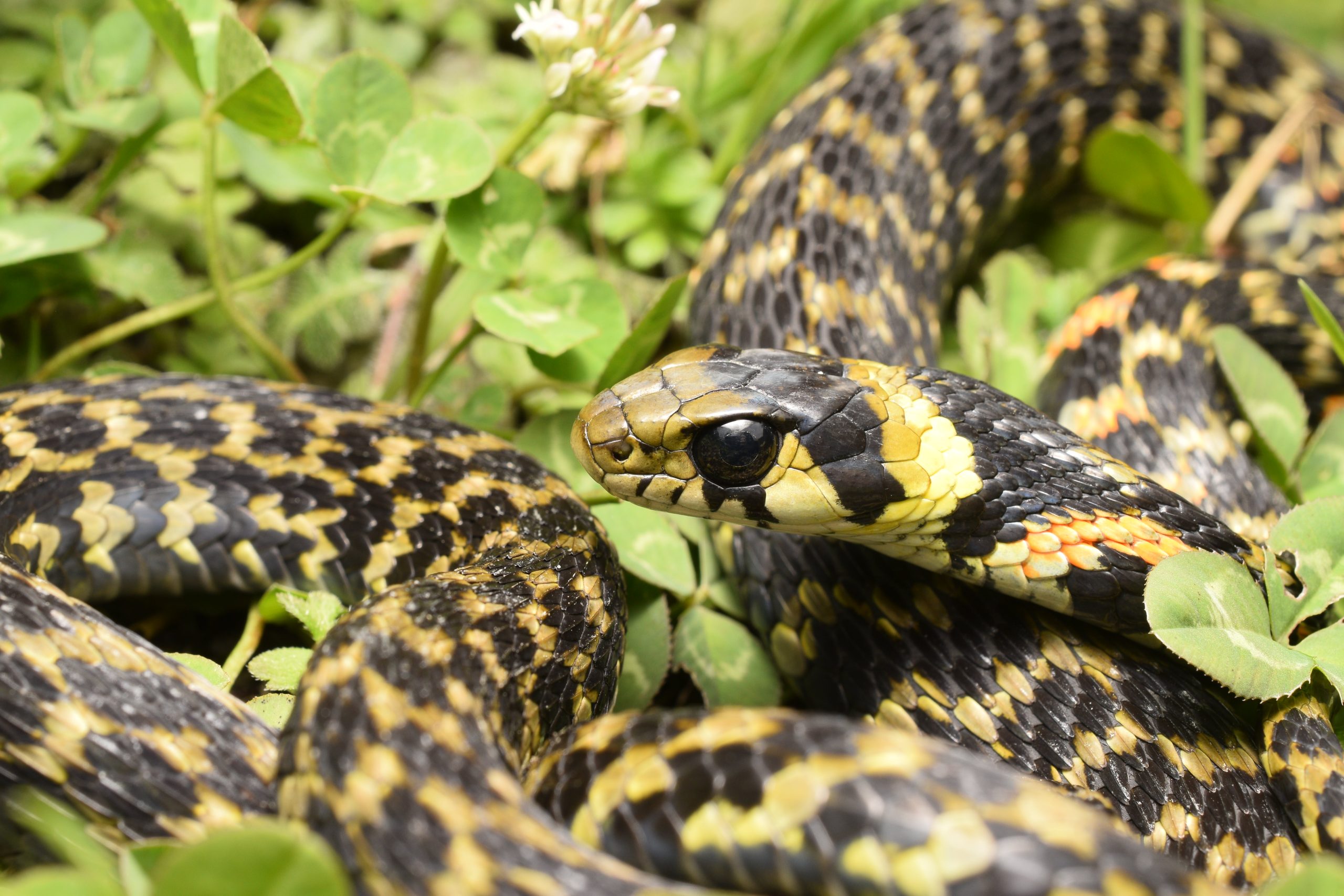
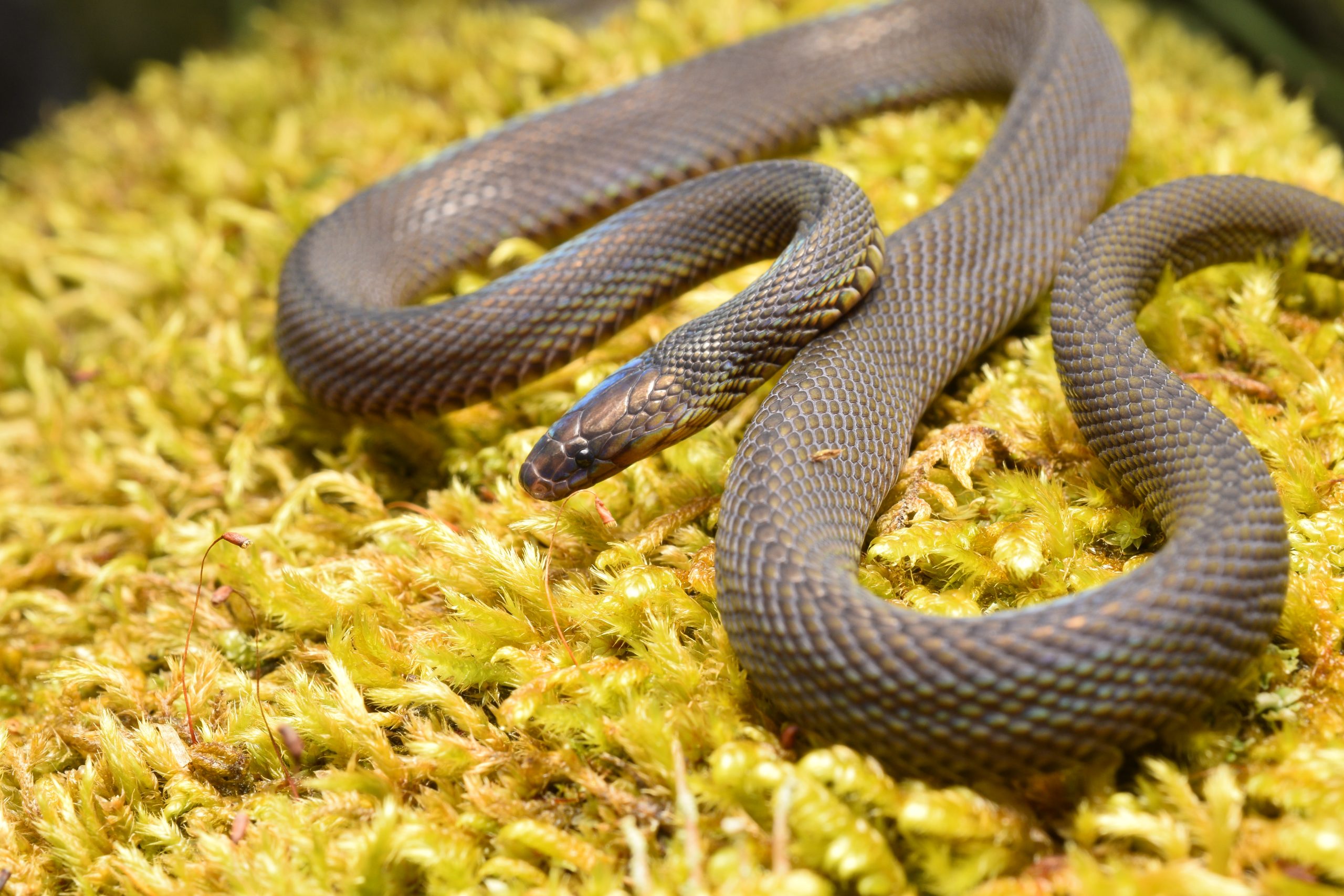
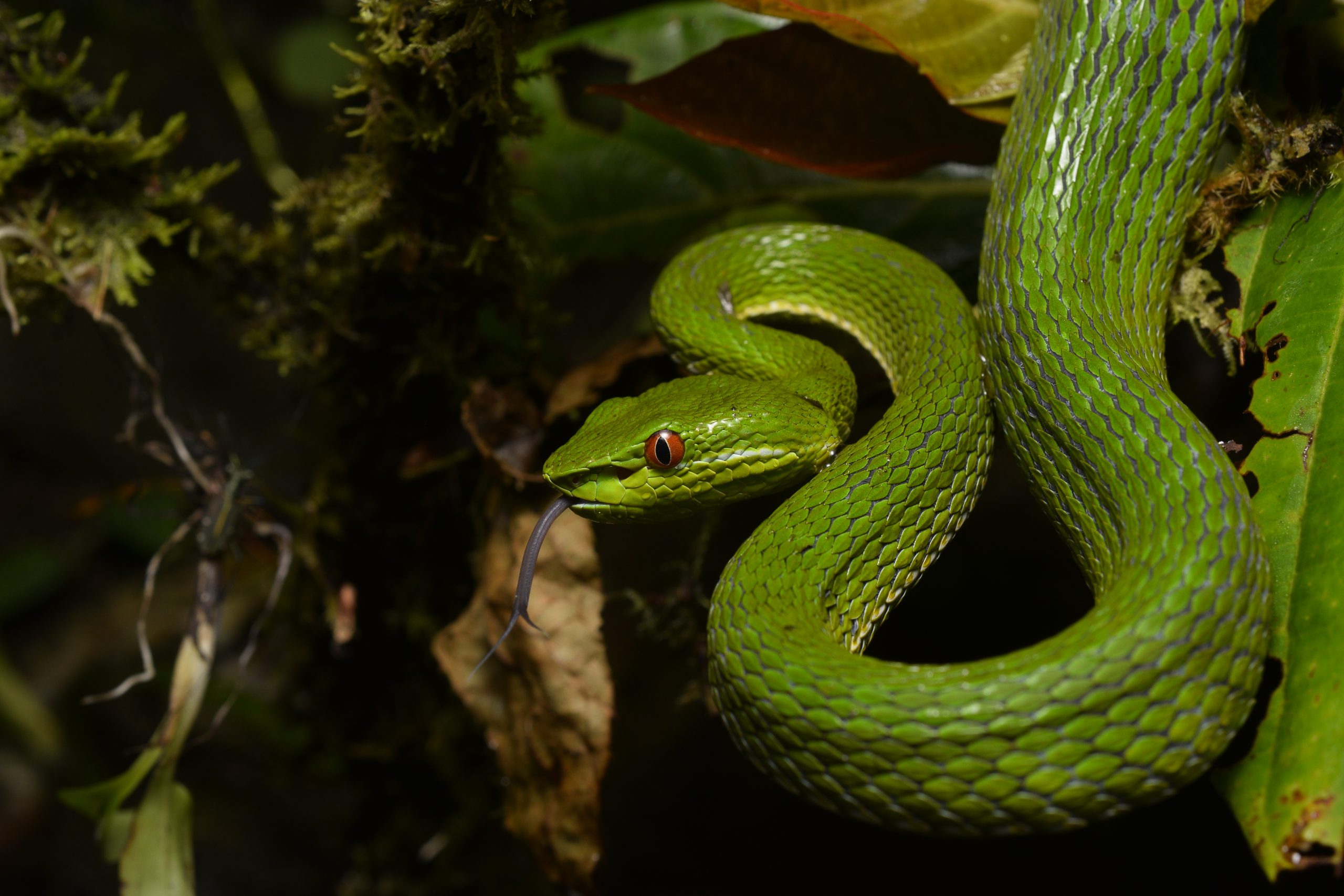
The next morning, we headed to a high-elevation spot during the day for a special target species. This was the first day we actually had good conditions for diurnal snake activity – still quite overcast, but no rain. I managed to make it through a road block, with terribly inefficient passing times (one 15-minute window every three hours), in time to reach the mountain peak. We set forth and were greeted by a morning of many herps. I spotted the first one quickly, resting on top of a wall verge, slightly obscured by grass, its dark colours blending into the wet rock. This was the enigmatic Trimeresurus gracilis (Taiwan Mountain Pitviper). I had heard they can be seen in high abundance at this location, so, before taking photos (this one wasn’t going anywhere) I continued walking along the rock wall. To my surprise, I spotted a further five individuals basking in the limited solar radiation hitting this rock wall. Accompanying the six vipers in total was also a Rhabdophis formosanus (Taiwan Tiger Keelback), another big target. Rhabdophis are remarkable among snakes in possessing paired nuchal glands in the skin of the neck that store bufadienolide toxins sequestered from toad prey rather than synthesised by the snake itself – a rare example among terrestrial vertebrates of dietary toxin sequestration for defence (Hutchinson et al. 2007, PNAS; Mori et al. 2012, Chemoecology). When threatened, the snake arches to present these glands to a would-be predator. The rock wall was also littered with activity from the endemic alpine specialist skink, Sphenomorphus taiwanensis (Taiwan Alpine Skink), likely a vital food source for these snakes. We chose the prettiest viper to photograph, so as not to disturb them all. I also managed a few good in-situ shots, but given most of them were quite high up, it was a bit challenging, and they weren’t great. This snake is special because it is not only a high-elevation specialist, but it also forms a sister lineage to Ovophis okinavensis from Japan. Molecular phylogenies have repeatedly shown that T. gracilis and O. okinavensis sit outside their respective genera as each is currently defined, rendering Ovophis non-monophyletic and making a case for erecting a new genus to accommodate the pair (Malhotra & Thorpe 2004, Molecular Phylogenetics and Evolution; corroborated by more recent multi-gene analyses). We will leave that one to the taxonomists to sort. I couldn’t help but draw similarities in their ecology to Vipera berus (European Adder) back home, basking in communal aggregations, trying to absorb every photon possible in challenging conditions. After walking around a bit more, I spotted a further three T. gracilis, and a particularly stunning R. formosanus. This truly was an amazing spot, and despite it not exactly being sunny, the heat radiating through the clouds was obviously enough to encourage the reptiles to be out and about. After spending some time photographing and recording my sightings, I flipped a decomposing log to reveal another rare, high-elevation snake: Achalinus niger (Taiwan Black Odd-scaled Snake). Just a juvenile, at approximately 20cm, this species can be identified from its sister species, A. formosanus (Formosan Odd-scaled Snake), by scale count and colour. The texture of this snake was interesting – hence where it gets its common name with the non-overlapping scales. The matte, slate-grey colour was enhanced with an iridescent sheen, making it, in my opinion, among the most beautiful snakes I had seen so far. After a few quick photos, I returned the snake to under the log so as not to keep it outside of its normal activity window for too long. Satisfied with the high abundance, diversity, and new lifers of an easy morning of herping, we headed back down the mountain, where we got stuck at the same road block for 1.5 hours. Quick nap, then the drive the rest of the way home.
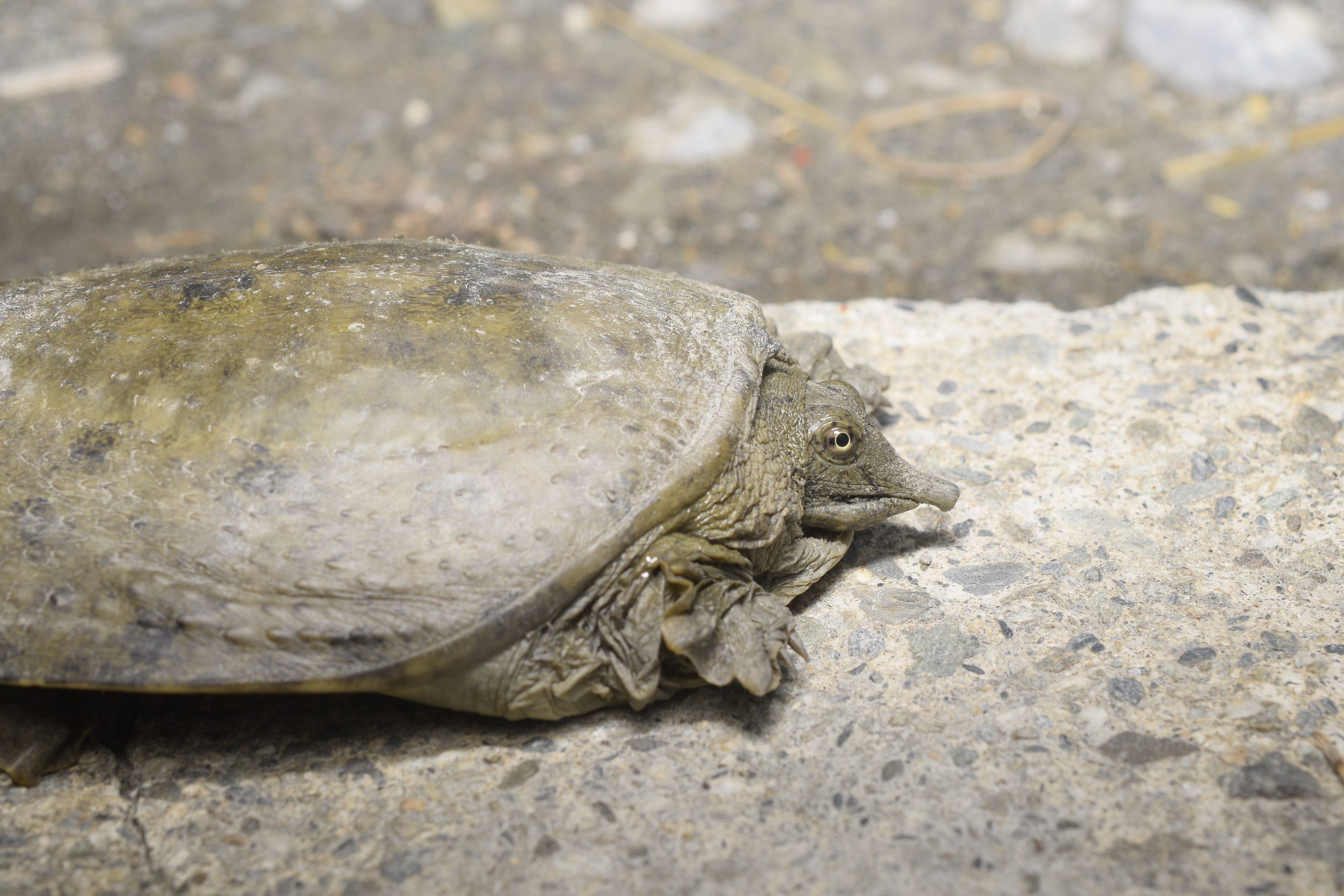
That night, I made the last-minute decision to change our plans for the last few nights and meet with a friend in Hualien County, a few hours’ drive north. Along the way I cruised not one, but two Pelodiscus sinensis (Chinese Softshell Turtle), a nice surprise to add a chelonian species to the trip. The smaller one, which was heading into a busy road, did not appreciate its ape-saviour rescuing it from imminent obliteration, and I was rewarded with a neat disc-shaped hole in my finger from its sharp, beak-like mouth. I got seriously held up checking into my accommodation, which I admittedly had booked last-minute, and couldn’t start herping until around 9pm. Even then, the friends I met suggested we drive down a very beaten-up old road, which the rental car was definitely not capable of doing, so we regrettably headed back with just a few amphibian records for the night.
My last day and night in Taiwan, I wanted to give the agriculture one last shot for Naja and Daboia with a friend who had observed them there before. We gave it our all, cruising around in the heat of the day and checking drainage ditches and flipping trash. Cruising one narrow road, at the peak heat of the day, I saw a snake slither across the road at a rapid pace. I accelerated quickly, but I did not have a chance of catching it out in the open. I spent a few minutes searching the side of the road, hoping it would reveal itself, but alas, nothing. There is a possibility it was a young cobra, but it could equally have been a small rat snake – that’s part of field herping, there will always be the one that got away. We took a break for a cold drink and some more stinky tofu (I need this more in my life), and then my friend took us to a “secret spot” through some ideal habitat – parked up, hiked a bit, and crossed two rivers to get there. We chilled for a bit and ate some snacks, waiting for sundown. It was during this time that I really appreciated the natural beauty of this country: its landscape, its flora and fauna, and its people. I guess Taiwan is on a lot of people’s lists for nature and herping, but I think it is still underrated. I am truly excited to see what the future holds for FHN in contributing towards the biodiversity knowledge and conservation of this country, and in highlighting it as a prime destination for eco-tourism. Beyond FHN’s own trips, the picture emerging from recent Taiwanese herpetological literature; new species like the Yuchi music frog described in 2025, ongoing splits within the Buergeria treefrog complex, and unresolved questions around endemics like Sinomicrurus sauteri and Trimeresurus gracilis makes clear that Taiwan’s herpetofauna is still being actively described and understood. Well-run, science-forward expedition tourism has a genuine role to play here: generating photographic vouchers, occurrence records, and local goodwill that can feed back into that research. After some fun trying to catch crepuscular Buergeria otai around the stream (and failing), we started our night walk. We encountered a total of 12 Diploderma swinhonis that night (a few still awake before sunset, and then a few sleeping), and the T. stejnegeri were also active, with a total of eight recorded, a few of which were tiny juveniles. Just an hour or so into the walk, my eagle-eyed friend spotted our main target, perhaps 30m+ up a tree. This was the unmistakable ventral view of Gonyosoma frenatum (Rein Snake). This is a rare species in Taiwan – first recorded in the country only in 1996, in Pingdong County, with records since confined to the south and southeast of the island – though it is more widespread elsewhere in its range across northeast India, southern China, and northern Vietnam. We gave a solid effort trying to climb the tree to bring the snake down, knowing full well that we would never even get close. We left it there in peace. Not much else was seen that night, but we had a good turnout with the amphibians, including a good look and photos of a Kurixalus berylliniris, accompanied by the usual Buergeria and Hylarana species. That, along with the snakes and lizards, made for quite a nice night of herping. We also encountered a Pareas komaii along a side stream. On the way down, another crazy spot by my eagle-eyed friend revealed a sleeping Takydromus sp. also about 30m up a tree. I never realised these “grass” lizards slept at such heights, but its long tail, approximately three times its body length, made its identity unmistakable. We also spotted an L. rufozonatus almost entirely in a hole on a rock side, and theorised it was feeding on geckos, or gecko eggs (of which we saw some in different rock crevices). Then, on the last stretch before reaching the cars, I noticed a huge Protobothrops mucrosquamatus coiled up just off the side of the path. This was such a nice way to end my trip in Taiwan, and felt like a full-circle moment, thinking back to that first one I found on the first night. We took the opportunity to photograph this majestic animal, and then called it a night. On the way home, I cruised yet another L. rufozonatus and B. kraeplini, which would be my last herps seen in Taiwan.
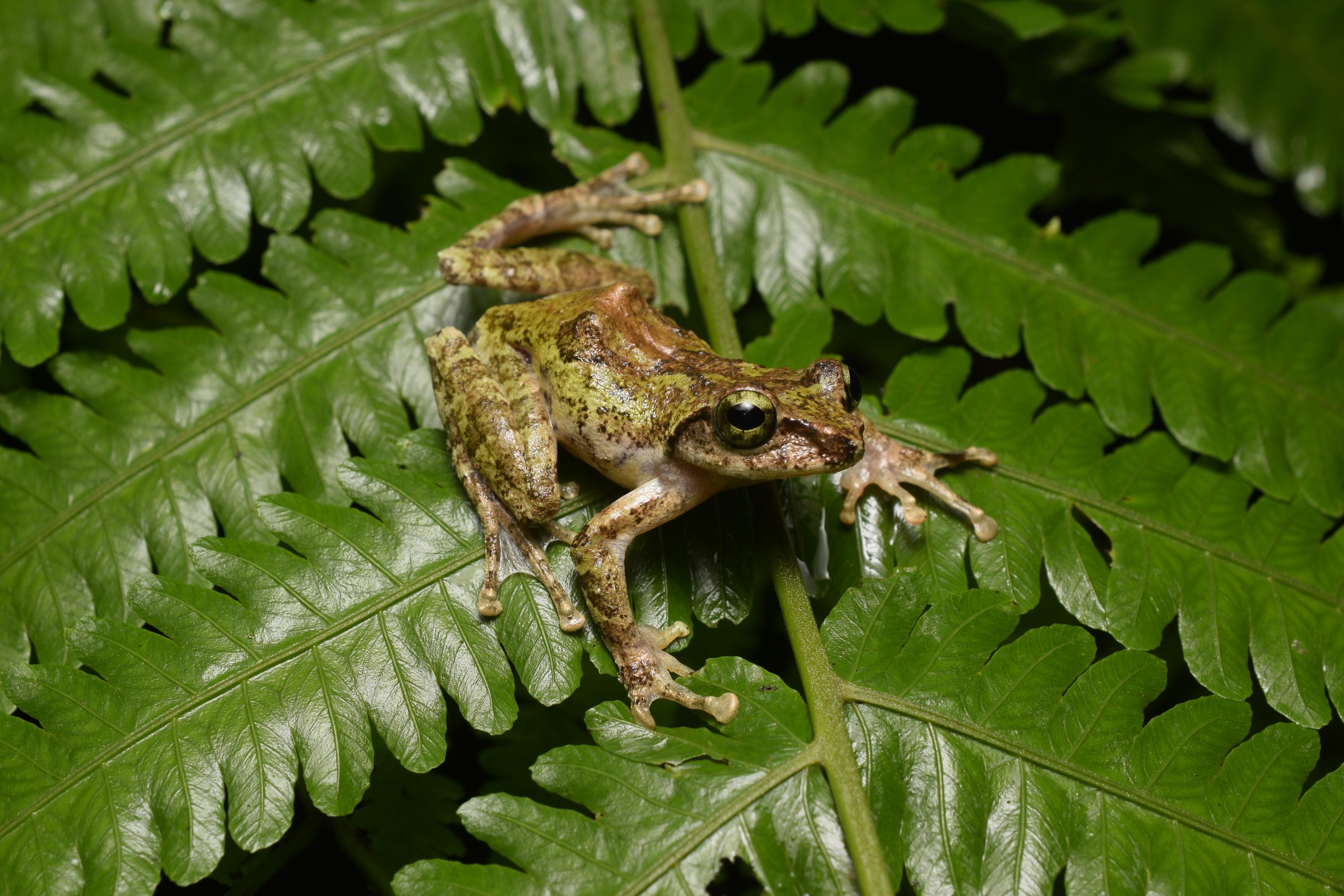
Overall, I am completely enamoured with Taiwan: the beauty of its landscape, the charisma of its wildlife, and the friendliness of its people. The first expedition with FHN, while lacking in recruitment, more than made up for it in rich experiences and first-class encounters. More than a herping trip, I am excited that the data we collect can also further our understanding of the herpetofauna on the island, and hopefully help conserve it. With fantastic support from locals, I definitely intend to make Taiwan a regular destination for Field Herping Network expeditions. Watch this space!
References
Lin, C-F., Chang, C., Matsui, M., Shen, C-C., Tominaga, A. & Lin, S-M. (2025). Description of a new music frog (Anura, Ranidae, Nidirana) critically endangered in Taiwan. ZooKeys, 1229, 245–273. https://doi.org/10.3897/zookeys.1229.139344
Wang, Y-H., Hsiao, Y-W., Lee, K-H., Tseng, H-Y., Lin, Y-P., Komaki, S. & Lin, S-M. (2017). Acoustic differentiation and behavioral response reveals cryptic species within Buergeria treefrogs (Anura, Rhacophoridae) from Taiwan. PLOS ONE, 12(9), e0184005.
Matsui, M. & Tominaga, A. (2020). A new species of Buergeria from the southern Ryukyus and northwestern Taiwan (Amphibia: Rhacophoridae). Current Herpetology, 39(2), 160–172.
Li, P. & Zhou, Z. (2021). Deinagkistrodon acutus. The IUCN Red List of Threatened Species 2021: e.T190644A1955997.
Malhotra, A. & Thorpe, R.S. (2004). A phylogeny of four mitochondrial gene regions suggests a revised taxonomy for Asian pitvipers (Trimeresurus and Ovophis). Molecular Phylogenetics and Evolution, 32(1), 83–100.
Hutchinson, D.A., Mori, A., Savitzky, A.H., Burghardt, G.M., Wu, X., Meinwald, J. & Schroeder, F.C. (2007). Dietary sequestration of defensive steroids in nuchal glands of the Asian snake Rhabdophis tigrinus. Proceedings of the National Academy of Sciences, 104(7), 2265–2270.
Mori, A., Burghardt, G.M., Savitzky, A.H., Roberts, K.A., Hutchinson, D.A. & Goris, R.C. (2012). Nuchal glands: a novel defensive system in snakes. Chemoecology, 22, 187–198.