Enquire About This Expedition
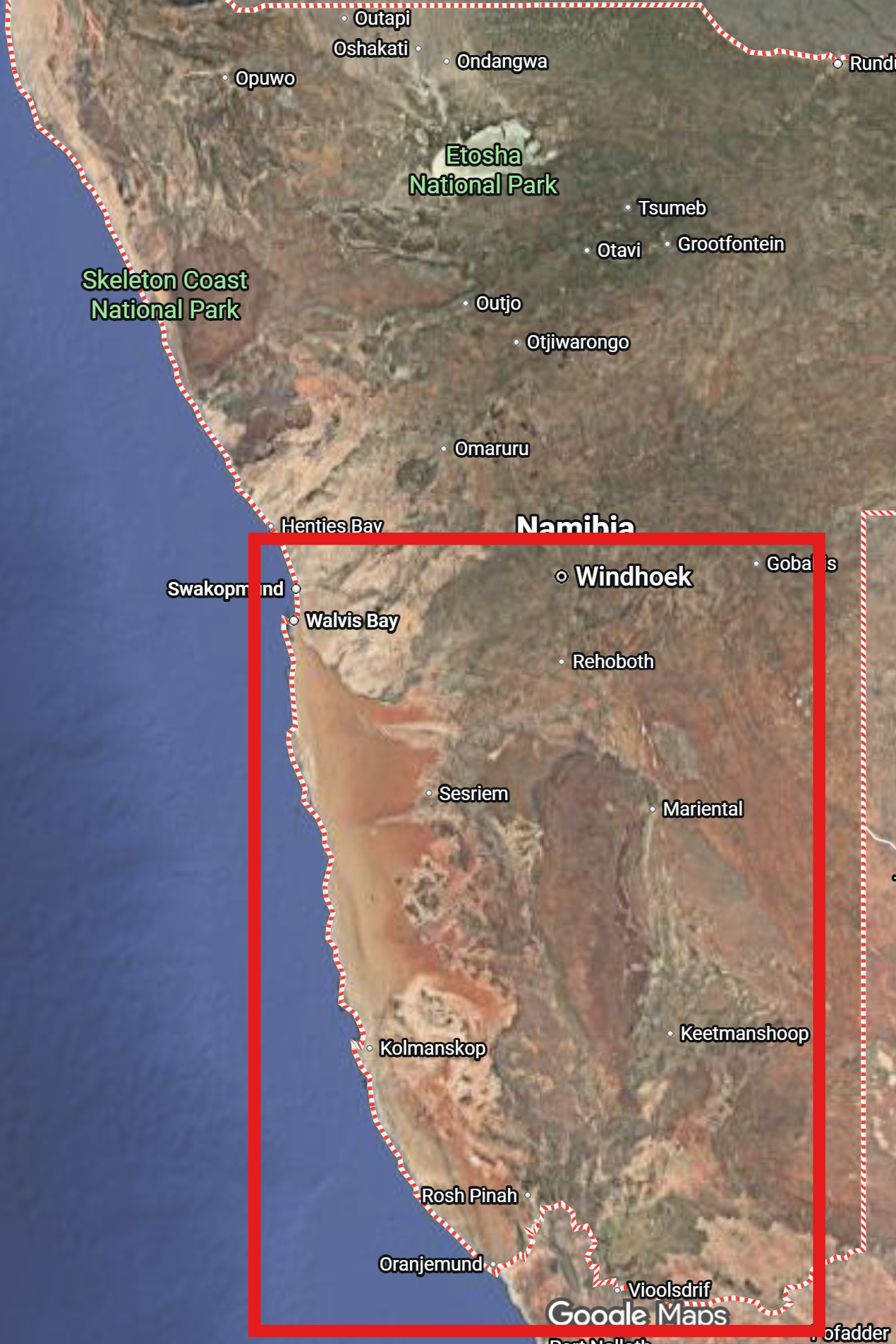
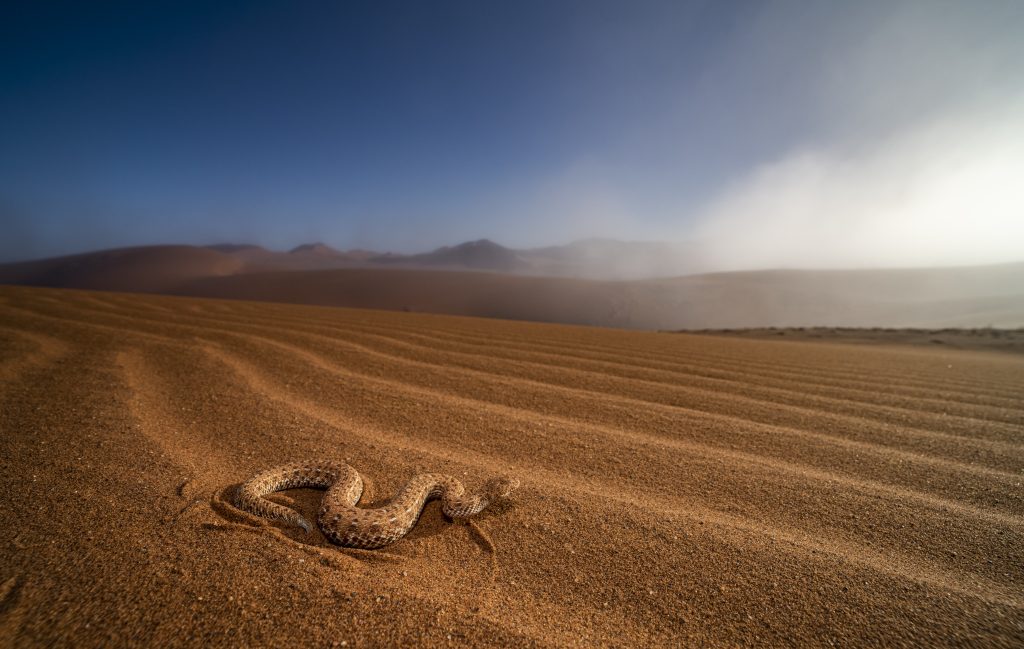
A twelve-night expedition across southern Namibia, moving from Windhoek through the succulent Karoo to the Orange River border, the central dunes around Sossusvlei and Lüderitz, and finishing on the Skeleton Coast. Days combine daytime species recording with dedicated night surveys, targeting all five of the region’s dwarf Bitis vipers alongside a wide range of elapids, geckos, and other herpetofauna.
View full day-by-day itinerary
19th — Arrival at Windhoek
Transfer to first accommodation, briefing on field protocols and data collection procedures, with a local night survey if time permits.
20th — Karoo
Transfer south to the arid succulent Karoo. Daytime survey of plains and rocky outcrops, strong habitat for cobras, lizards, and geckos, followed by a night survey after dinner.
21st–22nd — Southern Edge
To the Orange River and southwest coast, a key biogeographic boundary. Primary target: the rare Namaqua Dwarf Adder (
Bitis schneideri), searched for along sandy river margins and scrubland at night.
23rd–27th — Central Dunes
Luderitz, Aus, and Sossusvlei. Targets include the Many-horned Adder and the rarely-seen Desert Mountain Adder, plus Peringuey’s Adder at its best site on the itinerary. Microhabitat recording and photographic morphometrics conducted on every
Bitis encountered.
28th–29th — Skeleton Coast
Where the Namib Desert meets the Atlantic. Dune systems, gravel plains, and coastal fog belt habitat for Peringuey’s Adder, Namaqua Chameleon, and multiple gecko species.
30th — Departure (Walvis Bay)
Transfer to Walvis Bay Airport, with a final morning available for last-chance surveying around Swakopmund.
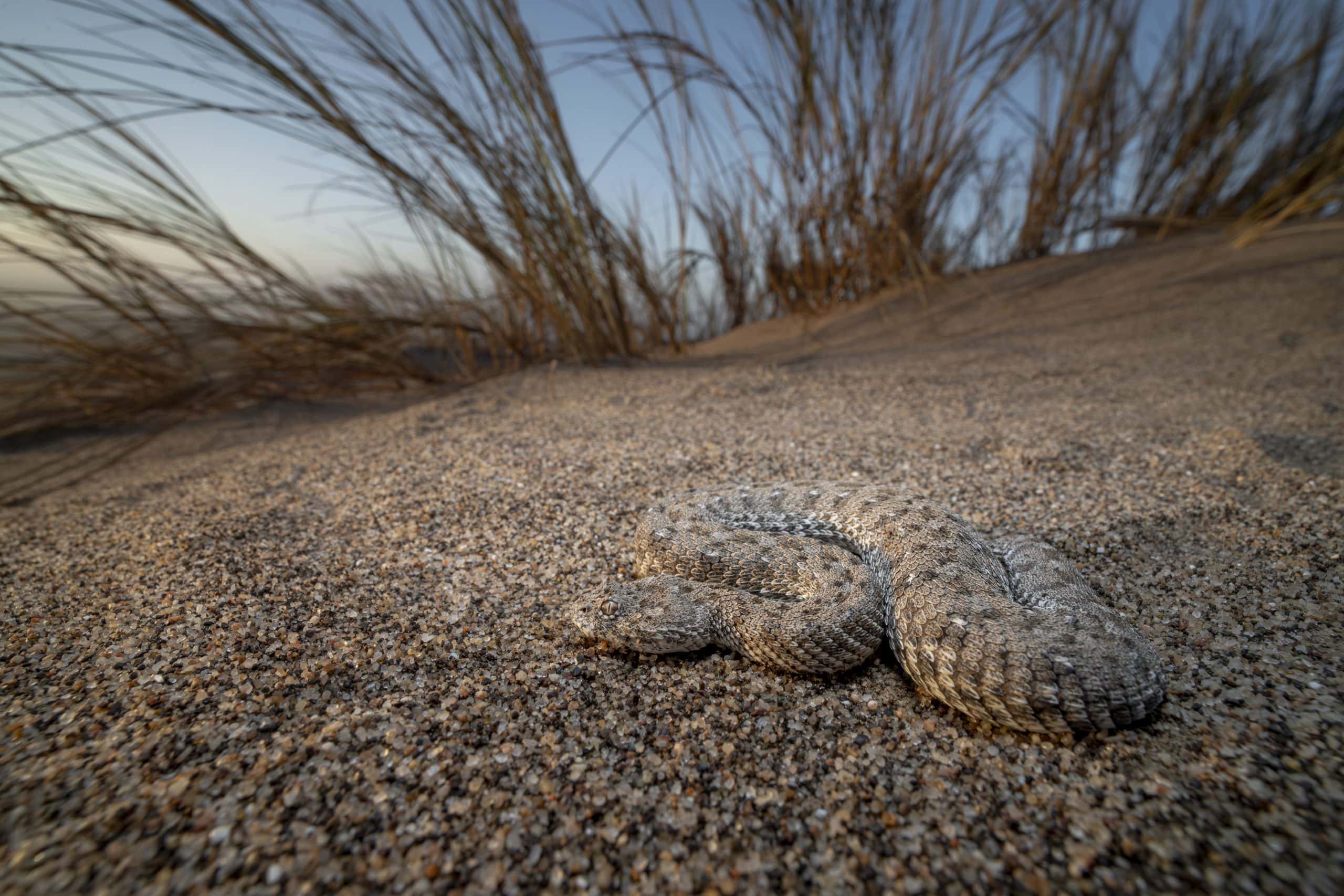
Namaqua Dwarf Adder
Bitis schneideri
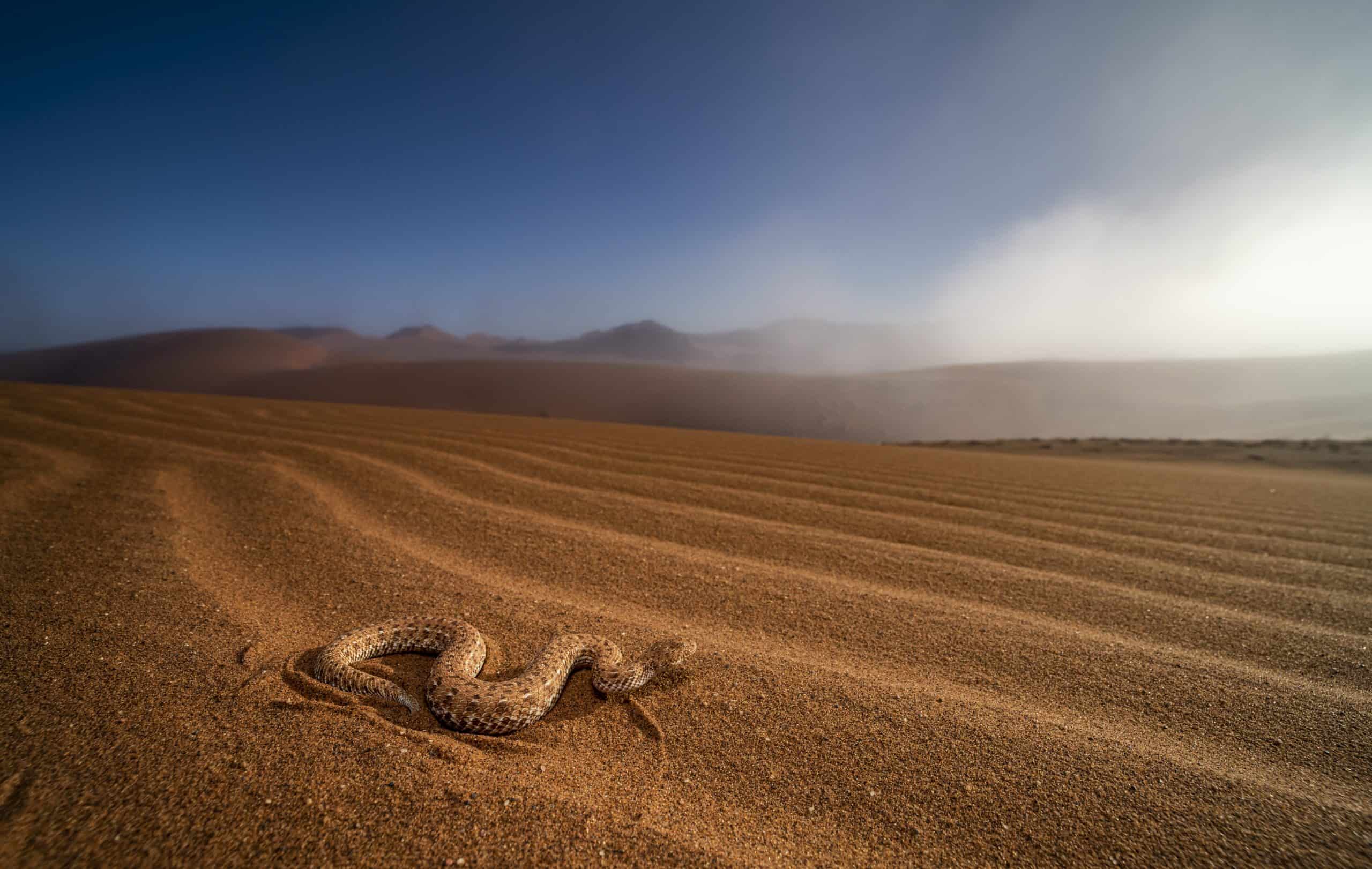
Peringuey’s Adder
Bitis peringueyi
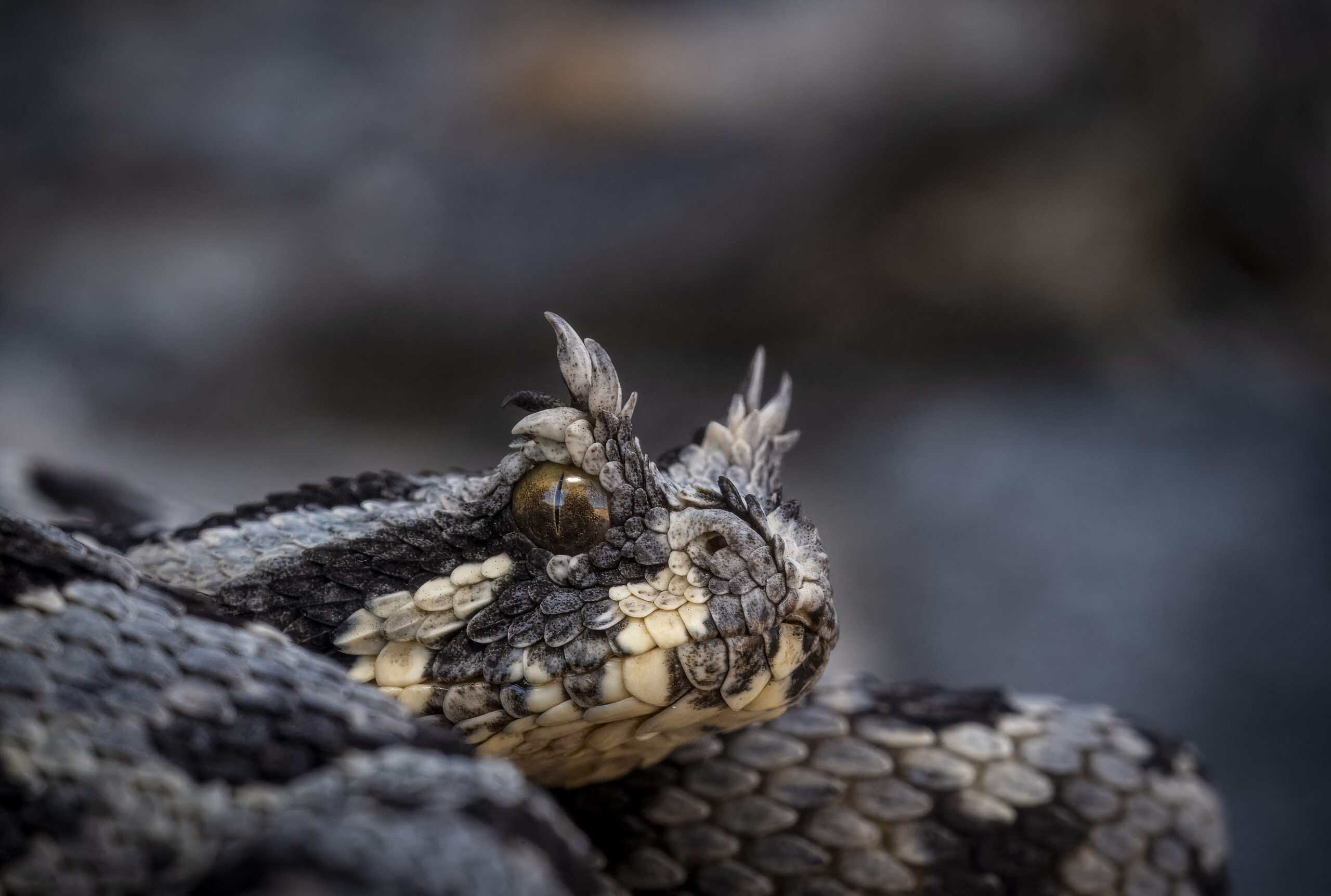
Many-horned Adder
Bitis cornuta
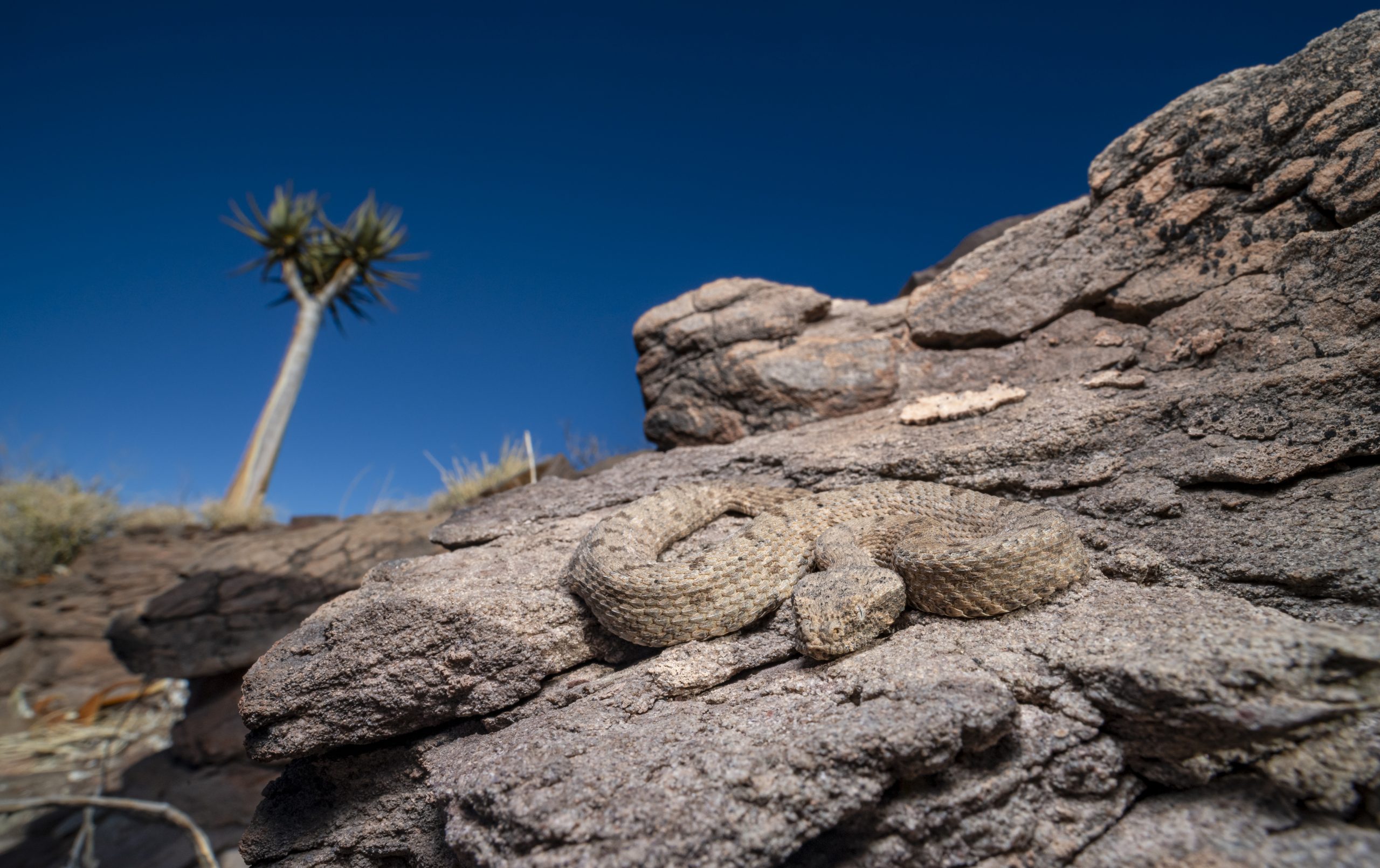
Desert Mountain Adder
Bitis xeropaga
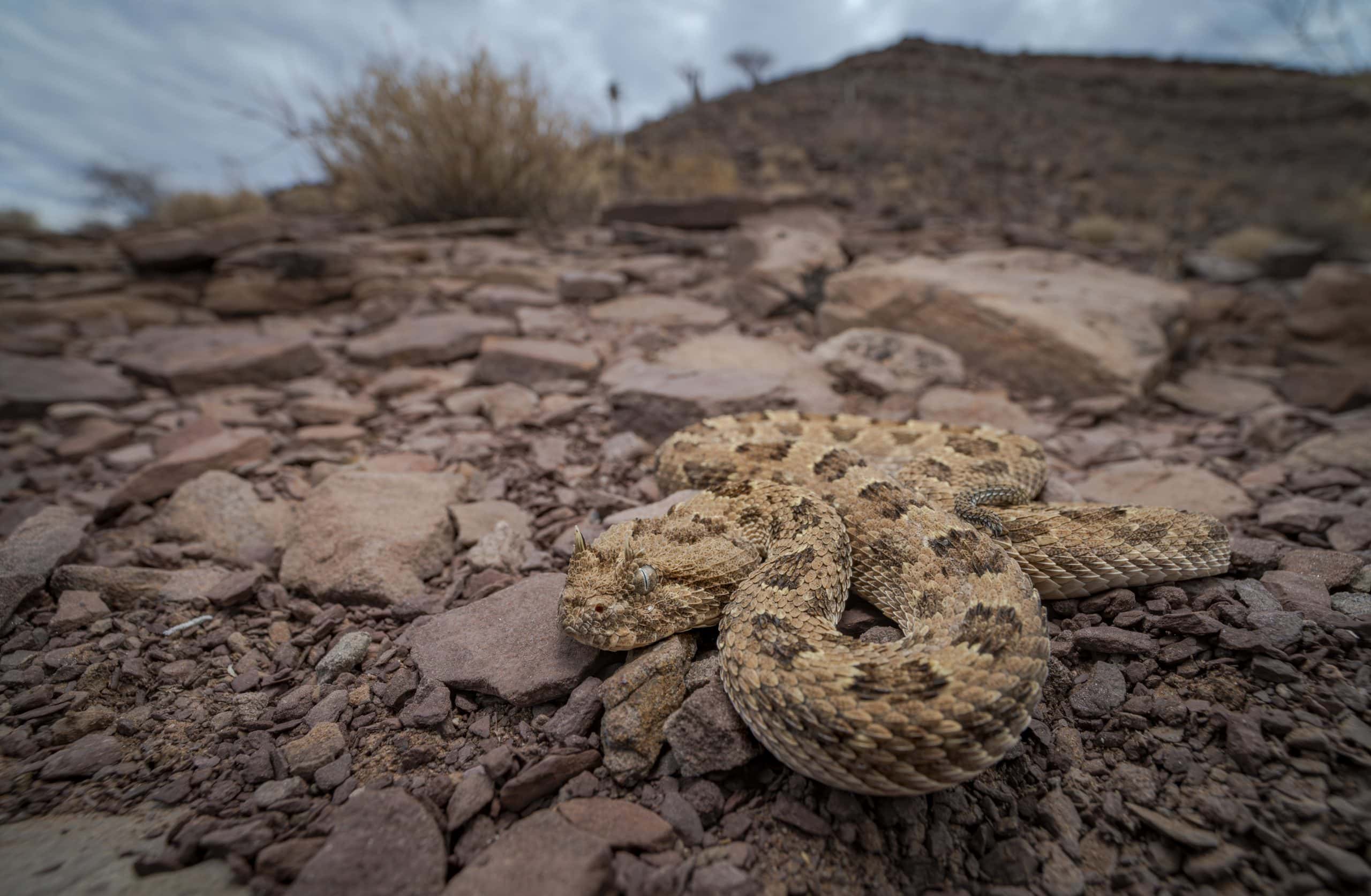
Horned Adder
Bitis caudalis
Scientific Value
This expedition contributes to a research project studying microhabitat partitioning and morphological variation among Namibia’s Bitis vipers; one of the most distinctive viper assemblages found anywhere in the world. The study is led by FHN founder Dr Edward Gilbert in partnership with Namibian-based herpetologist, drawing on expedition encounters alongside supplementary field data.
Every dwarf Bitis encountered is recorded and photographed as part of this project. Findings are intended for peer-reviewed publication, contributing new knowledge to the conservation and understanding of this remarkable group of desert-adapted snakes. If you wish to be involved with the research aspect of this expedition, be it field measurements, data analysis, or leading publication, please make this clear on application.
Enquire About This Expedition